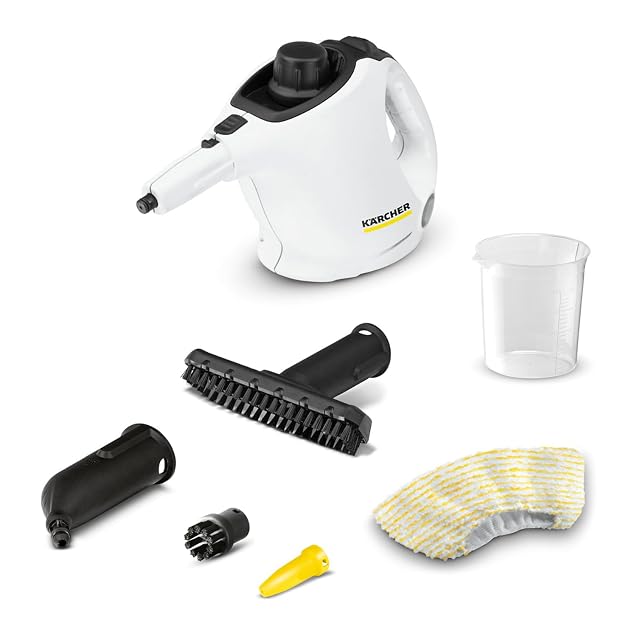
Kärcher SC 1
3 bar · 3 min heat-up · 200 ml · 1.58 kg (3.5 lb)
A handheld for taps, tiles and hobs — and honest about the twenty square meters it covers.
Best for: Taps, sinks, wall tiles, mirrors, extractor hoods and hobs — detail work, not floors
Small spaces
Most of this category assumes a garden tap and a garage. Without either, three families still make sense and the rest do not.
Three questions decide this: is there a tap, is there a drain, and is there a cupboard.
A liter of water in a compact steam cleaner does a bathroom, a hob and a set of window frames. There is no run-off, no drain and nothing to wheel outside. For a flat this is the single most useful machine in the category.
Bought for windows, kept for the shower screen and the condensation on a cold morning. It is the smallest machine here and among the most used.
Spray extraction on a sofa, a rug and a mattress is a hand-tool job. A compact spot machine does it and stores in a cupboard; a full carpet cleaner does not.
Pressure washers, wet and dry vacuums, sweepers and surface cleaners. Not because they are bad, but because every one of them assumes a tap, a drain or a garage, and a flat usually has none of the three.
Where a steam mop or floor washer does the daily work without needing outdoor space.
Where a window vacuum is one of the most useful machines a flat can own.
Where a handheld steam cleaner does detail work without chemicals or drainage.
Where cleaning is constrained by drainage and by what falls on the flat below.
| Your need | The machine | The constraint |
|---|---|---|
| Hard floors | Steam mop or floor washer | Storage space |
| Windows | A window vacuum | Very little |
| Detail cleaning | A handheld steam cleaner | Noise and storage |
| Balcony | A bucket and brush, often | Runoff onto neighbors |
In a flat, machines are stored in cupboards where damp does not dry, and that is what shortens their lives. A steam mop put away with water in it and a floor washer stored with a wet roller both develop odors that spread to the cupboard.
Small spaces concentrate the risks.
3 bar · 3 min heat-up · 200 ml · 1.58 kg (3.5 lb)
A handheld for taps, tiles and hobs — and honest about the twenty square meters it covers.
Best for: Taps, sinks, wall tiles, mirrors, extractor hoods and hobs — detail work, not floors
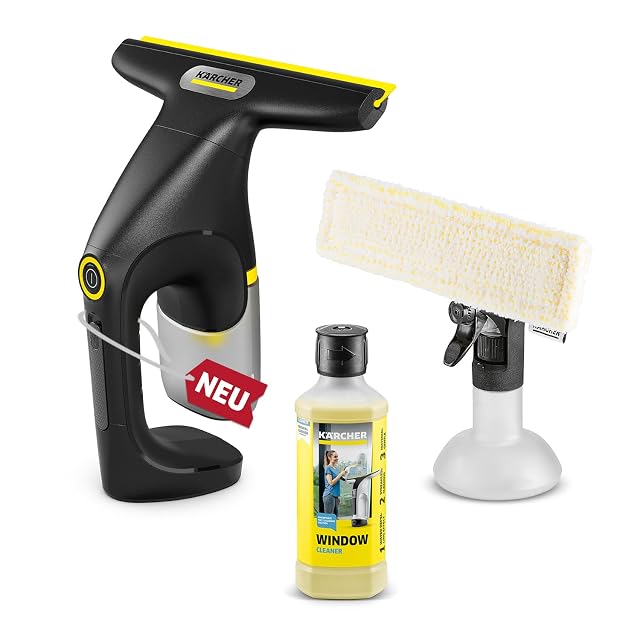
360° Comfort!Clean · vertical, horizontal or overhead · cordless
A window vacuum that works upside down — which sounds like a detail until you reach a skylight.
Best for: Shower screens, mirrors and skylights — the everyday glass rather than a whole house
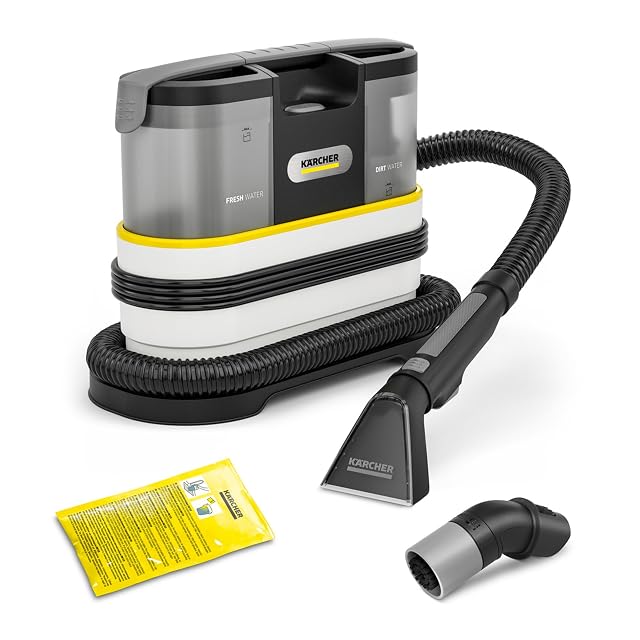
Spray extraction · 6.3 m (21 ft) working radius · upholstery and car interiors
A spot machine, not a carpet machine — and the six-meter radius is what makes it a car tool.
Best for: Households with children, pets or a car interior that sees food
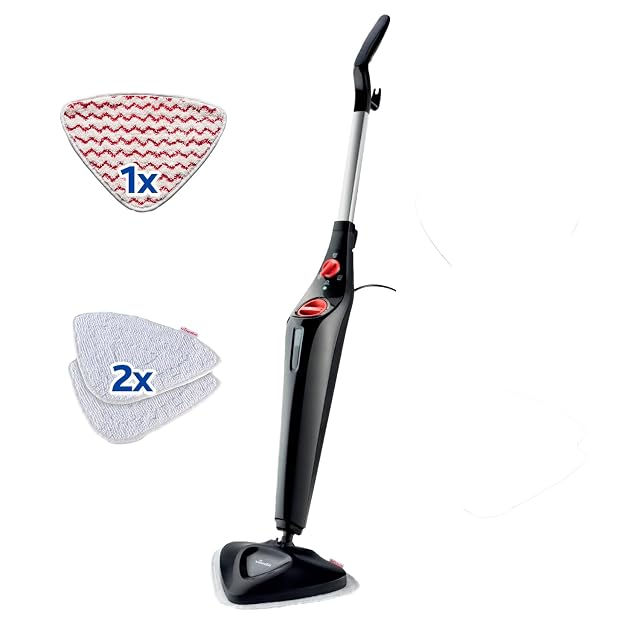
15 s heat-up · 400 ml · triangular head · PowerPad included
Fifteen seconds, a triangular head and a scrubbing pad — the cheapest sensible way to stop mopping with a bucket.
Best for: A flat or a small house, on sealed tile and vinyl, cleaned often and quickly
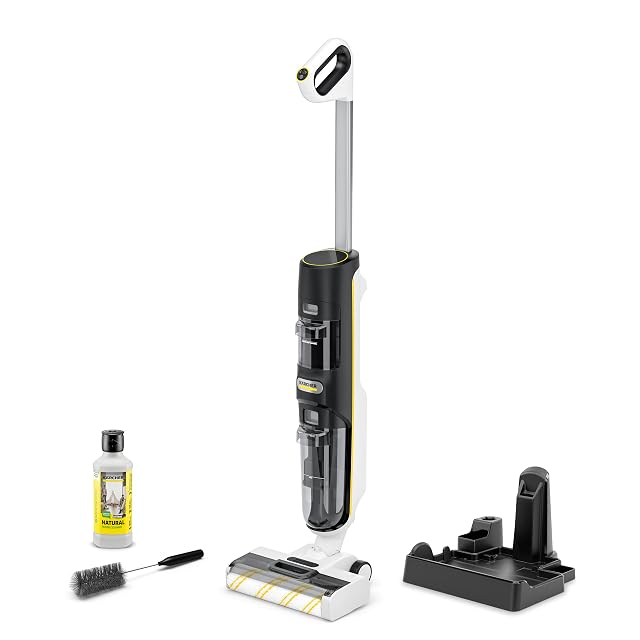
4 modes · 45 min · dirt sensor · two-stage filter · self-cleaning on charge
Four modes including a stairs mode, and a self-cleaning cycle that runs while the machine charges.
Best for: A house with mixed floors and stairs, cleaned weekly, where the machine has to look after itself
Physically yes, sensibly no. There is nowhere for several hundred liters of dirty water to go except your neighbors’ balcony below, and most leases treat that as a nuisance. A steam cleaner does balcony tile and railings with a liter of water and no run-off.
It is the real constraint. A cylinder steam cleaner and a window vacuum both fit on a shelf. A wet and dry vacuum, a floor washer with a dock and a surface cleaner do not — and a machine stored on a landing is a machine that gets sold within a year.
Rarely usefully. Without an outdoor tap, drainage and space, it is an expensive object in a cupboard. Confirm you can actually use one before buying.
Often a window vacuum for condensation, and a steam mop or compact floor washer for hard floors. All three are small and used often.
Carefully, and with an eye on where the water goes. Runoff lands on the flat below, which is the constraint nobody anticipates.
With shared walls, yes. It decides when you can clean rather than whether, and quieter machines widen your options considerably.
Cordless suits small spaces and awkward corners; corded avoids charging and runtime limits. In a flat, the storage of the charger matters too.
In a small home, a machine that does two jobs is usually worth more than two machines each doing one, purely because of storage.
Meant for: Taps, sinks, wall tiles, mirrors, extractor hoods and hobs — detail work, not floors
Where it is strongest: 1.58 kg (3.5 lb) — light enough to hold above your head against an extractor hood
Where it is weakest: 200 ml is roughly twenty square meters, then it stops
Meant for: Shower screens, mirrors and skylights — the everyday glass rather than a whole house
Where it is strongest: Works in any orientation, including overhead — skylights and shower ceilings
Where it is weakest: Verified absent from the US store
Meant for: Households with children, pets or a car interior that sees food
Where it is strongest: 6.3 m (21 ft) of reach: a car can be done from a socket in the garage
Where it is weakest: Not a whole-carpet machine: the tank and the head are sized for spots
Meant for: A flat or a small house, on sealed tile and vinyl, cleaned often and quickly
Where it is strongest: Fifteen seconds from cold, and it stays ready between rooms
Where it is weakest: Triangular head reaches into corners but leaves the edges beside them
Meant for: A house with mixed floors and stairs, cleaned weekly, where the machine has to look after itself
Where it is strongest: Self-cleaning runs while charging, so the roller is dealt with without a separate step
Where it is weakest: No runtime beyond an approximate figure, and no published weight
$36 – $100
16 models
$100 – $170
16 models
$190 – $2 400
16 models
Lances, nozzles and detergents from the same aisle, at the price we read. Confirm the fit against the machine you choose before ordering: it turns on the coupling and the part number, which the listing gives.
Comparisons we have already run between two washers from this guide or this aisle.
The washers above come from the catalog of this site. Specifications are those the manufacturer and the Amazon page publish; prices are what Keepa reported for the date below, and both move. The order follows declared specifications, stated strengths weighed against stated limits, and price. No machine here has been put to work by us, and nothing on this page pretends otherwise.
Last checked on
Prices quoted in these summaries are dated readings. The live price is shown next to each product.
Pressure washers and floor washers swing by a hundred dollars or more across the year, and the biggest "discounts" often land at prices the same model sold for six weeks earlier. UniverTrack tracks the real price history across retailers, spots fake reductions, and alerts you when it is genuinely the moment to buy.