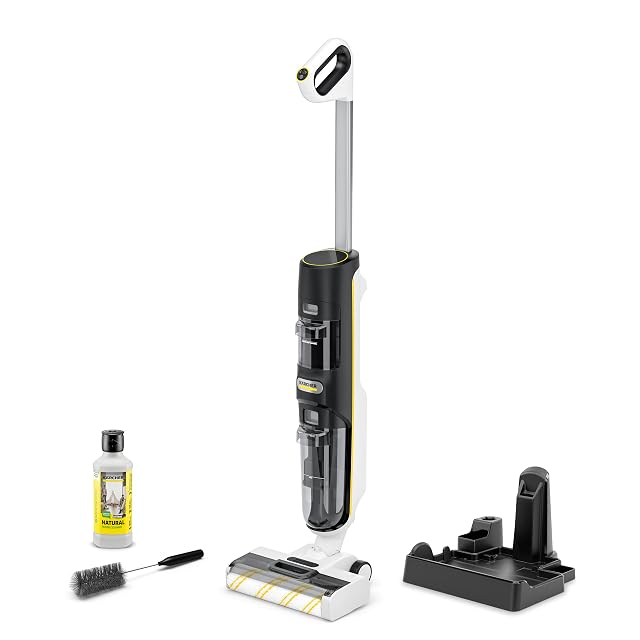
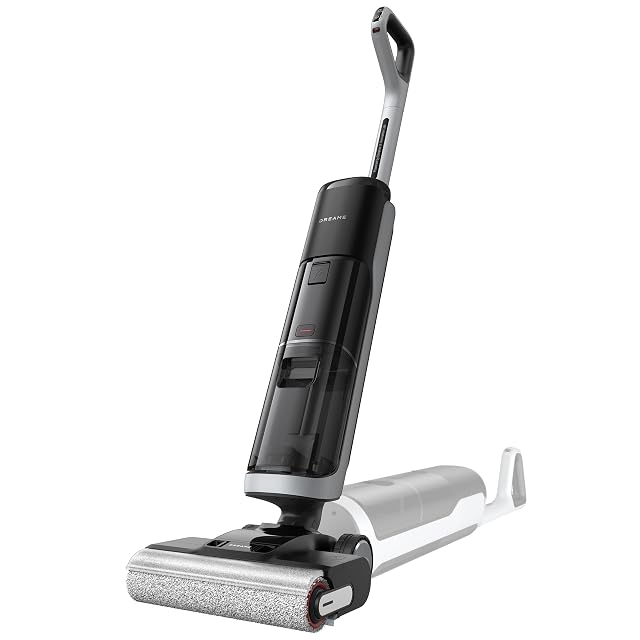
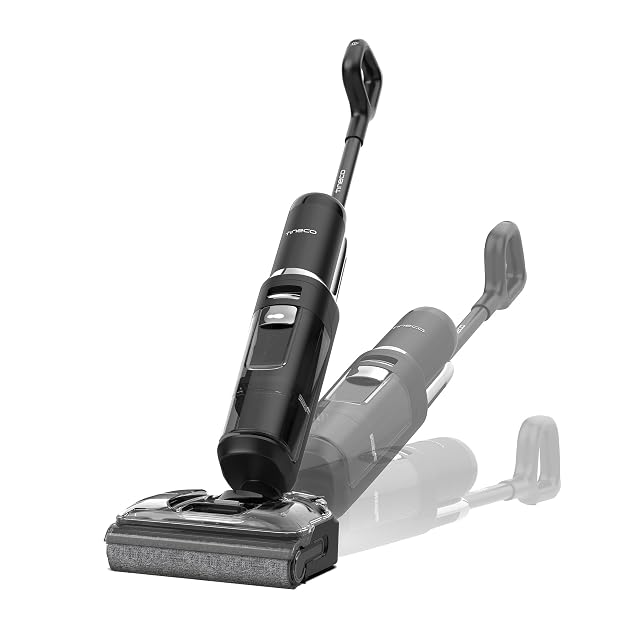
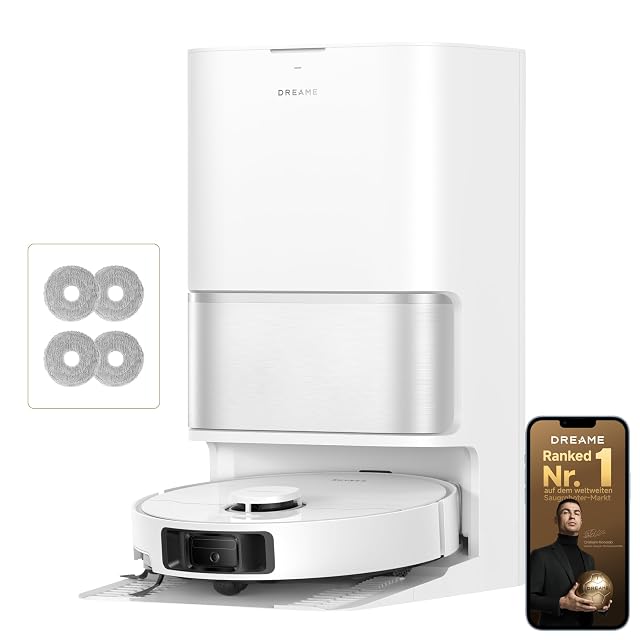
Almost every machine in this category is abandoned rather than broken. Self-cleaning features exist to remove the chore that ends them, and some of them work.
Four different things get sold under the same phrase, and they are not equally useful.
Hot roller washing
On floor washers, the roller is rinsed with hot water in its dock. Where the temperature is published — 85 °C (185 °F), 90 °C (194 °F) on the machines here — it is a real specification. Where it is not published, it cannot be compared with anything.
Drying
The washing is only half of it. A rinsed roller left damp still smells. A stated drying cycle is what finishes the job, and a cycle that runs during charging is best of all, because it cannot be skipped.
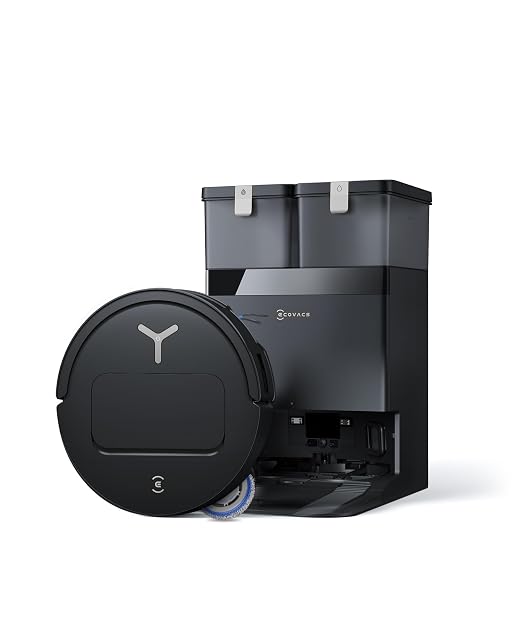
Self-emptying docks on robots
These transfer dust into a bag so you empty the machine monthly instead of daily. They genuinely change how much a robot gets used. They also add a consumable, and it is worth pricing the bags before choosing the brand.
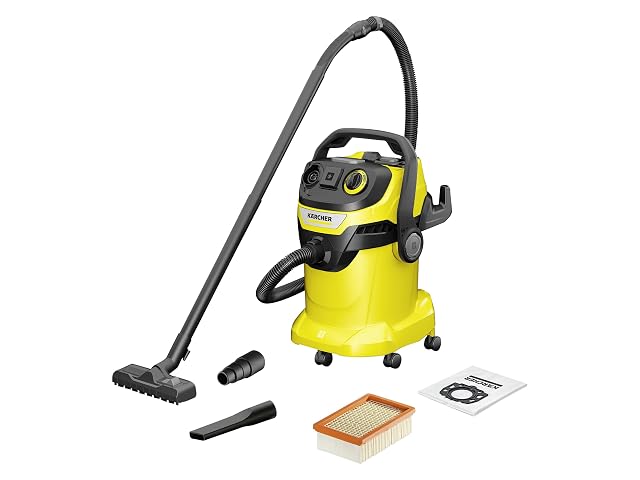
Filter clearing on workshop vacuums
The least glamorous version and one of the most useful: a button that shakes the pleated filter without opening the machine. On plaster dust it is the difference between one session and three.
What no cycle does
Descaling. Every steam machine on this site still dies of limescale, and no self-clean function touches it.
Which washer does your job need?
You are told a machine self-cleans
Find out exactly what the cycle does, because the term covers very different things.
You own a floor washer
Self-cleaning means the roller, which is the part you would otherwise hand-wash.
You own a robot vacuum
It can mean emptying the bin, washing the mop pad, or both.
You own a pressure washer
There is no meaningful self-cleaning; draining and filter care are still yours to do.
Picking by the surface
Floor washers
Where self-cleaning washes the roller in the dock, and where it is the feature that keeps the machine in use.
Robot vacuums
Where a dock may empty the bin, wash the mop pad and dry it, each being a different promise.
Steam cleaners
Where a rinse cycle is not descaling, and where confusing the two shortens the machine's life.
Pressure washers
Where the term is largely marketing and where the real maintenance remains manual.
What to measure, and what to ignore
What the cycle actually cleans
The roller, the bin, the pad, or the water path. Each is a different claim and only one of them may apply.
What it does not do
No self-cleaning cycle descales, empties a dirty water tank, or replaces a filter. Those remain yours.
What it consumes
Water, detergent and dock bags. A self-emptying dock has ongoing costs that are easy to overlook.
Whether the dock needs cleaning
Docks collect dirty water and residue. A self-cleaning machine with a filthy dock is not clean.
How much time it genuinely saves
On a floor washer it is substantial. On other machines it may be marginal.
Which figure for which surface
The machine
What self-cleaning means
What it does not do
Floor washer
Washes the roller
Empty the dirty tank
Robot vacuum
Empties bin, washes pad
Clean the sensors or brush
Steam cleaner
A rinse, sometimes
Descale the boiler
Pressure washer
Very little
Drain, or clean the filter
What to avoid doing
Assuming self-cleaning means no maintenance
Filters, tanks and sensors still need attention. The cycle handles one part of the job, not all of it.
Confusing a rinse cycle with descaling
A rinse removes loose residue; descaling removes limescale. Only the second protects a boiler.
Never cleaning the dock
Docks collect dirty water and residue. A dirty dock recontaminates whatever it is supposedly cleaning.
Overlooking the running costs
Dock bags, detergent and water are consumed by these cycles. It is convenience bought rather than free.
By how hard you will work it
The floor washer owner
Gets real benefit, because hand-washing a roller is exactly the chore that stops people using the machine.
The robot owner
Benefits most from self-emptying in a pet household, and should still clean brushes and sensors.
The pressure washer owner
Should not expect anything from the term and should keep draining and cleaning the filter.
Servicing, storage and working life
The irony of self-cleaning machines is that the docks doing the cleaning need cleaning themselves. Residue builds in the tray, dirty water sits, and a dock that has not been rinsed in months is working against the machine it serves.
Rinse the dock tray regularly; it collects everything the cycle removes.
Empty and rinse the dirty water tank yourself; no cycle does this.
Descale separately where the machine has a boiler.
Replace filters and pads on schedule regardless of any cycle.
Safety
Docks combine water and mains electricity.
Keep docks on a hard, dry surface and away from splashing.
Unplug before cleaning the dock tray.
Do not run a self-clean cycle with the machine's tank empty.
Follow the maker's guidance on which detergents are permitted.
Does a self-cleaning cycle mean I never touch the machine?
No. It handles the routine — the roller wash, the mop rinse, the filter shake. It does not empty the dirty tank, it does not descale the boiler, and it does not clear a hair tangle. Treat it as removing the daily step, not the monthly one.
Which self-cleaning feature is worth the most?
A cycle that runs automatically when the machine is docked, because it removes the possibility of forgetting. A hotter wash you have to start manually is a better cycle that gets used less. On a wet and dry vacuum, the equivalent is the filter-clean button.
What does self-cleaning actually mean?
It depends entirely on the machine: washing a roller, emptying a bin, rinsing a pad. The term covers very different things and it is worth checking which applies.
Does it mean no maintenance?
No. Filters, tanks, sensors and descaling all remain yours. The cycle handles one part of the job.
Does a rinse cycle descale a steam cleaner?
No. A rinse removes loose residue; descaling removes limescale from the boiler. Only the second protects the machine.
Do I have to clean the dock?
Yes. Docks collect dirty water and residue, and a dirty dock recontaminates whatever it is supposed to be cleaning.
Is a self-emptying robot dock worth it?
In a pet household particularly, because it turns a frequent chore into an occasional one. It consumes dock bags in exchange.
Does my pressure washer self-clean?
Not meaningfully. Draining before frost and keeping the inlet filter clean remain manual jobs and they are the ones that matter.
Lances, nozzles and detergents from the same aisle, at the price we read. Confirm the fit against the machine you choose before ordering: it turns on the coupling and the part number, which the listing gives.
The washers above come from the catalog of this site. Specifications are those the manufacturer and the Amazon page publish; prices are what Keepa reported for the date below, and both move. The order follows declared specifications, stated strengths weighed against stated limits, and price. No machine here has been put to work by us, and nothing on this page pretends otherwise.
Last checked on
Prices quoted in these summaries are dated readings. The live price is shown next to each product.
The tool we use ourselves
Chosen your machine? Now buy it at the right price.
Pressure washers and floor washers swing by a hundred dollars or more across the year, and
the biggest "discounts" often land at prices the same model sold for six weeks earlier.
UniverTrack tracks the real price history across retailers, spots fake
reductions, and alerts you when it is genuinely the moment to buy.
Real price historyBuy-now alertsAI buying assistant