Skip to content

Choosing a floor washer

Floor washers rarely fail. They get abandoned, and almost always for the same reason — the roller.

Four specifications, and the first two decide whether you still use the machine in six months.

1. Roller wash temperature

90 °C on the Dreame H12 Pro, 85 °C on the Tineco S6, 60 °C on the dearer Dreame H14 Pro. Hotter is better for grease and for smell, and the range across brands is wider than the marketing suggests. Read the two models of the same brand side by side; the newer number is not always the higher one.

2. The drying cycle

A hot wash without drying leaves a damp roller in a warm kitchen. Five minutes of hot air is what makes the difference.

3. Lying height

Thirteen centimeters on the Tineco Stretch machines means the head passes under a sofa rather than up to it — which is where the crumbs are.

4. Edge cleaning

One side, or three. On a fitted kitchen the difference is whether you finish the kickboard line by hand.

Which washer does your job need?

You have large hard floor areas
A floor washer vacuums and washes in one pass, which is the whole argument.
You have pets or children
The self-cleaning function is what decides whether you keep using it.
You have mostly carpet
This is the wrong machine; a vacuum and a carpet cleaner are the right ones.
You have a small flat
A mop and a vacuum may serve better, since these machines are bulky to store.

Picking by the surface

Daily hard floor cleaning

Where washing and vacuuming in one pass genuinely halves the routine.

Kitchens and spills

Where wet and dry pickup together is what these machines do better than anything else.

Pet households

Where muddy paw prints and food spills are constant, and where the self-cleaning matters most.

Edges

Where edge-cleaning ability differs greatly between models and where the gap shows every time.

What to measure, and what to ignore

Self-cleaning
Whether the machine cleans its own roller in its dock. Without it you are hand-washing a dirty roller after every use, and that is what stops people using these machines.
Edge cleaning
How close to a skirting board it reaches. A machine that leaves a visible strip along every wall irritates daily.
Tank capacity and separation
Clean and dirty tanks, and how easy the dirty one is to empty and rinse. You will do this every time.
Weight and manoeuvrability
Self-propelled models are noticeably easier. A heavy machine that fights you gets used less.
Runtime and charging
Whether it covers your floor area in one charge. Running out halfway through is the practical limit.

Which figure for which surface

Your homeThe featureWhy
Large hard floorsRuntimeCovering it in one go
Pets and childrenSelf-cleaningThe roller gets filthy
Fitted roomsEdge cleaningStrips along walls show
Mostly carpetNot this machineA vacuum and carpet cleaner

What to avoid doing

Not emptying the dirty tank after use
It smells within a day and the machine becomes unpleasant to use. Emptying and rinsing is part of every session, not an occasional chore.
Using it on unsealed wood
These machines put real water on the floor. On unsealed wood that causes exactly the damage a steam mop would.
Vacuuming large debris with it
The roller and the dirty water tank are for fine debris and liquid. Large items clog the path and are better swept first.
Leaving the roller wet in the machine
It develops an odor and degrades. Running the self-clean or drying the roller is the routine that prevents it.

By how hard you will work it

The busy household with hard floors
Gets the most from a self-cleaning machine with good runtime.
The pet owner
Values self-cleaning above almost everything, since the roller does the unpleasant part.
The small flat dweller
May find storage and charging outweigh the benefit over a mop and vacuum.

Servicing, storage and working life

These machines smell if the dirty water tank and roller are not dealt with after every use, and that smell is the reason many end up unused in a cupboard. The filter also clogs quietly and reduces suction long before anyone notices.

  • Empty and rinse the dirty tank after every use, without exception.
  • Run the self-clean cycle or dry the roller before storing.
  • Clean the filter regularly; a clogged one costs suction silently.
  • Replace the roller when it stops lifting; it is a consumable.

Safety

Water, electricity and a wet floor.

  • Do not use it on standing water beyond what the maker specifies.
  • Unplug or remove the battery before clearing the roller.
  • A freshly washed floor is slippery until dry.
  • Keep the charging dock away from the wet area.

The picks, and what decided them

The questions we hear

Why does the roller wash temperature matter so much?

Because the roller sits damp in a dock between uses, loaded with what came off the floor. A hot wash removes the dirt and a drying cycle removes the water; without both, the machine smells within a week and you start washing the roller by hand — which is the chore it was bought to remove.

Corded or cordless?

Corded never stops mid-floor and has no battery to age; cordless is quicker to pick up for five minutes. For a large hard floor cleaned in one session, corded is the more rational choice — and the market is quietly abandoning it.

Does a floor washer replace a vacuum?

On hard floors largely yes, since it picks up dry debris and washes in one pass. It does not replace a vacuum for carpet or stairs.

How important is self-cleaning?

It is the feature that decides whether the machine keeps being used, because hand-washing a dirty roller after every session is what puts people off.

Can I use it on wooden floors?

On properly sealed floors with the appropriate setting, often yes. On unsealed wood, the water it puts down causes real damage.

Why does my machine smell?

A dirty water tank or a wet roller left in the machine. Emptying, rinsing and drying after each use prevents it entirely.

Does it clean right to the edge?

It varies considerably by model, and a machine that leaves a strip along every wall is an irritation you notice daily.

Can I use my own cleaning solution?

Only what the maker allows. Excess foam can damage the motor, which is why these machines specify their own products.

Each washer, and the job behind it

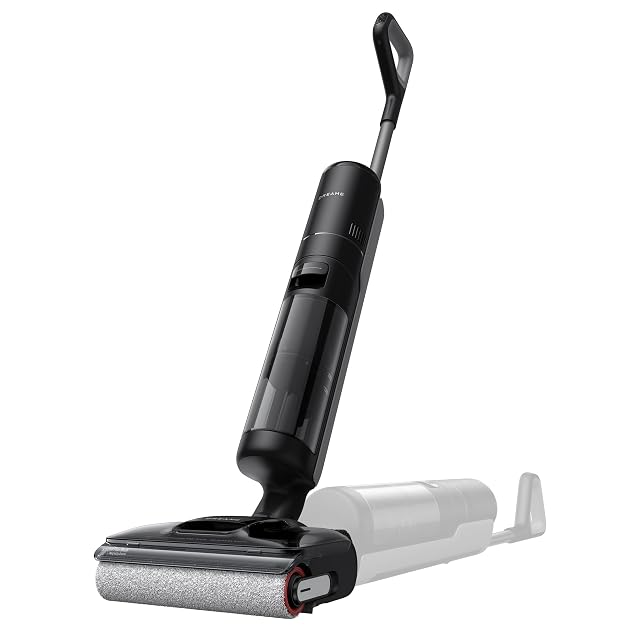
Dreame H12 Pro FlexReach

Meant for: Hard floors in a family home — spills, paw prints and daily crumbs, cleaned in one pass
Where it is strongest: 90 °C (194 °F) roller wash and a five-minute dry cycle — the answer to the smell that kills these machines

Where it is weakest: Consumables — rollers and filters — are model-specific and a real running cost

Read the full review →

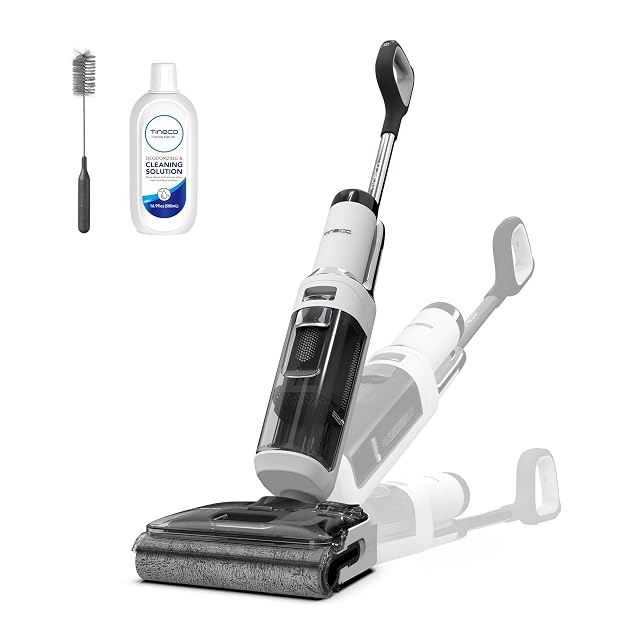
Tineco Floor One Stretch S6

Meant for: Open-plan hard floors with furniture to clean under, and homes where edges matter

Where it is strongest: Thirteen centimeters of lying height — it goes under most sofas and beds

Where it is weakest: 85 °C (185 °F) self-cleaning is hot but below the 90 °C (194 °F) of the Dreame H12 Pro

Read the full review →

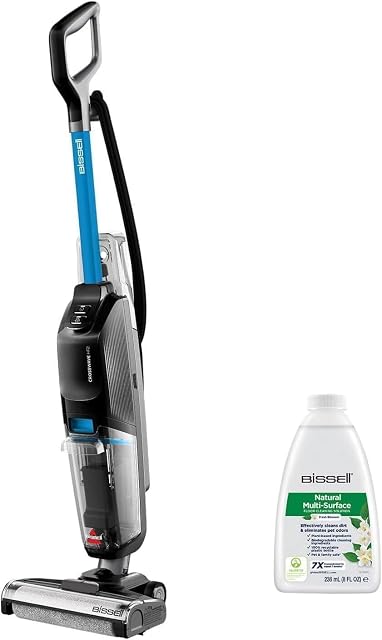
Bissell CrossWave HF2 3845N

Meant for: Large hard-floor areas cleaned in one go, and anyone who dislikes managing batteries

Where it is strongest: Corded: no runtime limit and no battery to degrade in three years

Where it is weakest: A cable to manage, and a socket to find

Read the full review →

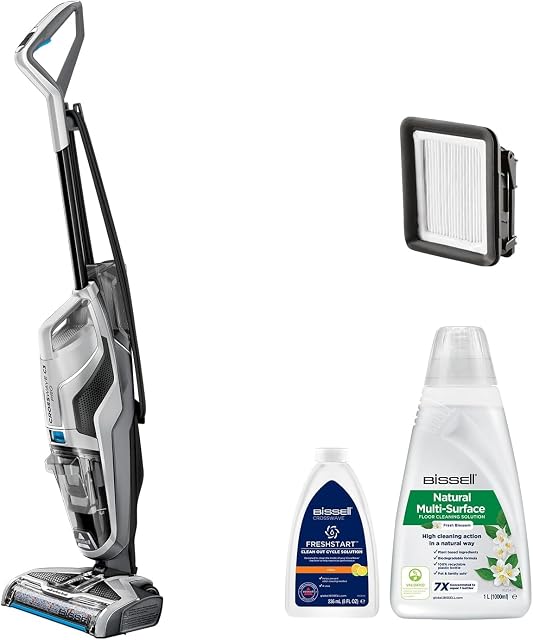
Bissell CrossWave C3 Pro 3555N

Meant for: Homes with a mix of hard floor and rugs, where one machine has to cover both

Where it is strongest: Both tank volumes published — you can work out how far one fill goes

Where it is weakest: 0.82 l is a small clean-water tank for a whole floor

Read the full review →

What you get for each level of spend

What you will need too

Lances, nozzles and detergents from the same aisle, at the price we read. Confirm the fit against the machine you choose before ordering: it turns on the coupling and the part number, which the listing gives.

The short of it

Comparisons that are worth it

Comparisons we have already run between two washers from this guide or this aisle.

What this page is based on

The washers above come from the catalog of this site. Specifications are those the manufacturer and the Amazon page publish; prices are what Keepa reported for the date below, and both move. The order follows declared specifications, stated strengths weighed against stated limits, and price. No machine here has been put to work by us, and nothing on this page pretends otherwise.

Last checked on

Prices quoted in these summaries are dated readings. The live price is shown next to each product.

The tool we use ourselves

Chosen your machine? Now buy it at the right price.

Pressure washers and floor washers swing by a hundred dollars or more across the year, and the biggest "discounts" often land at prices the same model sold for six weeks earlier. UniverTrack tracks the real price history across retailers, spots fake reductions, and alerts you when it is genuinely the moment to buy.

Real price historyBuy-now alertsAI buying assistant
Try free for 14 days →
No commitment · Cancel in one click · 5 languages