Two questions decide this, and pressure is not one of them.
Is there a socket?
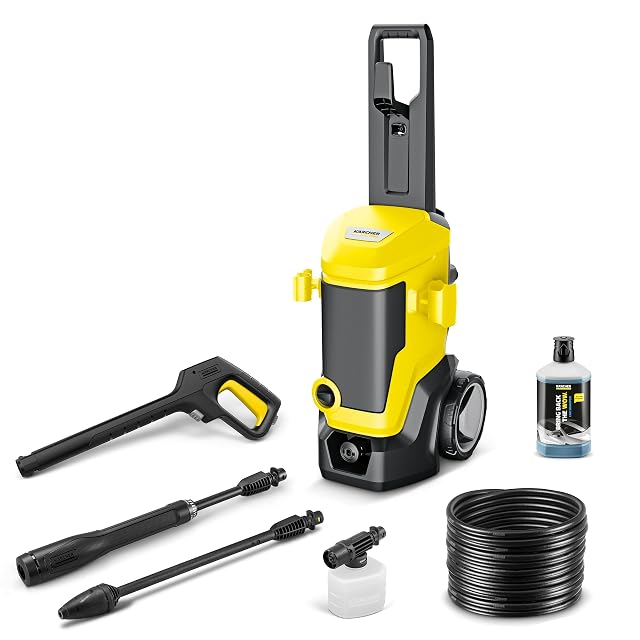
If yes, an electric machine is cheaper, quieter, starts instantly and needs no maintenance. The Kärcher K 7 WCM at 180 bar and 600 l/h cleans anything a house has.
If no — a paddock, a boatyard, a second property, a farm gate at the end of a track — petrol is the only answer, and that is the whole argument.
How long will it run?
Petrol machines tolerate hours of continuous work. Domestic electric machines are designed for intermittent use, which is why the water-cooled motor on the top Kärcher exists.
What petrol costs you
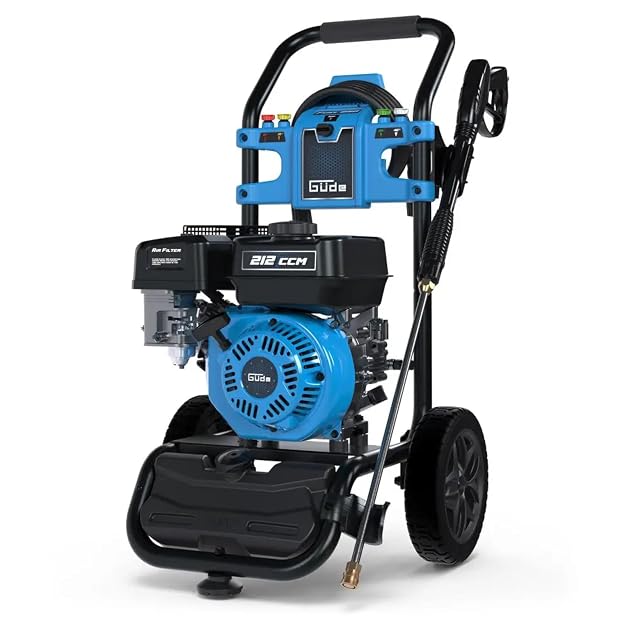
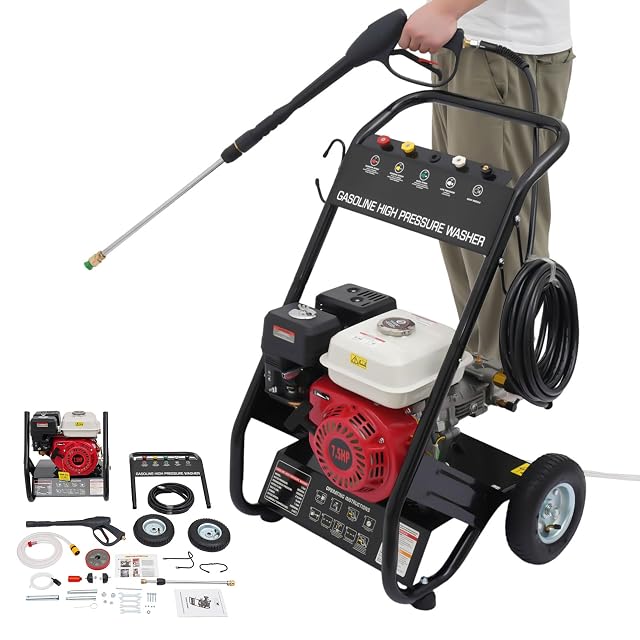
Fumes — never indoors or in a garage, the exhaust is carbon monoxide. Maintenance. Noise. And a pressure level that will damage most of what a house is made of: at 221 to 234 bar, technique stops being a preference.
The sensible middle
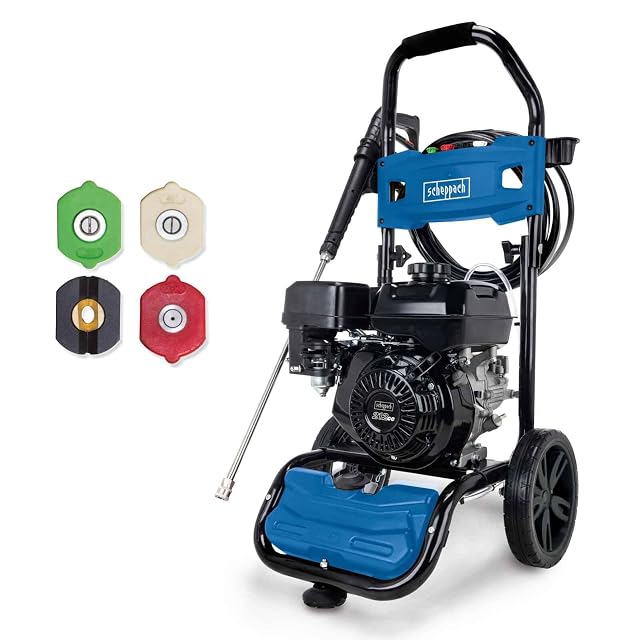
The BTGSHYNM at about 152 bar is the pressure of a good electric machine with no cable — which, for a large garden without power, is exactly the right specification.
Which washer does your job need?
You clean at home near a socket
Electric, which is quieter, lighter and needs far less maintenance.
You work away from mains power
Petrol, which is the reason the format exists.
You clean large areas regularly
Petrol machines usually offer more flow, which is what shortens large jobs.
You live in a flat or terrace
Electric, because petrol machines are loud and exhaust fumes rule out enclosed spaces entirely.
Picking by the surface
Domestic cleaning
Where electric covers almost everything and where noise and convenience decide the experience.
Remote work
Where there is no socket and petrol is the only option.
Large or commercial areas
Where the higher flow of petrol machines genuinely shortens the work.
Indoors or enclosed spaces
Where petrol is never acceptable because of exhaust fumes.
What to measure, and what to ignore
Where you will use it
The single deciding factor. Near a socket, electric wins on almost every count; away from one, petrol is the only answer.
Noise
Petrol engines are loud enough to matter to neighbors. In a terrace or a flat that is often decisive.
Maintenance
Petrol adds engine servicing, fuel storage and winter care. Electric machines have none of that.
Weight and storage
Petrol machines are heavier and need ventilated storage away from ignition sources.
Running the machine
Electric starts instantly; petrol needs starting, warming and a fuel supply, which shapes how often you bother.
Which figure for which surface
Your situation
The machine
The catch
Home with a socket
Electric
Limited by supply and cable
No mains power
Petrol
Noise, fumes and servicing
Large areas often
Petrol for flow
Weight and maintenance
Enclosed space
Electric only
Petrol fumes are dangerous
What to avoid doing
Running a petrol machine in an enclosed space
Exhaust fumes contain carbon monoxide and are lethal indoors or in a garage with the door shut. This is not a precaution to weigh up; it is absolute.
Buying petrol for domestic cleaning
The noise, weight and servicing outweigh the benefit for a car and a patio near a socket.
Leaving fuel in over winter
Stale fuel causes starting problems and gums carburettors. Draining or stabilizing is standard practice.
Using a damaged extension lead with an electric machine
Water and electricity together demand an intact lead and an appropriate residual current device.
By how hard you will work it
The householder
Electric, near a socket, for a car and a patio.
The remote worker
Petrol, because there is no alternative away from mains power.
The regular heavy user
Petrol for flow, accepting the noise, weight and servicing that come with it.
Servicing, storage and working life
Electric machines need frost protection and a clean inlet filter and little else. Petrol machines add everything an engine needs, and stale fuel left over a winter is the commonest reason a petrol machine will not start in spring.
Drain or stabilize fuel before a long period of storage.
Change engine oil and clean the air filter on the maker's schedule.
Drain water from both machine types before frost.
Keep the inlet filter clean on either type; grit destroys pumps.
Safety
Two different sets of risks.
Never run a petrol machine indoors, in a garage, or in any enclosed space.
Store petrol in an approved container, away from ignition sources.
Use a residual current device with any electric machine.
Rarely. At that level you are cleaning concrete yards, farm machinery and stonework. The same pressure removes the surface of softwood decking, drives water behind render and strips paint. Domestic machines top out around 180 bar for a reason.
What maintenance does a petrol machine need?
Oil changes on schedule, an air filter, a spark plug, and either fuel stabiliser or an empty tank over winter. That is genuinely more work than an electric machine — and it is why a petrol washer left in a shed for a year usually will not start when you want it.
Is petrol more powerful?
Petrol machines typically offer more flow, which shortens large jobs. For domestic cleaning near a socket, that advantage rarely justifies the drawbacks.
Can I use a petrol machine in my garage?
No. Exhaust fumes contain carbon monoxide and are lethal in enclosed spaces. This applies even with the door partly open.
How noisy is a petrol machine?
Loud enough to matter to neighbors and to make conversation difficult. In a terrace or a flat this alone often decides the choice.
What extra maintenance does petrol need?
Engine oil, air filter, spark plug and fuel management, on top of the pump care both types need.
Does an electric machine need an RCD?
Using an appropriate residual current device is strongly advised whenever water and mains electricity are combined outdoors.
Which is better for a car?
Electric, comfortably. Cars need moderate pressure and good technique rather than the flow that petrol machines exist to provide.
Lances, nozzles and detergents from the same aisle, at the price we read. Confirm the fit against the machine you choose before ordering: it turns on the coupling and the part number, which the listing gives.
AURORA CAR Not stated by the maker · Lances & nozzles — Rotating turbo nozzle using centrifugal force to combine impact with a spray pattern, built with a ceramic core, a rubber exterior, brass and an aluminum alloy vortex nozzle, sized at a 4.0 orifice for 4.0 gallons per minute with a 1/4 inch quick-connect plug, rated for pressure washers from 1000 to 4000 PSI · $14
POOPLE SQ-18 · Lances & nozzles — Hose wand · 3/4 in and 1/2 in connectors · brass connector, aluminum tube · jet and fan nozzles · $29
The washers above come from the catalog of this site. Specifications are those the manufacturer and the Amazon page publish; prices are what Keepa reported for the date below, and both move. The order follows declared specifications, stated strengths weighed against stated limits, and price. No machine here has been put to work by us, and nothing on this page pretends otherwise.
Last checked on
Prices quoted in these summaries are dated readings. The live price is shown next to each product.
The tool we use ourselves
Chosen your machine? Now buy it at the right price.
Pressure washers and floor washers swing by a hundred dollars or more across the year, and
the biggest "discounts" often land at prices the same model sold for six weeks earlier.
UniverTrack tracks the real price history across retailers, spots fake
reductions, and alerts you when it is genuinely the moment to buy.
Real price historyBuy-now alertsAI buying assistant