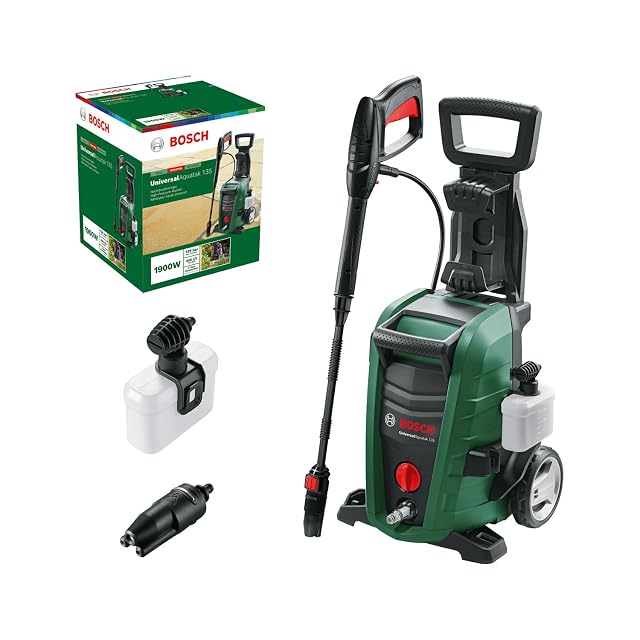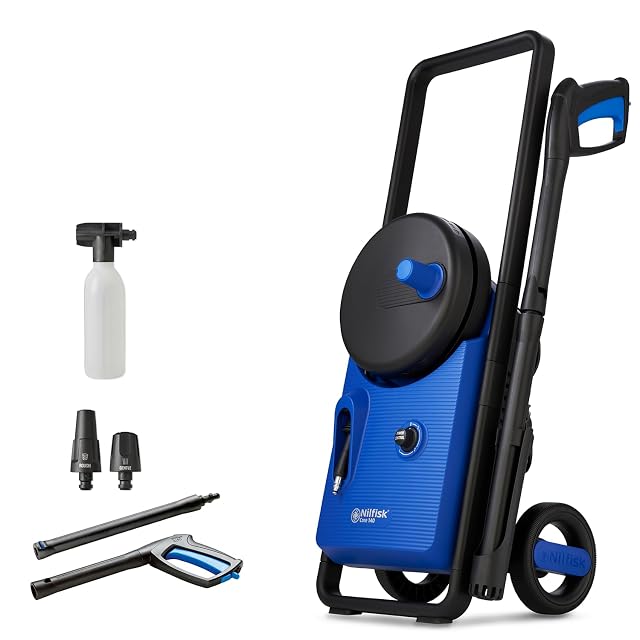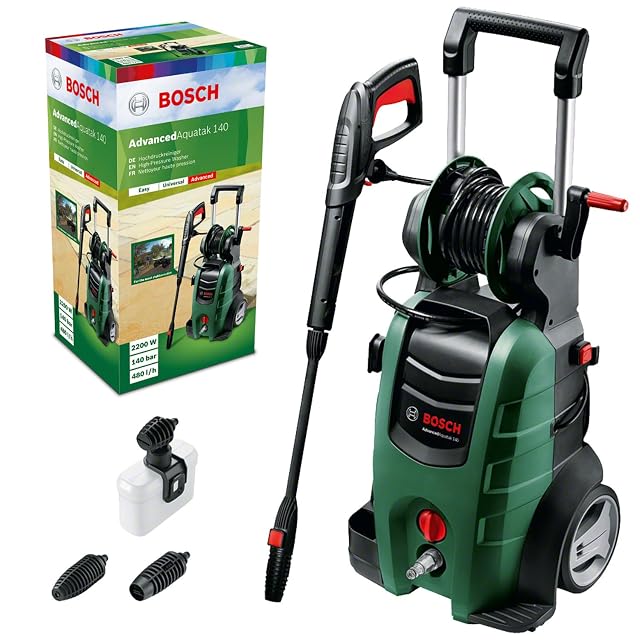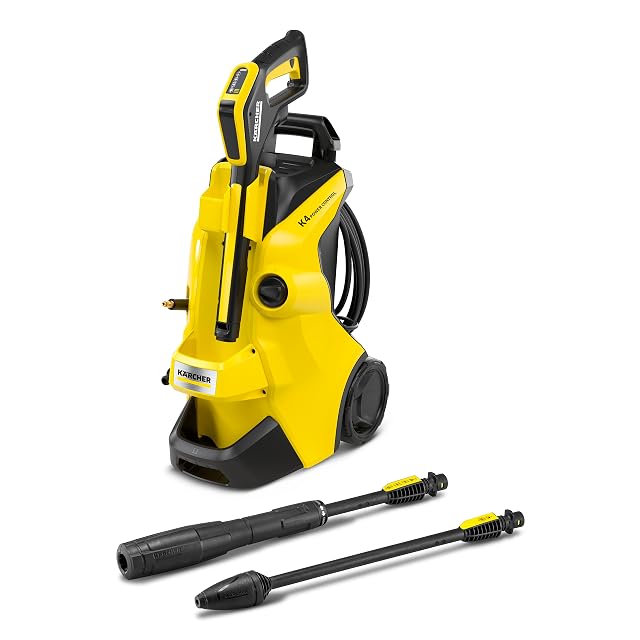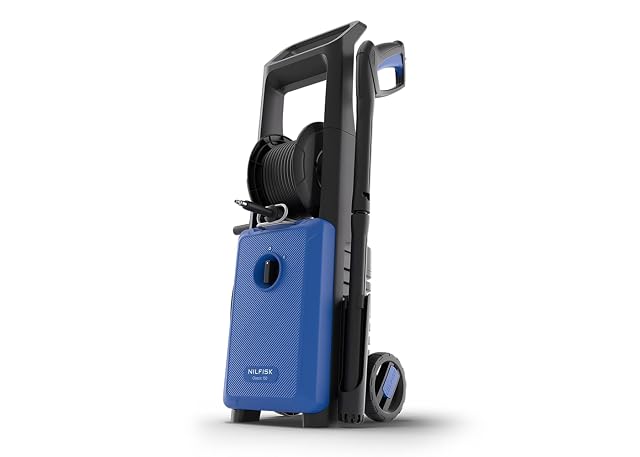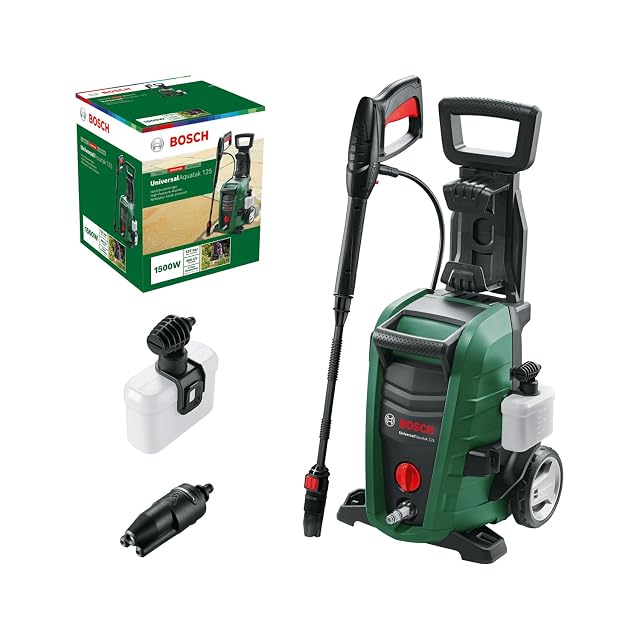
Bosch UniversalAquatak 125
125 bar · 3-in-1 nozzle · 5 m (16 ft) hose
The cheapest machine here, and the one whose single nozzle does the work of three.
Best for: A first pressure washer for a small garden, a bike and a car, where price decides
The machine everyone starts with
A pressure washer is bought on its bar rating and lived with on its water flow. Pressure lifts the dirt; liters per hour carry it away, and a machine with plenty of one and little of the other cleans slowly whatever the box says. We compare working pressure against peak pressure, flow rate, induction against universal motors, and the parts that fail first — the trigger gun and the hose.
125 bar · 3-in-1 nozzle · 5 m (16 ft) hose
The cheapest machine here, and the one whose single nozzle does the work of three.
Best for: A first pressure washer for a small garden, a bike and a car, where price decides
120 bar · 380 l/h · 25 m (82 ft)²/h · detergent suction · carry handle
A horizontal chassis that does not tip, with a detergent suction hose instead of a bottle.
Best for: A courtyard or a small terrace where the machine is carried out and put away each time
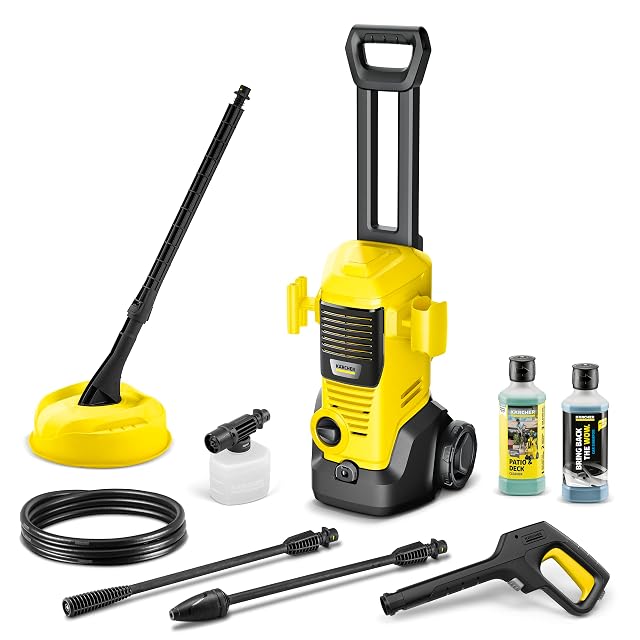
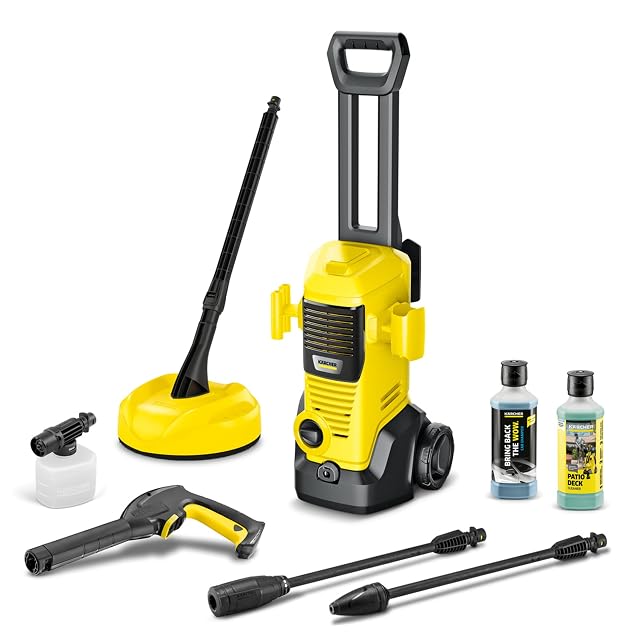
110 bar · 360 l/h · 20 m (66 ft)²/h · Foam Jet nozzle
The same pump as the Universal Edition, with a foam nozzle and car shampoo — bought for the bundle, not the bar.
Best for: Washing a car properly without pointing a jet at the paint
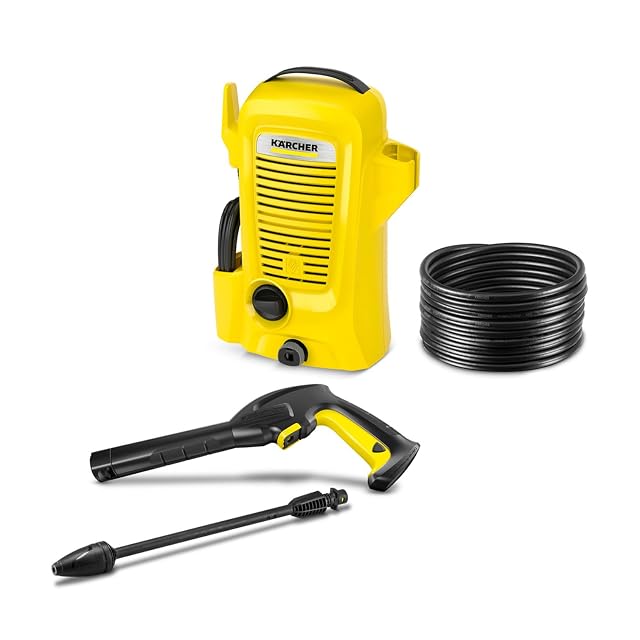
110 bar · 360 l/h · 20 m (66 ft)²/h · 3 m (10 ft) hose
The smallest Kärcher that still publishes its flow rate — and the cheapest honest way into the range.
Best for: A balcony, a bike and garden furniture — occasional work within a few meters of a tap
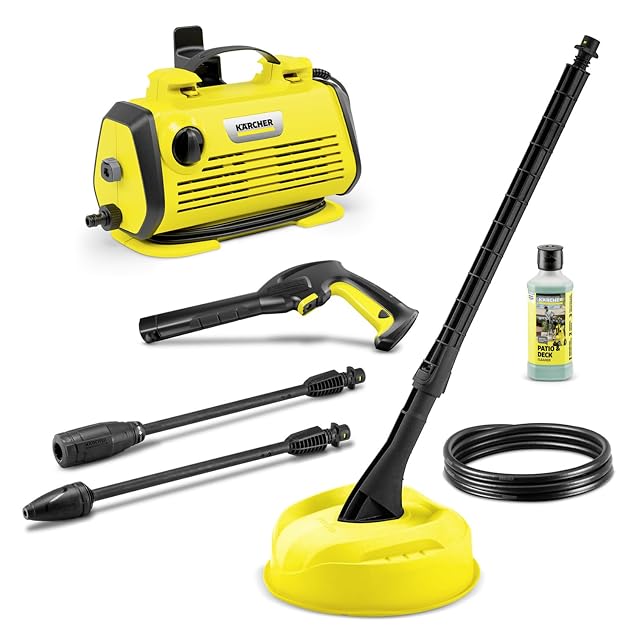
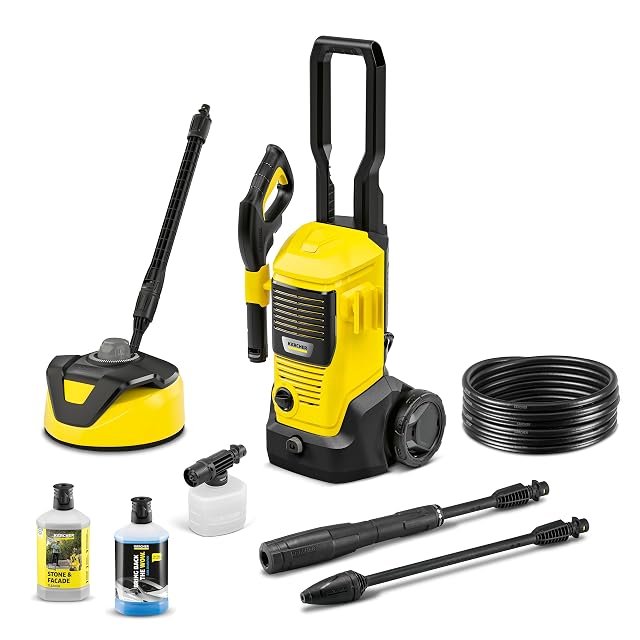
120 bar · Foam Jet nozzle · T 1 patio cleaner included
The entry Kärcher, sold as a bundle with a patio head — which is the part that decides whether the machine gets used.
Best for: A small courtyard, garden furniture and bikes, where the machine is used a few times a season
135 bar · 3-in-1 nozzle · 7 m (23 ft) hose
The 125 with ten more bar and two more meters of hose — and the second of those is the one you notice.
Best for: A drive, a terrace and a car — the general-purpose choice where the 125's hose would be the limiting factor
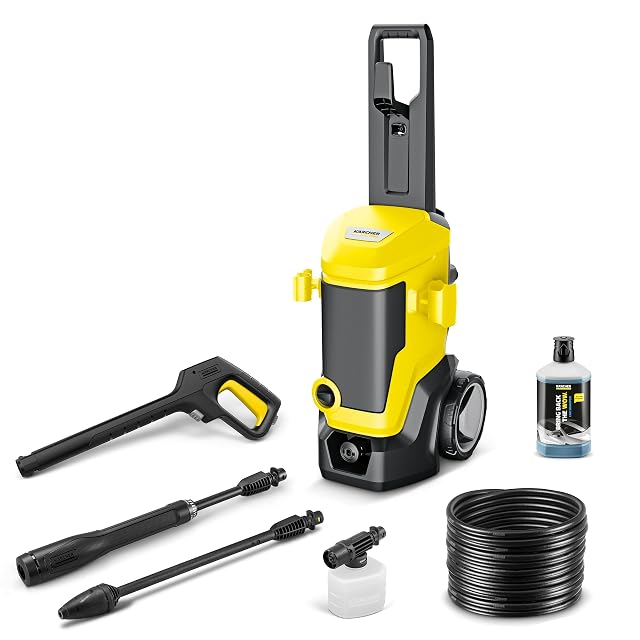
130 bar · 420 l/h · 30 m (98 ft)²/h · 5.7 kg (12.6 lb)
The first Kärcher that publishes its flow rate — and the number that tells you what the machine will actually do.
Best for: A terrace, a drive and a car, cleaned two or three times a year, where the K 3 would need too many passes
145 bar · 500 l/h · 40 m (131 ft)²/h · water filter · telescopic handle
The K 5 pump in the Classic body, with the water filter and the aluminum handle — and the full 500 l/h.
Best for: A drive and a car, cleaned two or three times a year, where flow rate sets the finishing time
145 bar · 500 l/h · 40 m (131 ft)²/h · 6.3 kg (13.9 lb)
Five hundred liters an hour and a fixed handle: the point in the range where the machine stops being carried and starts being wheeled.
Best for: A long drive, a large terrace or several vehicles — where flow rate, not pressure, sets the finishing time
140 bar · 465 l/h · 40 m (131 ft)²/h · 1,800 W
The machine in this group that publishes every figure it should — pressure, flow, area and power — and lets you turn the pressure down.
Best for: Mixed jobs — a car one weekend and a terrace the next — where being able to lower the pressure matters
140 bar · 450 l/h · 2,100 W · integrated storage
The Bosch that finally publishes a flow rate — 450 l/h, which is what the UniversalAquatak machines never gave you.
Best for: A drive, a terrace and vehicles, for someone already inside the Bosch accessory system
Pressure dial on the lance · app support · 6 markets
The pressure setting moved to the lance, where your hand already is — and an app you can ignore.
Best for: A household cleaning several different surfaces in one session — a car, then render, then a drive
≈ $490
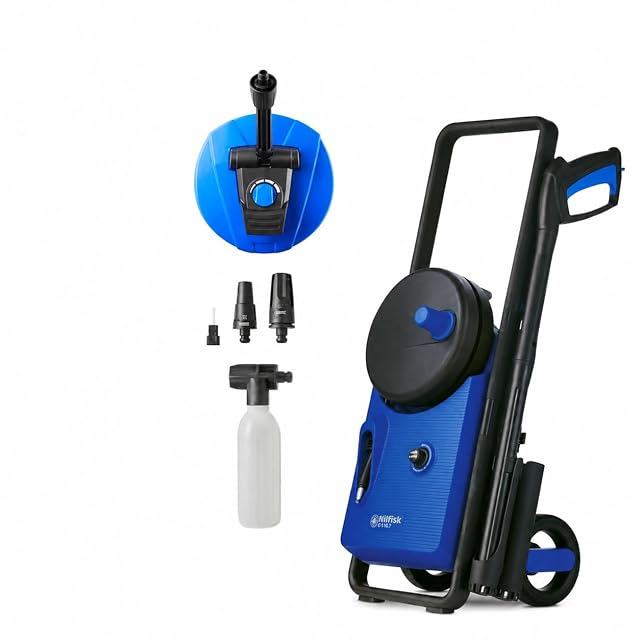
150 bar · 2,200 W · coarse filter · plug-and-spray
A hundred and fifty bar from Nilfisk with almost nothing else specified — the numbers are the argument.
Best for: Mid-sized terraces, garden furniture and vehicles, where the work is regular but not daily
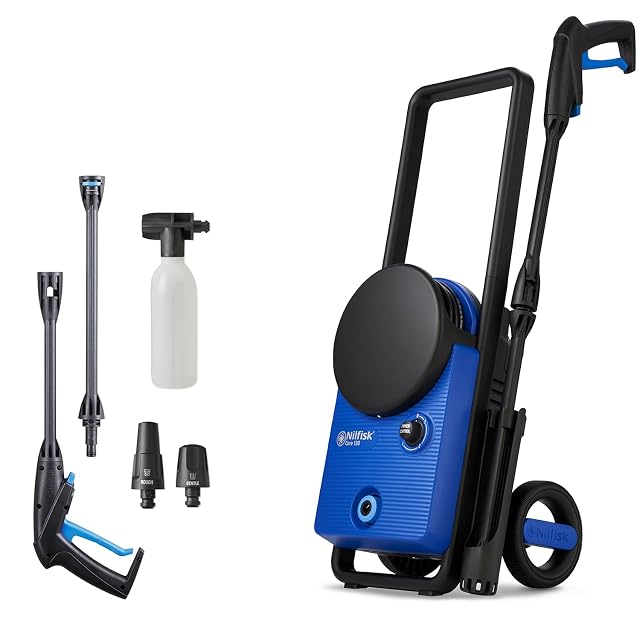
130 bar · PowerControl dial · multi-surface nozzles
The adjustable-pressure Nilfisk one step below the Core 140 — the dial, at a lower price.
Best for: A first machine for someone who will clean a car as well as a drive
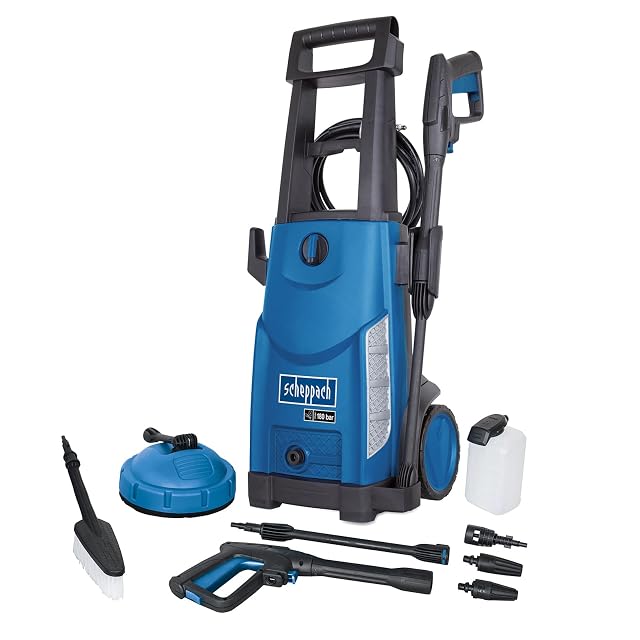
180 bar max · 2,400 W · 5 m (16 ft) hose · Quick-Connect
A hundred and eighty bar for the price of an entry machine — and the compromises are in the hose and the flow figure.
Best for: Concrete, stone and a drive, where the pressure is usable and the short hose is tolerable
180 bar · 600 l/h · 60 m (197 ft)²/h · water-cooled motor
The top of the domestic range, and the only one here whose motor is water-cooled — which is a statement about running time, not power.
Best for: Large areas cleaned in one session — long drives, farmyards, several vehicles — where the machine runs continuously rather than in bursts
150 bar · 2,000 W · metal pump · 10 m (33 ft) hose
A metal pump head and ten meters of hose on a reel — the two things that separate a machine you keep from one you replace.
Best for: Regular, long sessions on hard surfaces where the machine will be used for years rather than seasons
130 bar (13 MPa) · self-supporting frame · dirt killer nozzle
A trade machine on a domestic page: less pressure than a mid-range Kärcher, and built to a completely different brief.
Best for: Daily or near-daily use — a workshop, a stable yard, a small business — where downtime costs more than the machine
135 bar working pressure · aluminum pump head · brushless motor
A brushless motor and an aluminum pump head, at a price that only makes sense if the machine runs often.
Best for: Someone who already runs Stihl equipment and cleans machinery, vehicles or a yard every week
Bodywork, door seals and light units do not take full power. A more measured machine saves you holding back on every pass, and takes the risk of lifting a chip of paint away with it.
What carries away the loosened dirt is the volume of water, not the pressure. At equal pressure, the machine that delivers more finishes a patio in half the passes.
The length of the hose decides what you can reach without moving the machine — and a machine you move constantly ends up lying in a puddle.
Between 110 and 140 bar covers the essentials: car, garden furniture, patio, low façade. Beyond that, what you mainly gain is the speed at which you can damage soft wood or a tile joint. Pressure adjustment is worth more than thirty extra bar.
It is measured with the trigger closed and the water still — a situation in which nothing is being cleaned. As soon as water leaves a nozzle, the real pressure is lower. Some brands publish both figures; most publish only the flattering one.
Not more, but as much, and it is almost always ignored. Pressure lifts the dirt off the surface; flow washes it away. A high-flow machine finishes a large area markedly faster at comparable pressure.
Induction runs cooler, tolerates long sessions and can be repaired; universal is lighter, cheaper and amply enough for a few hours a year. The first earns its place from regular use onwards, not before.
Yes, provided you reduce the pressure, keep about thirty centimeters back and avoid seals, light units and areas already chipped. A rotary nozzle on bodywork is the fastest way to mark it.
Most domestic models require a pressurized supply and do not self-prime. Those that allow it say so explicitly and require a suction kit with a strainer; skipping that runs the pump dry.
The trigger gun and the hose, far ahead of the pump. Check that they can be replaced separately and that the part still exists: that is what separates a repairable machine from a disposable one.
Drain it completely and store it out of frost. Water left in the pump freezes, expands and cracks the body — the most common failure, and it is not covered.
A pressure washer is bought on three figures, and the most visible one is the least useful. Look at the flow rate alongside the pressure, check that the pressure adjusts, and make sure the trigger gun and hose can be replaced. The rest — number of nozzles, hose reel, chassis — decides comfort, not the result.
A figure has to be published by four machines in five to earn its column. Below that, we would be comparing empty cells.
| Model | Price | Maximum pressure |
|---|---|---|
| Kärcher K 4 Power Control | $490 | — |
| Bosch AdvancedAquatak 140 | — | 140 bar |
| Bosch UniversalAquatak 125 | — | 125 bar |
| Bosch UniversalAquatak 135 | — | 135 bar |
| Kärcher K 2 Premium FJ | — | 110 bar |
| Kärcher K 2 Universal Edition | — | 110 bar |
| Kärcher K 3 Horizontal Plus Home | — | 120 bar |
| Kärcher K 3 FJ Home | — | 120 bar |
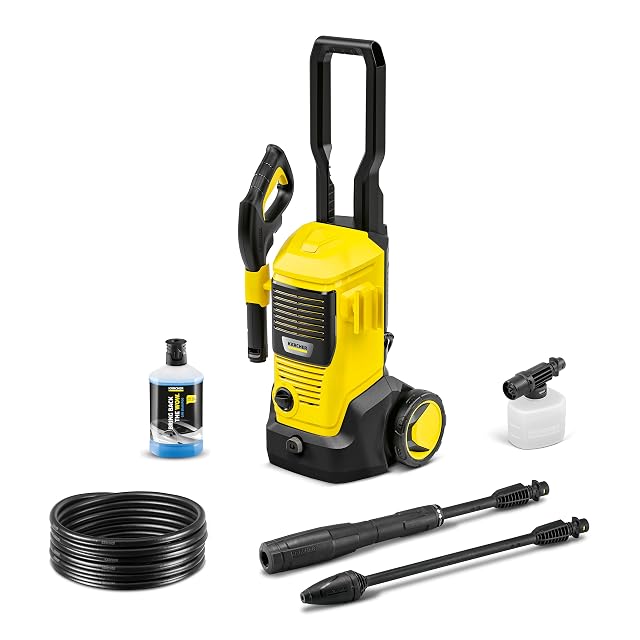
| Kärcher K 4 FJ Home | — | 130 bar |
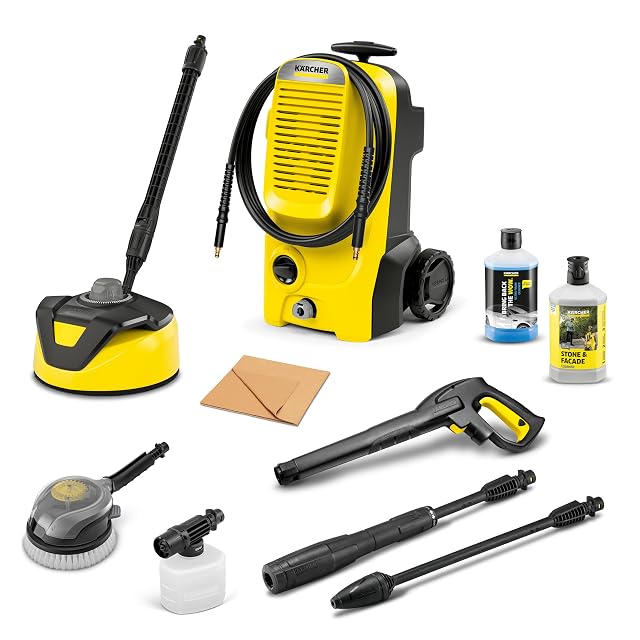
| Kärcher K 5 Classic Car & Home | — | 145 bar |
| Kärcher K 7 WCM FJ | — | 180 bar |
| Kärcher K 5 FJ | — | 145 bar |
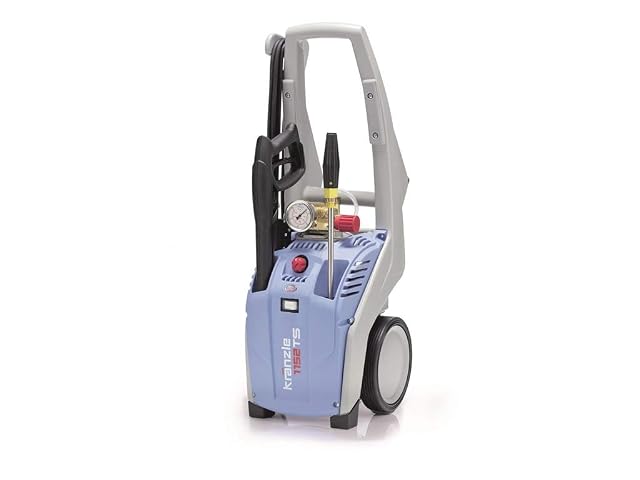
| Kränzle K 1152 TS | — | — |
| Nilfisk Classic 150 Bar | — | 150 bar |
| Nilfisk Core 130-6 PowerControl | — | 130 bar |
| Nilfisk Core 140-6 PowerControl | — | 140 bar |
| Nilfisk Core 150-10 PowerControl PA EU | — | 150 bar |
| Scheppach HCE2600 | — | 180 bar |
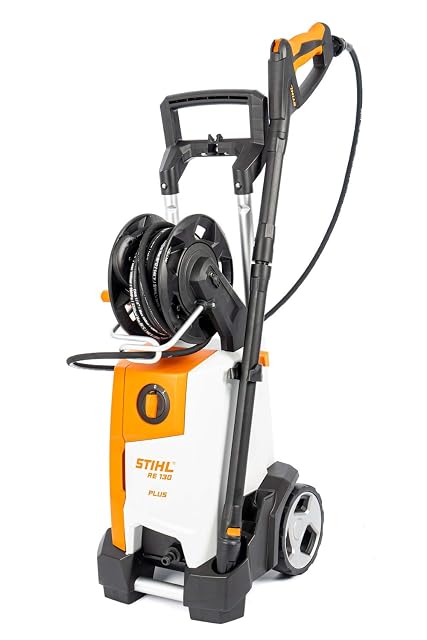
| Stihl RE 130 PLUS | — | — |
Specifications: manufacturer sheets for cleaning machines and the matching Amazon product pages. Prices and availability: Keepa. Every figure in this table names its source.
Most recent revision in this category: August 16, 2026.
Prices quoted in these summaries are dated readings. The live price is shown next to each product.