Skip to content

Choosing a spray extraction cleaner

The number that matters on these machines is not how much water goes in. It is how much comes back out, and how fast the fabric dries afterwards.

Spray extraction is a two-stage process, and the second stage is the one that decides the result.

Recovery, not spray

Every machine here sprays adequately. What separates them is how much of that water comes back into the dirty tank rather than staying in the pile. A machine that leaves the fabric soaked has not cleaned it — it has diluted the dirt and driven it deeper.

Hand tool or floor tool

Most household use is upholstery, car seats, stairs and spot work — all hand-tool jobs. A large floor head is dead weight if you have no fitted carpet, and a machine sold as a compact spot cleaner may be the right machine.

Detergent is not optional here

These machines need a low-foam extraction solution. Household carpet shampoo foams in the recovery tank, and foam reaching the motor is a repair rather than an inconvenience. Budget for the correct product before you budget for accessories.

What they will not do

They will not rescue a carpet that has been walked on for fifteen years, and they will not remove a stain that has already dyed the fiber. What they do well is periodic maintenance, pets, and the accident that has just happened.

Which washer does your job need?

You have carpets and pets
A carpet cleaner is the machine that actually extracts, which is what a vacuum cannot do.
You have occasional spills
A compact spot cleaner may be enough, and it is far easier to store.
You clean whole rooms
Tank capacity and how fast the carpet dries become the deciding factors.
You clean once a year
Hiring is a legitimate answer, and often the sensible one.

Picking by the surface

Whole-room cleaning

Where a full-size machine and good extraction shorten the drying time that decides the whole job.

Spot cleaning

Where a compact machine kept to hand deals with a spill before it becomes a stain.

Pet accidents

Where extraction and an appropriate product together do what blotting cannot.

Upholstery

Where a hand tool and a gentle approach matter, and where over-wetting is the real risk.

What to measure, and what to ignore

Extraction power
How much water it pulls back out. This decides drying time, and drying time decides whether a carpet smells afterwards.
Tank size and separation
Clean and dirty tanks and how easy they are to fill and empty. On a whole room you will do this several times.
Brush action
Powered brushes agitate the fibers and lift more. They also demand more care on delicate carpet.
Hand tools
For stairs, upholstery and edges. A machine without them cannot reach where accidents usually happen.
Weight and storage
These machines are bulky. If you clean once a year, hiring one avoids storing one.

Which figure for which surface

Your situationThe machineThe deciding factor
Whole rooms, petsA full-size machineExtraction and drying
Occasional spillsA compact spot cleanerKept to hand
Stairs and upholsteryOne with hand toolsReach
Once a yearHiringStorage

What to avoid doing

Over-wetting the carpet
Water that reaches the backing takes days to dry and can smell or shrink the carpet. Extraction passes matter more than wetting passes.
Skipping the vacuum first
Wetting dry soil turns it into mud in the fibers. Vacuuming thoroughly first is part of the process, not an optional extra.
Using the wrong product
Excess foam damages machines and residue attracts dirt. Products intended for the machine exist for both reasons.
Walking on it too soon
A damp carpet picks up dirt from shoes immediately. Keeping off it until dry is what preserves the result.

By how hard you will work it

The pet household
Needs real extraction and appropriate products, used often enough to justify owning a machine.
The family with spills
Gets more use from a compact spot cleaner kept accessible than from a big machine in a loft.
The annual cleaner
Is usually better off hiring, since storage and infrequent use argue against buying.

Servicing, storage and working life

Carpet cleaners smell if the dirty tank and the hoses are not rinsed after use, and a machine that smells is a machine that will not be used again. Residue in the lines also dries and blocks the spray.

  • Rinse the dirty tank and run clean water through the system after every use.
  • Dry the tanks before storing rather than closing them damp.
  • Clean the brush of hair and fibers after each session.
  • Check the spray jets for blockages when coverage becomes uneven.

Safety

Water, electricity and chemicals.

  • Keep the machine and its cable clear of the wet area you are working on.
  • Follow the product label; some concentrates irritate skin and eyes.
  • Ventilate the room so the carpet dries and to disperse any vapor.
  • Keep children and pets off the carpet until it is fully dry.

The picks, and what decided them

The questions we hear

How is this different from a floor washer?

A floor washer wipes a hard surface with a damp roller. Spray extraction pushes cleaning solution into a fabric under pressure and vacuums it back out with the dirt. On a sofa or a car seat, only the second one reaches what is actually in the pile.

Why does drying time matter so much?

Because a carpet that stays damp for two days smells, and the smell is what people blame on the machine. Recovery suction is what shortens drying, so a machine with strong suction and a small tank often beats one with the reverse.

How wet should the carpet get?

As little as possible. Extraction passes matter more than wetting passes, and water reaching the backing takes days to dry and can smell.

Should I vacuum first?

Always. Wetting dry soil turns it into mud in the fibers, and thorough vacuuming is part of the process rather than an optional step.

How long does the carpet take to dry?

It depends far more on how much water was left in it than on the machine. Good extraction and ventilation are what shorten it.

Can I use any cleaning solution?

Only what the machine allows. Excess foam damages machines and residue attracts dirt back to the carpet faster than before.

Buy or hire?

For pets and regular use, buying pays. For an annual clean, hiring avoids storing a bulky machine you rarely need.

Why does my carpet smell after cleaning?

Usually it was over-wetted and dried too slowly. Better extraction and ventilation prevent it, and hot rooms are not the answer.

Each washer, and the job behind it

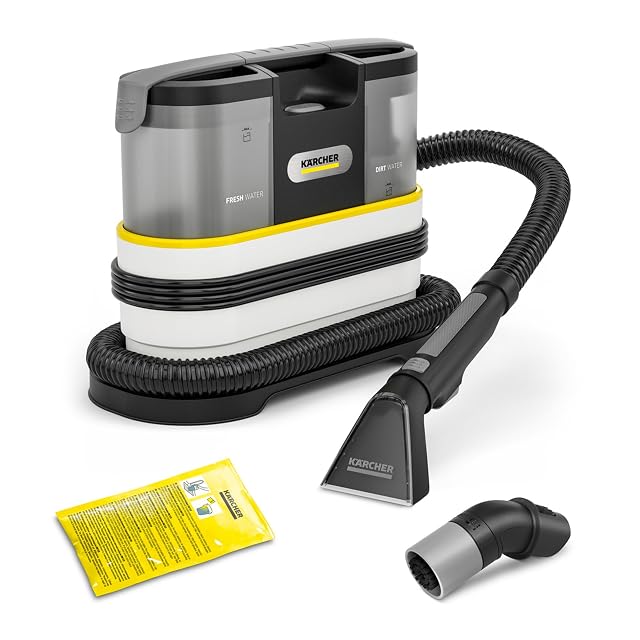
Kärcher SE 2 Spot Care

Meant for: Households with children, pets or a car interior that sees food
Where it is strongest: 6.3 m (21 ft) of reach: a car can be done from a socket in the garage

Where it is weakest: Not a whole-carpet machine: the tank and the head are sized for spots

Read the full review →

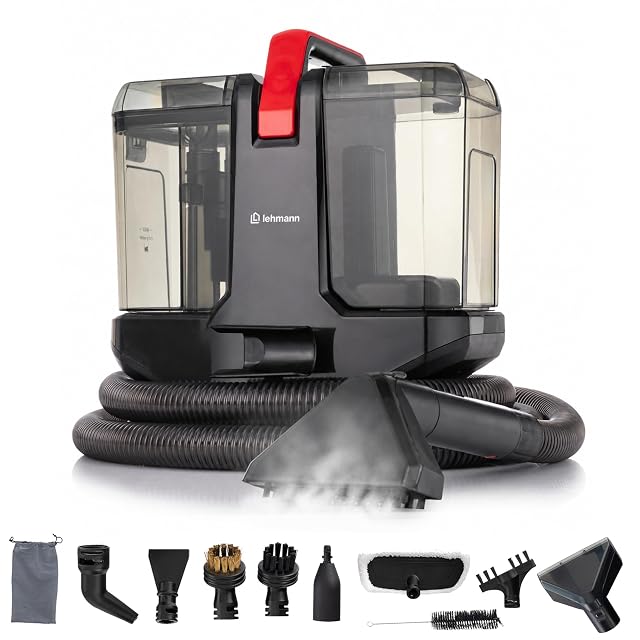
Lehmann SteamWash 1800

Meant for: Households with pets and mixed surfaces — fabric, mattresses, tiles and grout

Where it is strongest: Publishes both temperatures — 60 °C (140 °F) water and 116 °C (241 °F) steam — rather than saying 'hot'

Where it is weakest: Four modes means four techniques to learn, and the wrong one soaks a sofa

Read the full review →

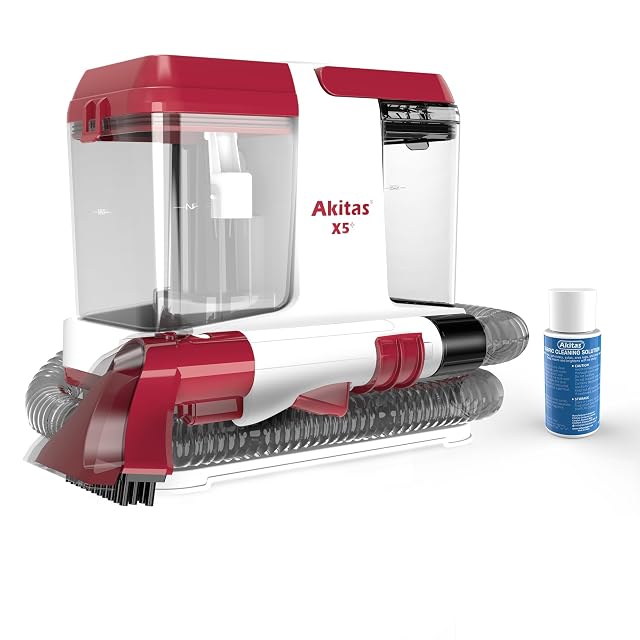
Akitas X5

Meant for: A first spot-cleaning machine for accidents on a sofa or a car seat

Where it is strongest: Two separate tanks at the lowest price in this family

Where it is weakest: Verified absent from the US and UK stores

Read the full review →

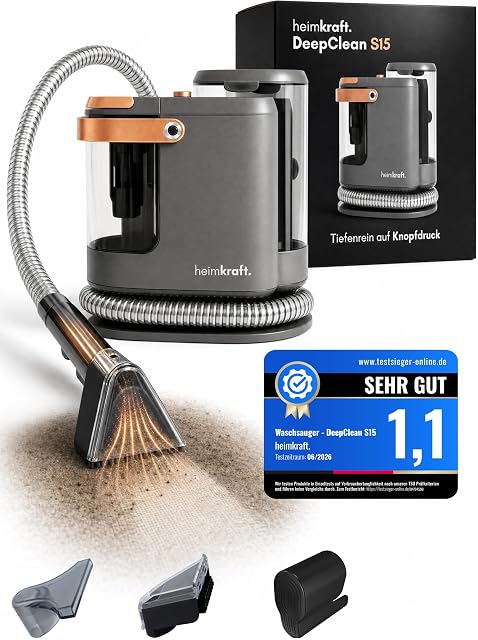
Heimkraft Spray Extractor

Meant for: Quick response to spills on sofas and car seats, where control matters more than power

Where it is strongest: Spray on demand rather than continuous — the single best defense against soaking a sofa

Where it is weakest: 500 W is modest against the 1,400 W machines here

Read the full review →

Lubluelu 1400 W Extractor

Meant for: Sofas, mattresses and car seats in Germany, Italy and Spain — the markets where it is actually sold

Where it is strongest: 20 kPa published — the recovery figure that decides how dry the fabric is left

Where it is weakest: Verified absent from the US, UK and French stores

Read the full review →

Mamowla Upholstery Cleaner

Meant for: Occasional spills in a flat, where the machine is bought for one specific accident

Where it is strongest: Publishes its suction — 12 kPa — at the cheapest price in this family

Where it is weakest: 1.4 m (5 ft) of hose: the machine sits on the sofa cushion beside you

Read the full review →

What you get for each level of spend

Entry level

$100 – $130

2 models

Mid range

$150 – $170

3 models

Upper range

$300 – $2 400

2 models

What you will need too

Lances, nozzles and detergents from the same aisle, at the price we read. Confirm the fit against the machine you choose before ordering: it turns on the coupling and the part number, which the listing gives.

The short of it

What this page is based on

The washers above come from the catalog of this site. Specifications are those the manufacturer and the Amazon page publish; prices are what Keepa reported for the date below, and both move. The order follows declared specifications, stated strengths weighed against stated limits, and price. No machine here has been put to work by us, and nothing on this page pretends otherwise.

Last checked on

Prices quoted in these summaries are dated readings. The live price is shown next to each product.

The tool we use ourselves

Chosen your machine? Now buy it at the right price.

Pressure washers and floor washers swing by a hundred dollars or more across the year, and the biggest "discounts" often land at prices the same model sold for six weeks earlier. UniverTrack tracks the real price history across retailers, spots fake reductions, and alerts you when it is genuinely the moment to buy.

Real price historyBuy-now alertsAI buying assistant
Try free for 14 days →
No commitment · Cancel in one click · 5 languages