Skip to content

Choosing an ash vacuum

Ash is fine, abrasive and warmer for longer than it looks. That is why this family exists, and why a household vacuum must never be used for it.

Four things distinguish a real ash vacuum.

The drum

Metal, always. A plastic drum offers nothing if something in the ash is still alive, and ash is abrasive enough to score plastic over time.

The hose end

The part closest to the heat. Aluminum tubes and metal hoses — as on the Einhell TC-AV 2032 DW — survive contact with a warm grate; PVC softens. The trade-off is flexibility.

The filter arrangement

Ash blinds a filter in minutes. Look for a coarse pre-filter ahead of the fine element, as on the Kärcher AD 4 Premium, and a cleaning mechanism you can operate without opening the drum.

The rule that outranks every specification

Cold ash, twenty-four hours. Flame-retardant materials and antistatic handles reduce the consequences of a mistake. They do not license one.

Which washer does your job need?

You have a wood burner or open fire
A dedicated ash vacuum, because ordinary vacuums are a fire risk with ash.
The ash may still be warm
Wait. Even an ash vacuum has limits, and embers hide in ash for far longer than people expect.
You clean a pellet stove
Ash volume is lower but frequency is higher, which changes what suits.
You already have a workshop vacuum
It is not the right tool; the metal container and filter of an ash vacuum are the whole point.

Picking by the surface

Wood burners and open fires

The main case. Cold ash, removed without the cloud that a shovel creates.

Pellet stoves

Where cleaning is more frequent and where fine ash reaches into the mechanism.

Barbecues and pizza ovens

Where the same rule applies: it must be completely cold.

Fine ash generally

Where the filter is what determines whether the ash stays in the machine or comes back into the room.

What to measure, and what to ignore

A metal container
The defining feature. Plastic is not appropriate for ash, and this is the reason a dedicated machine exists.
The filter
Ash is extremely fine. A poor filter blows it straight back into the room, which defeats the purpose entirely.
The hose material
A metal or heat-resistant hose section near the nozzle. Ordinary plastic hose is the vulnerable part.
Capacity against handling
A full ash container is heavy and awkward. Bigger is not automatically better here.
Whether it is self-powered
Some are attachments for an existing vacuum. That works, but the filter and container requirements are the same.

Which figure for which surface

Your fireThe machineThe rule
Wood burnerA dedicated ash vacuumCompletely cold ash only
Pellet stoveFine filtrationFrequent, fine ash
BarbecueThe same machineCompletely cold, no exceptions
Any fireNever a household vacuumFire risk

What to avoid doing

Vacuuming ash that is not completely cold
Embers survive in ash for far longer than people expect, and a hidden ember in a container of ash is how fires start.
Using a household or workshop vacuum
Plastic containers, unsuitable filters and paper bags make an ordinary vacuum a genuine fire risk with ash.
Neglecting the filter
Ash clogs filters quickly, and a clogged filter both loses suction and pushes ash back into the room.
Emptying it indoors
Ash rises in a cloud. Emptying outdoors, into a metal container, is the way to do it.

By how hard you will work it

The wood burner owner
Cleans a cold grate weekly and needs a metal container and a good filter.
The pellet stove owner
Cleans more often, with finer ash, and needs filtration above capacity.
The occasional user
Cleans a fireplace a few times a year and still should not use a household vacuum for it.

Servicing, storage and working life

Ash clogs filters faster than almost anything else, and a machine that has lost suction almost always needs its filter cleaned rather than repairing. Ash is also mildly corrosive when damp, so a container left full is a container that will pit.

  • Clean the filter after every use; ash blinds it quickly.
  • Empty the container rather than storing it full.
  • Check the hose and seals for heat damage periodically.
  • Replace the filter when cleaning no longer restores suction.

Safety

This is the most safety-critical guide in this category.

  • Only ever vacuum ash that is completely cold, which takes far longer than it appears.
  • Empty outdoors into a metal container with a lid, kept away from anything combustible.
  • Never use a household or workshop vacuum for ash.
  • Store the emptied container away from buildings for a day if there is any doubt.

The picks, and what decided them

The questions we hear

How cold does the ash have to be?

Cold through, which in practice means at least twenty-four hours after the last burn. Embers survive under a grey surface far longer than they look as though they should, and a drum full of ash with air rushing through it is exactly the environment an ember needs. One manufacturer here — Lehmann — publishes an actual limit: 40 °C (104 °F).

Can I use a pre-separator with my household vacuum?

Many cheap 'ash vacuums' are exactly that: a drum and a filter with no motor, driven by your own vacuum. They work, and they put your everyday machine one filter away from ash. A standalone unit has a motor sized for the material — check before ordering, because the listings look alike.

How cold must the ash be?

Completely cold, which takes far longer than a grate looks. Embers survive buried in ash for a surprisingly long time, and that is how fires start.

Can I use my normal vacuum?

No. Plastic containers, paper bags and unsuitable filters make an ordinary vacuum a real fire risk with ash.

Why has my ash vacuum lost suction?

Almost always a blinded filter. Ash clogs filters faster than nearly anything else, and cleaning it after every use is routine.

Where should I empty it?

Outdoors, into a metal container with a lid, away from anything combustible. Emptying indoors raises a cloud of fine ash.

Are ash vacuum attachments any good?

They can work, provided the container is metal and the filtration is suitable. The requirements are the same whether it is a machine or an attachment.

Can I use it on a barbecue?

Yes, once it is completely cold. The same rule applies as to any fire, without exception.

Each washer, and the job behind it

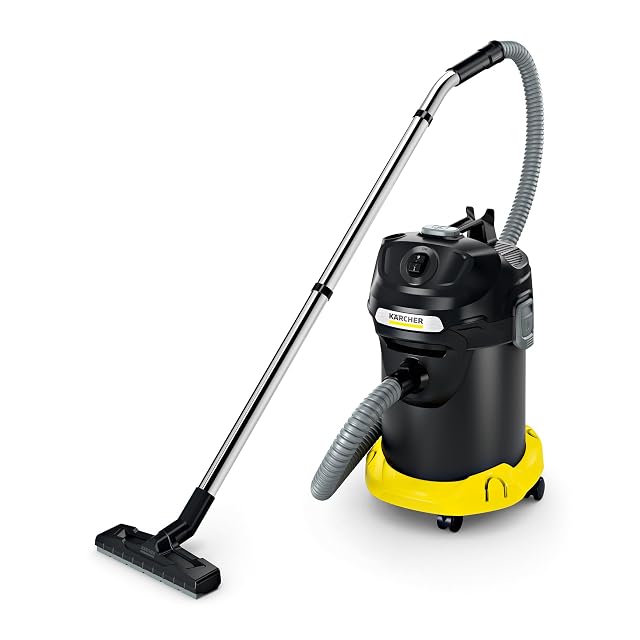
Kärcher AD 4 Premium

Meant for: A household that empties a wood burner or pellet stove every week through the winter
Where it is strongest: Flame-retardant construction and an antistatic handle — specifications aimed at the actual risk

Where it is weakest: Costs more than a general workshop vacuum of the same size

Read the full review →

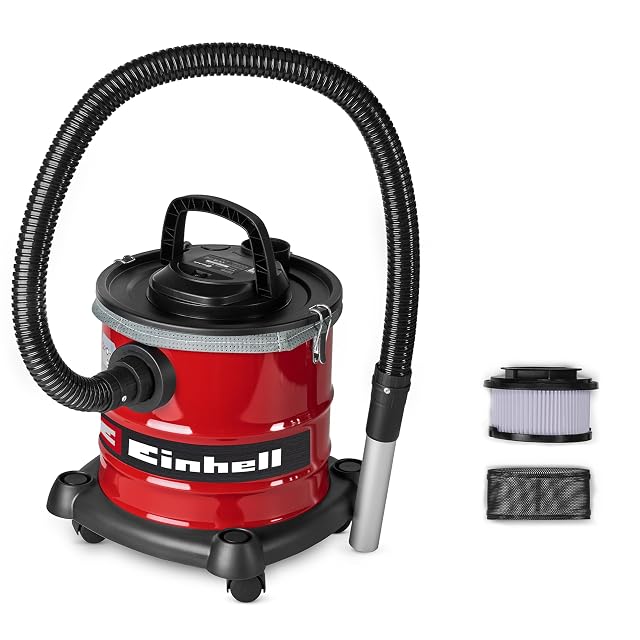
Einhell TC-AV 2032 DW

Meant for: Regular winter use on a wood burner, where the machine is emptied often and the hose sees warm surfaces

Where it is strongest: Aluminum hose rather than PVC — the part nearest the ash is metal

Where it is weakest: A metal hose is stiffer and less convenient than a flexible one

Read the full review →

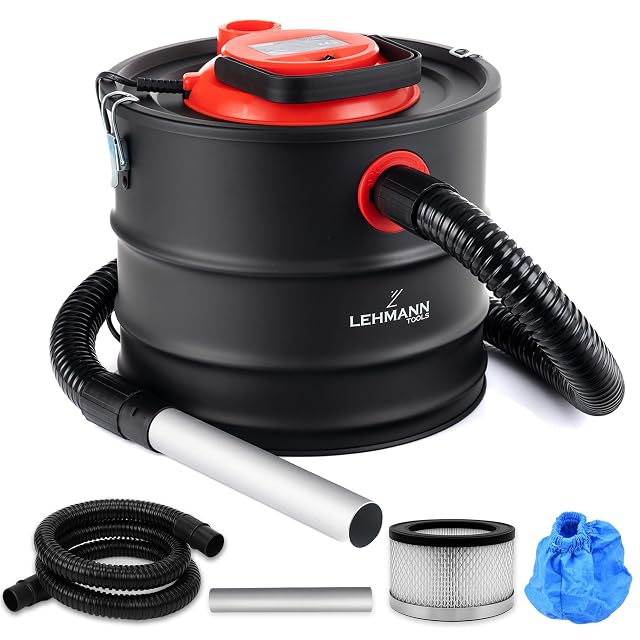
Lehmann Ash Vacuum 15 L

Meant for: A single stove or fireplace, cleaned often, where a small machine that lives beside the hearth is the point

Where it is strongest: A published temperature limit — 40 °C (104 °F) — instead of a vague 'cold ash' instruction

Where it is weakest: Fifteen liters is the smallest drum in this group

Read the full review →

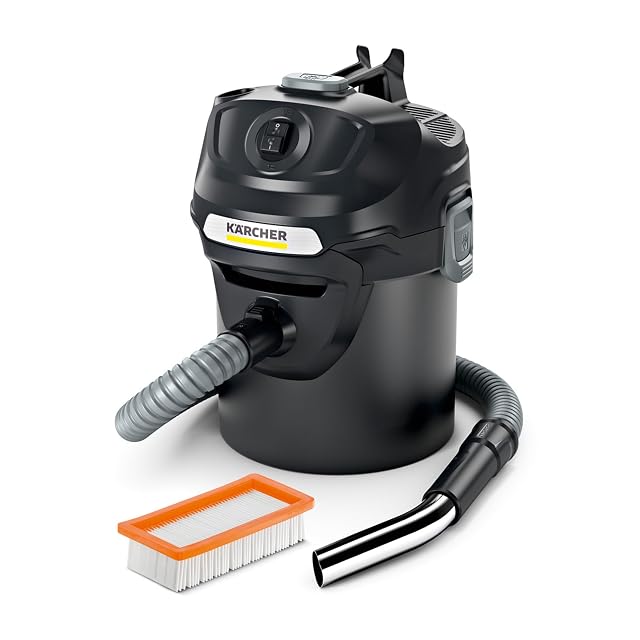
Kärcher AD 2

Meant for: One fireplace or pellet stove, cleaned regularly, where the vacuum lives beside the hearth

Where it is strongest: Metal container — the specification that separates an ash vacuum from a workshop one

Where it is weakest: Fourteen liters fills quickly on a wood-burning household

Read the full review →

What you get for each level of spend

What you will need too

Lances, nozzles and detergents from the same aisle, at the price we read. Confirm the fit against the machine you choose before ordering: it turns on the coupling and the part number, which the listing gives.

The short of it

Comparisons that are worth it

Comparisons we have already run between two washers from this guide or this aisle.

What this page is based on

The washers above come from the catalog of this site. Specifications are those the manufacturer and the Amazon page publish; prices are what Keepa reported for the date below, and both move. The order follows declared specifications, stated strengths weighed against stated limits, and price. No machine here has been put to work by us, and nothing on this page pretends otherwise.

Last checked on

Prices quoted in these summaries are dated readings. The live price is shown next to each product.

The tool we use ourselves

Chosen your machine? Now buy it at the right price.

Pressure washers and floor washers swing by a hundred dollars or more across the year, and the biggest "discounts" often land at prices the same model sold for six weeks earlier. UniverTrack tracks the real price history across retailers, spots fake reductions, and alerts you when it is genuinely the moment to buy.

Real price historyBuy-now alertsAI buying assistant
Try free for 14 days →
No commitment · Cancel in one click · 5 languages