Skip to content

A terrace kit that will not mark the stone

Most damaged terraces were cleaned with the right machine and the wrong nozzle. Here is the kit, in the order it matters.

Three items, and one to leave in the box.

1. The machine, chosen on flow

For a terrace of any size, flow rate decides the finishing time. The Kärcher K 5 publishes 500 l/h; the K 7 WCM 600 l/h with a water-cooled motor for long sessions. Pressure above about 150 bar buys nothing here except the ability to damage stone faster.

2. The surface cleaner

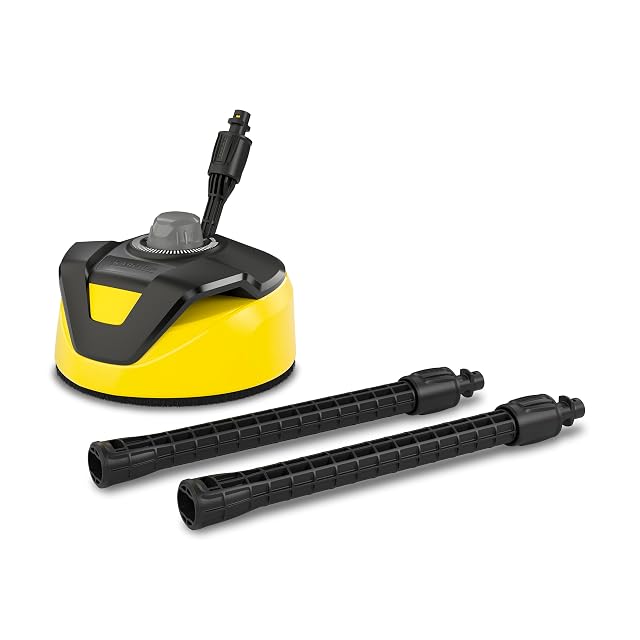
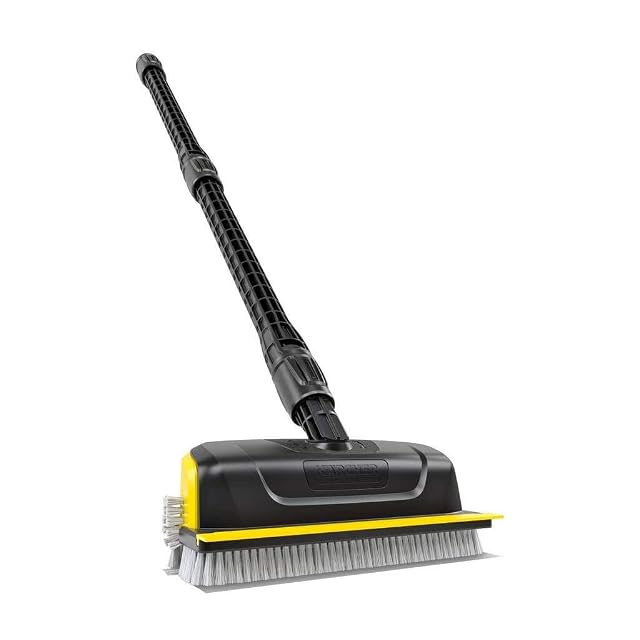
The single most important purchase. It holds the jets at a fixed height, keeps the spray off the wall, and removes the striping a hand-held lance leaves. The T-Racer T 5 adds adjustable jet height, which is what protects soft stone and timber. The PS 30 Plus handles the steps and edges the wide head cannot reach.

3. A stone treatment

Applied low, left to dwell, rinsed low. Dwell time does what pressure cannot.

And the one to leave in the box

The rotary nozzle, unless the surface is concrete. Two seconds of hesitation leaves a line in a paving slab that stays for years.

Which washer does your job need?

Your terrace is natural stone
Lower pressure, a wider nozzle and a product intended for that stone.
Your terrace is concrete or paving
A surface cleaner, which is the fastest route without streaking.
You have grouted joints
Care, because a jet blows sand and grout out of joints faster than it cleans them.
You have never cleaned it before
Test a hidden corner and work out from there.

Picking by the surface

Seasonal cleaning

The main case, and one where working in sections and rinsing as you go avoids drying marks.

Removing algae and moss

Where a treatment and time do far more than pressure, and where pressure alone often just moves it.

Preparing to seal

Where a thorough clean and full drying are both required before anything is applied.

Delicate or old stone

Where a soft-wash approach with a detergent and a brush is safer than any machine setting.

What to measure, and what to ignore

The stone itself
Sandstone, limestone, porcelain and concrete tolerate very different treatment. Knowing what you have decides everything else.
The surface cleaner
For hard paving it does the work evenly. On soft stone the risk is that it does it too well in one pass and marks it.
The joints
Sand and grout are the vulnerability. Working across joints rather than along them, at distance, limits the damage.
Detergent or treatment
Algae and lichen respond to a treatment and time far better than to pressure. That is the difference between clean and briefly clean.
What happens to the runoff
A terrace clean sends a lot of dirty water somewhere. Planning where it goes protects plants and drains.

Which figure for which surface

Your terraceThe approachThe risk
Concrete pavingSurface cleanerBlowing out joint sand
Natural soft stoneLow pressure and detergentMarking and etching
PorcelainGentle rinse and detergentVery little
Anything with mossA treatment and timePressure alone regrows

What to avoid doing

Blasting the joints
A jet removes jointing sand and weak grout in seconds. Refilling joints afterwards is a bigger job than the cleaning was.
Not testing first
Stone varies enormously. A hidden corner tells you what the whole terrace will look like before it is too late to change approach.
Working in direct sun
Detergent dries and streaks, and the surface dries unevenly. Shade and sections make the result consistent.
Using pressure instead of treatment on moss
Pressure removes the visible growth and leaves the roots. A treatment with dwell time is what actually delays its return.

By how hard you will work it

The concrete paving owner
Uses a surface cleaner and re-sands the joints afterwards.
The natural stone owner
Uses low pressure, a suitable detergent and patience, testing first.
The one fighting algae
Uses a treatment with dwell time rather than trying to remove it with force.

Servicing, storage and working life

A terrace cleaned every year needs less force each time, and one left for a decade takes damage during the recovery. Jointing sand and any sealer are consumables that get removed alongside the dirt, and replacing them is part of the job rather than an afterthought.

  • Re-sand joints after cleaning paving; the wash removes them.
  • Let the surface dry completely before applying any sealer.
  • Clean regularly at low pressure rather than rarely at high.
  • Clear drains of the debris the wash carries into them.

Safety

Wet surfaces, pressure and chemicals.

  • A freshly washed terrace is extremely slippery until dry.
  • Keep the jet away from feet; it injures through footwear.
  • Follow the label on any treatment and keep children and pets off until dry.
  • Wear eye protection; grit comes back hard off paving.

The picks, and what decided them

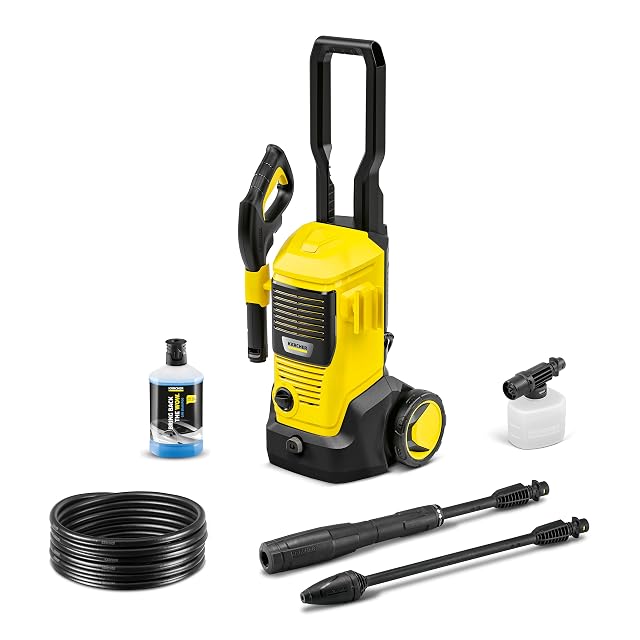
  1. Kärcher K 5 FJ

    145 bar · 500 l/h · 40 m (131 ft)²/h · 6.3 kg (13.9 lb)

    Five hundred liters an hour and a fixed handle: the point in the range where the machine stops being carried and starts being wheeled.

    Best for: A long drive, a large terrace or several vehicles — where flow rate, not pressure, sets the finishing time
    8.1/10

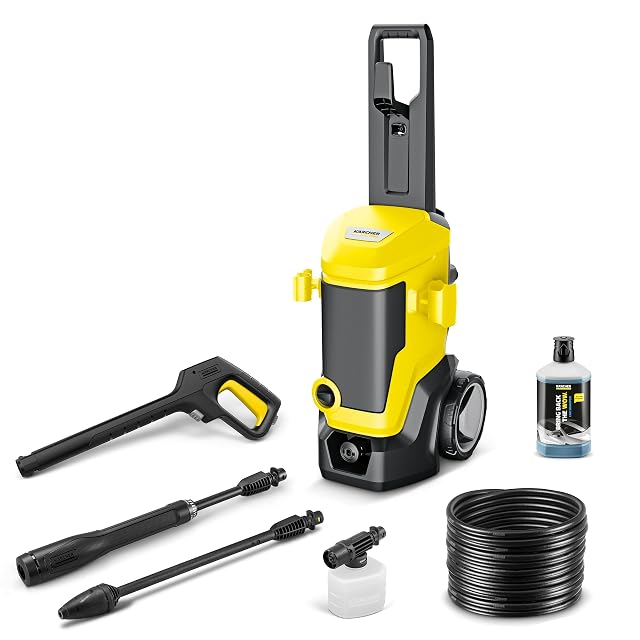
  2. Kärcher K 7 WCM FJ

    180 bar · 600 l/h · 60 m (197 ft)²/h · water-cooled motor

    The top of the domestic range, and the only one here whose motor is water-cooled — which is a statement about running time, not power.

    Best for: Large areas cleaned in one session — long drives, farmyards, several vehicles — where the machine runs continuously rather than in bursts

    8.9/10

The questions we hear

Why does a lance leave stripes?

Because the distance and angle between the nozzle and the stone change constantly with your arm. A surface cleaner holds both fixed and passes at a steady rate, so every square centimeter receives the same energy. That is what produces an even finish rather than a record of your technique.

What removes black spot and lichen?

Time, not pressure. A stone and facade treatment applied at low pressure and left for the stated period does what no nozzle can, because the growth is rooted in the surface. Rinse afterwards at low pressure — and keep the product away from planting beds and ponds.

Will a pressure washer damage my terrace?

It can, particularly soft natural stone and jointing sand. Testing in a hidden corner first is what tells you before the whole terrace does.

How do I stop blowing out the joints?

Work across joints rather than along them, keep the lance further back, and expect to re-sand paving afterwards regardless.

Does pressure remove moss for good?

No. It removes the visible growth and leaves the roots. A treatment with dwell time is what delays its return.

Should I seal afterwards?

If the surface was sealed before, cleaning will have removed some of it. Any sealer needs a completely dry surface, which takes longer than it looks.

Why is my terrace streaky?

Usually a hand-held lance rather than a surface cleaner, or detergent drying in the sun. Working in sections in the shade fixes both.

Where does the dirty water go?

Into drains, soil and onto plants. Wetting nearby plants before and after dilutes what reaches them.

Each washer, and the job behind it

Kärcher K 5 FJ

Meant for: A long drive, a large terrace or several vehicles — where flow rate, not pressure, sets the finishing time
Where it is strongest: 500 l/h — a fifth more water than the K 4, which is where the time saving comes from

Where it is weakest: No surface cleaner in this version, unlike the Home bundles

Read the full review →

Kärcher T-Racer T 5 · $150

Meant for: Kärcher owners with a terrace, a drive or a patio of any size

Where it is strongest: Adjustable jet height — the single control that protects a soft surface

Where it is weakest: Kärcher fitting only: it will not go on a Bosch or Nilfisk machine

Read the full review →

Kärcher K 7 WCM FJ

Meant for: Large areas cleaned in one session — long drives, farmyards, several vehicles — where the machine runs continuously rather than in bursts

Where it is strongest: Water-cooled motor: the specification that separates an occasional machine from one that runs for an hour

Where it is weakest: 180 bar will strip softwood, render and old paint if the nozzle is held close

Read the full review →

Kärcher PS 30 Plus Power Scrubber

Meant for: Steps, thresholds, edges, small courtyards and vertical surfaces

Where it is strongest: The swivelling side nozzle cleans right up to a riser or a wall

Where it is weakest: Small working width: it is not the tool for a large terrace

Read the full review →

What you get for each level of spend

What you will need too

Lances, nozzles and detergents from the same aisle, at the price we read. Confirm the fit against the machine you choose before ordering: it turns on the coupling and the part number, which the listing gives.

The short of it

Comparisons that are worth it

Comparisons we have already run between two washers from this guide or this aisle.

What this page is based on

The washers above come from the catalog of this site. Specifications are those the manufacturer and the Amazon page publish; prices are what Keepa reported for the date below, and both move. The order follows declared specifications, stated strengths weighed against stated limits, and price. No machine here has been put to work by us, and nothing on this page pretends otherwise.

Last checked on

Prices quoted in these summaries are dated readings. The live price is shown next to each product.

The tool we use ourselves

Chosen your machine? Now buy it at the right price.

Pressure washers and floor washers swing by a hundred dollars or more across the year, and the biggest "discounts" often land at prices the same model sold for six weeks earlier. UniverTrack tracks the real price history across retailers, spots fake reductions, and alerts you when it is genuinely the moment to buy.

Real price historyBuy-now alertsAI buying assistant
Try free for 14 days →
No commitment · Cancel in one click · 5 languages