Skip to content

Washing a car without adding swirl marks

Almost every swirl mark on a domestic car was put there by a wash, not by the road. The order matters more than the equipment.

The equipment is secondary. This is the order.

1. Wheels first, with their own brush

Wheel grit is the coarsest thing on the car and the most damaging if it migrates. Separate brush, separate bucket, done before anything else.

2. Rinse the whole car, top down

A fan jet at a comfortable distance, never a rotary nozzle. The purpose is to remove loose grit before contact, not to clean.

3. Foam, and let it dwell

Thick foam that clings for a few minutes softens what remains. Foam that slides off in thirty seconds looks impressive and does nothing.

4. Rinse again, then touch the paint

Two buckets, a clean mitt, straight lines rather than circles, and never a mitt that has been dropped. A water-fed brush is fine on the body provided it has not been used on the wheels — grit trapped in bristles and dragged across a bonnet is the single most common cause of swirl marks.

Which washer does your job need?

You want to avoid swirl marks
The problem is contact, not pressure: it is the mitt dragging grit across the paint.
You wash regularly
The two-bucket method, which is the single change that makes the most difference.
You use a machine
A wide nozzle at distance, and a pre-rinse before anything touches the paint.
You dry with a towel
That is where many swirls come from, and a clean dedicated drying towel matters as much as the wash.

Picking by the surface

Regular maintenance washing

Where the routine matters more than the products, and where consistency prevents damage accumulating.

Heavily soiled cars

Where a thorough pre-rinse and a snow foam do the loosening before anything touches the paint.

Wheels

Where separate tools are essential, because brake dust dragged onto paint causes exactly the damage you are avoiding.

Drying

Where a clean drying towel or a blower prevents the marks that a careless dry undoes the whole wash with.

What to measure, and what to ignore

The two-bucket method
One bucket of clean solution, one of rinse water with a grit guard. It keeps the grit you remove from returning to the paint.
Pre-rinsing
Removing loose grit before contact is what prevents most swirls. A snow foam extends the effect.
Separate wheel tools
Wheels carry brake dust and road grit. Using the same mitt on wheels and paint is a reliable way to scratch a car.
Wash media
A soft mitt rather than a sponge, rinsed frequently. Sponges trap grit against the paint rather than releasing it.
Drying method
A clean, soft drying towel used without pressure, or a blower. Many swirl marks are created at the drying stage.

Which figure for which surface

The stageWhat prevents damageWhy
Pre-rinseRemoving loose gritContact with grit is the cause
WashingTwo buckets and a grit guardGrit does not return to the paint
WheelsSeparate toolsBrake dust is abrasive
DryingA clean soft towelMany swirls happen here

What to avoid doing

Washing without pre-rinsing
Dragging a mitt over loose grit is precisely how swirl marks are made. The rinse before contact does most of the prevention.
Using one bucket
The grit you remove goes back into the water and then back onto the paint. A second rinse bucket with a grit guard solves it.
Using the same mitt on wheels and bodywork
Brake dust is highly abrasive. This single habit undoes everything else you do carefully.
Washing in direct sun
Water and shampoo dry on the panel, leaving spots and encouraging you to rub, which is where marks come from.

By how hard you will work it

The careful owner
Pre-rinses, uses two buckets, separate wheel tools and a clean drying towel.
The quick washer
Gets most of the benefit from a thorough pre-rinse and a second bucket alone.
The one with dark paint
Sees every mark, and benefits most from every step in the routine.

Servicing, storage and working life

Wash media are consumables and a dropped mitt is a contaminated mitt. Grit embedded in a microfibre stays there through a wash cycle, and a towel that has been on the floor should never touch paint again without a thorough clean.

  • Wash mitts and towels separately from household laundry, without fabric softener.
  • Discard a mitt that has been dropped on the ground, or wash it thoroughly before reuse.
  • Rinse buckets and grit guards after every wash.
  • Replace drying towels when they stop absorbing; a worn towel drags.

Safety

Pressure, chemicals and a wet working area.

  • Keep the jet away from panel gaps, seals and any damaged paint, which it can lift.
  • Do not aim at people; the jet injures through skin at close range.
  • Watch your footing; a soaped driveway is very slippery.
  • Keep wheel cleaners off skin and follow their label.

The picks, and what decided them

  1. Kärcher K 5 FJ

    145 bar · 500 l/h · 40 m (131 ft)²/h · 6.3 kg (13.9 lb)

    Five hundred liters an hour and a fixed handle: the point in the range where the machine stops being carried and starts being wheeled.

    Best for: A long drive, a large terrace or several vehicles — where flow rate, not pressure, sets the finishing time

    8.1/10

The questions we hear

Is a pressure washer safe on car paint?

At a sensible distance and with a fan jet, yes. Held close, or with a rotary nozzle, no — and never on a stone chip or a lifting lacquer edge, where the water gets underneath. Machines with adjustable pressure make this easier to get right, which is the practical argument for the Nilfisk Core here.

Do I need a foam cannon?

It is the accessory that does most for the paint, because foam clinging for a few minutes softens grit before anything touches the surface. A 3-in-1 wash brush is quicker and makes thinner foam. Either beats going straight in with a sponge.

What actually causes swirl marks?

Grit dragged across the paint by a mitt or towel. Pressure washing does not cause them; careless contact does.

What is the two-bucket method?

One bucket of shampoo solution and one of clean rinse water with a grit guard, so the grit you remove never returns to the paint.

Does snow foam make a difference?

It extends the pre-rinse by loosening dirt before contact. That is where most swirl prevention actually happens.

Can a pressure washer damage my car?

At close range with a narrow nozzle, yes, particularly around seals, badges and damaged paint. A wide fan at distance is safe.

Should I use separate tools for wheels?

Yes, without exception. Brake dust is abrasive and transferring it to paint undoes every other precaution.

How should I dry the car?

With a clean, soft drying towel used without pressure, or a blower. A careless dry creates the marks the wash avoided.

Each washer, and the job behind it

Kärcher K 4 FJ Home

Meant for: A terrace, a drive and a car, cleaned two or three times a year, where the K 3 would need too many passes
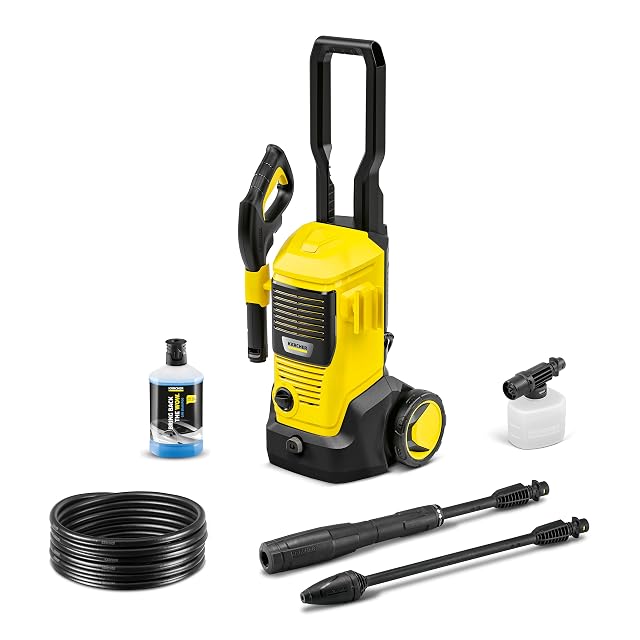
Where it is strongest: 420 l/h is published, so the machine can be compared honestly against anything else that publishes a flow figure

Where it is weakest: 5.7 kg (12.6 lb) with no water in it: light, which also means it walks when you pull the hose

Read the full review →

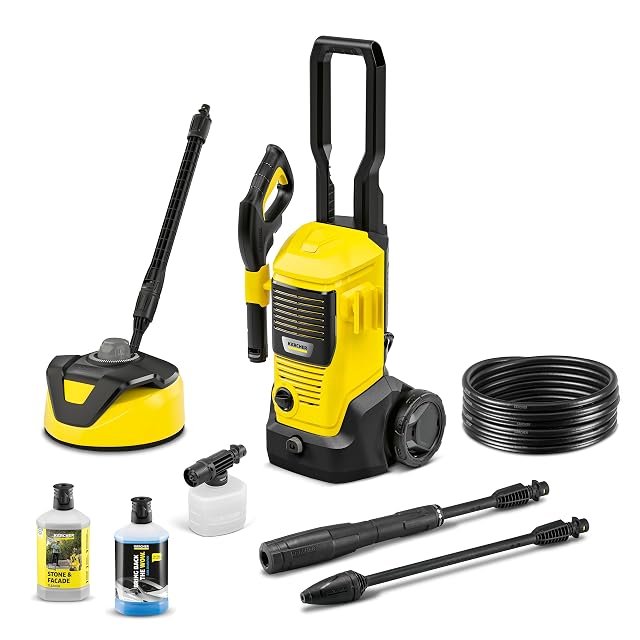
Kärcher K 5 FJ

Meant for: A long drive, a large terrace or several vehicles — where flow rate, not pressure, sets the finishing time

Where it is strongest: 500 l/h — a fifth more water than the K 4, which is where the time saving comes from

Where it is weakest: No surface cleaner in this version, unlike the Home bundles

Read the full review →

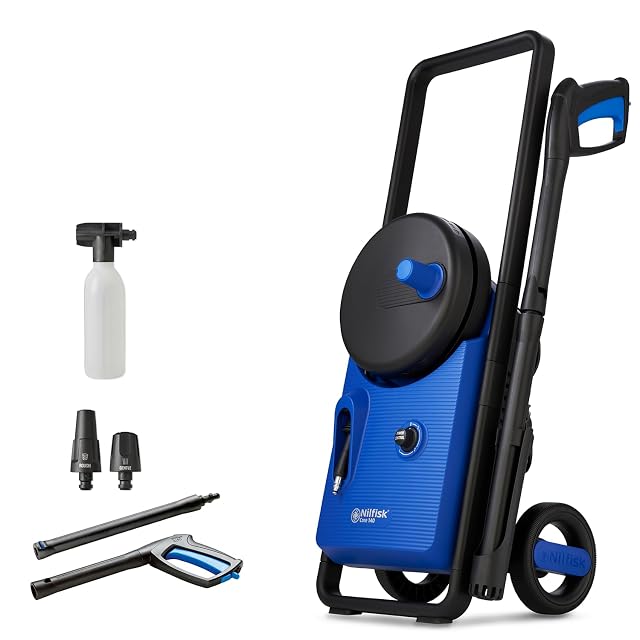
Nilfisk Core 140-6 PowerControl

Meant for: Mixed jobs — a car one weekend and a terrace the next — where being able to lower the pressure matters

Where it is strongest: Adjustable pressure — the feature that makes one machine safe on a car and useful on concrete

Where it is weakest: Six meters of hose, where 10 m (33 ft) is available further up the range

Read the full review →

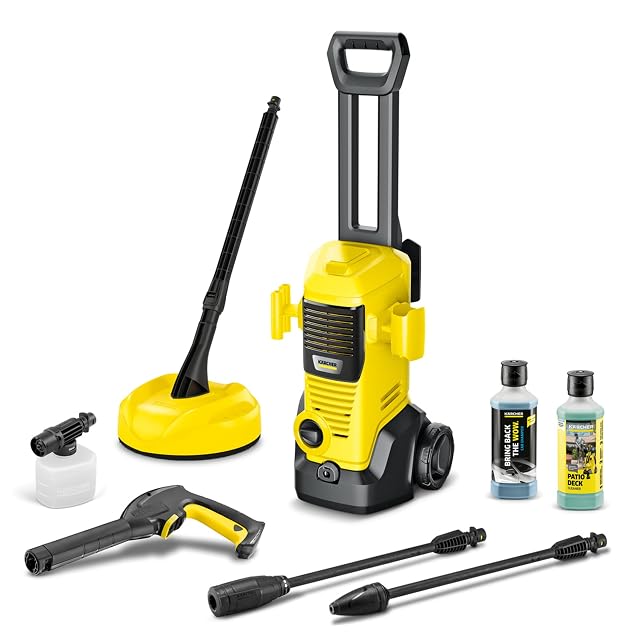
Kärcher K 3 FJ Home

Meant for: A small courtyard, garden furniture and bikes, where the machine is used a few times a season

Where it is strongest: The T 1 surface cleaner is in the box, and it is the accessory that stops a terrace coming out striped

Where it is weakest: Kärcher does not publish a flow rate for this model, and flow is what decides cleaning speed

Read the full review →

What you will need too

Lances, nozzles and detergents from the same aisle, at the price we read. Confirm the fit against the machine you choose before ordering: it turns on the coupling and the part number, which the listing gives.

The short of it

Comparisons that are worth it

Comparisons we have already run between two washers from this guide or this aisle.

What this page is based on

The washers above come from the catalog of this site. Specifications are those the manufacturer and the Amazon page publish; prices are what Keepa reported for the date below, and both move. The order follows declared specifications, stated strengths weighed against stated limits, and price. No machine here has been put to work by us, and nothing on this page pretends otherwise.

Last checked on

Prices quoted in these summaries are dated readings. The live price is shown next to each product.

The tool we use ourselves

Chosen your machine? Now buy it at the right price.

Pressure washers and floor washers swing by a hundred dollars or more across the year, and the biggest "discounts" often land at prices the same model sold for six weeks earlier. UniverTrack tracks the real price history across retailers, spots fake reductions, and alerts you when it is genuinely the moment to buy.

Real price historyBuy-now alertsAI buying assistant
Try free for 14 days →
No commitment · Cancel in one click · 5 languages