Bosch UniversalAquatak 125
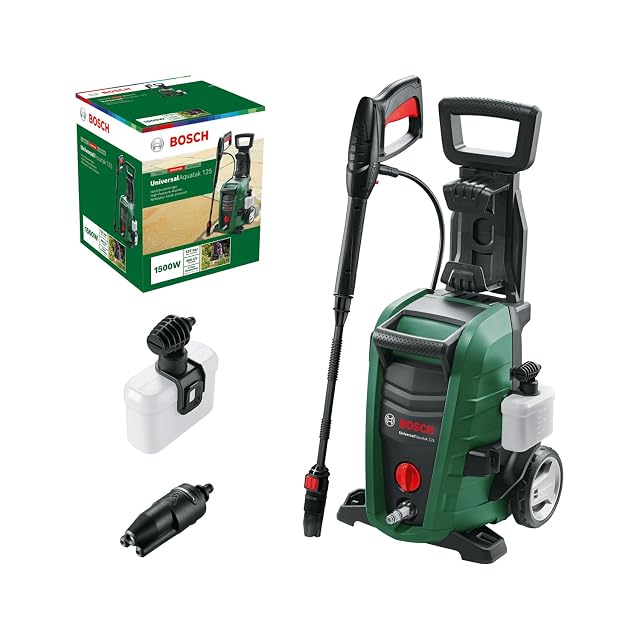
125 bar · 3-in-1 nozzle · 5 m (16 ft) hose
The cheapest machine here, and the one whose single nozzle does the work of three.
Best for: A first pressure washer for a small garden, a bike and a car, where price decides
Start here
Four machines, ranked by what they actually do rather than by their headline pressure. If you read nothing else: compare liters per hour, not bar.
The first pressure washer is usually bought on bar and regretted on flow. Here is the order that matters.
Pressure breaks the bond between dirt and surface; liters per hour carry the dirt away. A machine with plenty of one and little of the other cleans slowly whatever the box says. The Kärcher K 4 publishes 420 l/h and the Nilfisk Core 140 465 l/h, so both can be compared honestly. The Bosch UniversalAquatak 125 publishes none, which is stated on its page rather than guessed at.
Five meters puts the machine inside the area you are cleaning; seven or ten keeps it at the edge. Working radius decides how often the machine gets dragged over — and dragging is what kinks a hose at the gun and eventually splits it.
The Nilfisk’s adjustable pressure is the feature that makes one machine safe on a car and useful on concrete. Most of the harm domestic washers do happens at full pressure because full pressure was the only setting available.
Where a modest machine and the right nozzle do the work, and where too much pressure causes damage rather than cleaning.
Where flow rate and a surface cleaner decide how long the job takes, and where pressure alone is a poor guide.
Where a low-pressure setting and a detergent do more than force.
Where hiring or borrowing is a legitimate answer rather than buying a machine that lives in a shed.
| What you clean | What matters | The accessory |
|---|---|---|
| A car | Moderate pressure | A wide fan nozzle |
| A patio or drive | Water flow | A surface cleaner |
| Furniture and bikes | Low pressure | A detergent bottle |
| No outdoor tap | Container feed | A suction kit |
Pressure washers fail from frost, from running dry and from dirty water entering the pump. All three are avoidable, and the inlet filter is the cheapest part protecting the most expensive one.
A high-pressure jet is more dangerous than it looks.
125 bar · 3-in-1 nozzle · 5 m (16 ft) hose
The cheapest machine here, and the one whose single nozzle does the work of three.
Best for: A first pressure washer for a small garden, a bike and a car, where price decides
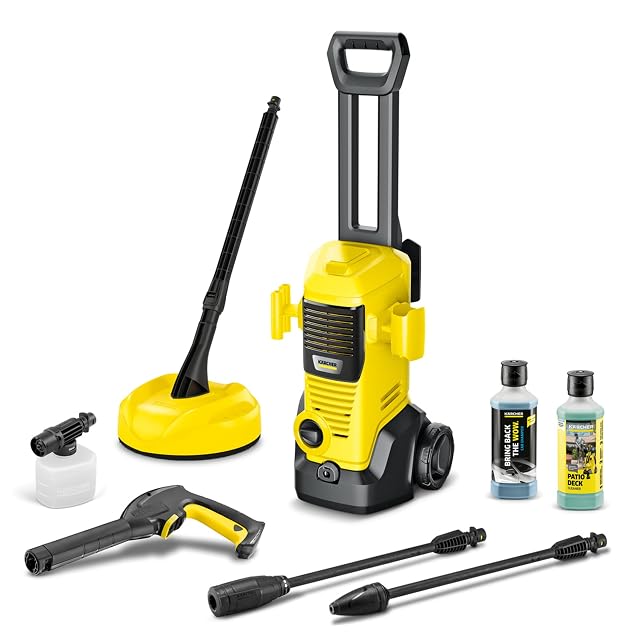
120 bar · Foam Jet nozzle · T 1 patio cleaner included
The entry Kärcher, sold as a bundle with a patio head — which is the part that decides whether the machine gets used.
Best for: A small courtyard, garden furniture and bikes, where the machine is used a few times a season
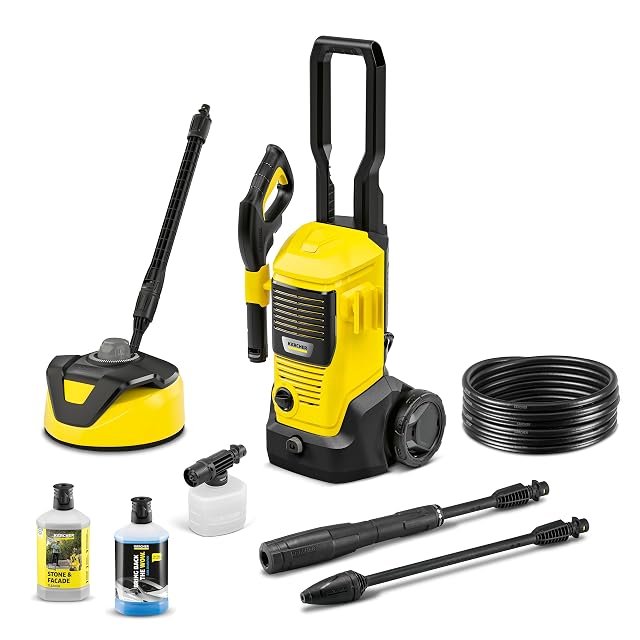
130 bar · 420 l/h · 30 m (98 ft)²/h · 5.7 kg (12.6 lb)
The first Kärcher that publishes its flow rate — and the number that tells you what the machine will actually do.
Best for: A terrace, a drive and a car, cleaned two or three times a year, where the K 3 would need too many passes
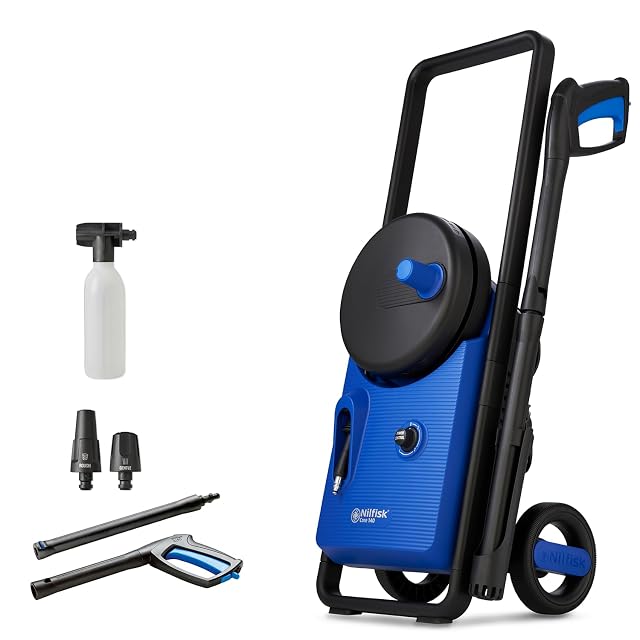
140 bar · 465 l/h · 40 m (131 ft)²/h · 1,800 W
The machine in this group that publishes every figure it should — pressure, flow, area and power — and lets you turn the pressure down.
Best for: Mixed jobs — a car one weekend and a terrace the next — where being able to lower the pressure matters
For a terrace, a car, garden furniture and a bike, 120 to 140 bar is enough — provided the machine moves a reasonable volume of water. Above 150 bar you are buying the ability to damage things faster, not to clean ordinary dirt better.
A surface cleaner, before anything else. It is the difference between an even terrace and a striped one, and between spray on the wall behind you and none. Then a detergent, because dwell time does what pressure cannot.
No. Flow rate decides how quickly a large area rinses clean, and too much pressure damages soft surfaces. Pressure alone is the least useful figure.
Sometimes, with a suction kit that draws from a container, but not every machine supports it. Confirm before buying if that is your situation.
A surface cleaner if you have a patio or drive. It changes the time a large area takes more than any upgrade to the machine.
Yes, with a wide nozzle and sensible distance. Too much pressure at close range damages paint and trim.
Commonly frost damage, running dry, or grit through a neglected inlet filter. All three are avoidable and all three are expensive.
For occasional heavy jobs, hiring is legitimate. For regular car and patio cleaning, a modest machine earns its place.
Meant for: A first pressure washer for a small garden, a bike and a car, where price decides
Where it is strongest: One nozzle covers fan, rotary and pencil patterns — nothing to swap, nothing to lose
Where it is weakest: No published flow rate, which makes honest comparison impossible
Meant for: A small courtyard, garden furniture and bikes, where the machine is used a few times a season
Where it is strongest: The T 1 surface cleaner is in the box, and it is the accessory that stops a terrace coming out striped
Where it is weakest: Kärcher does not publish a flow rate for this model, and flow is what decides cleaning speed
Meant for: A terrace, a drive and a car, cleaned two or three times a year, where the K 3 would need too many passes
Where it is strongest: 420 l/h is published, so the machine can be compared honestly against anything else that publishes a flow figure
Where it is weakest: 5.7 kg (12.6 lb) with no water in it: light, which also means it walks when you pull the hose
Meant for: Mixed jobs — a car one weekend and a terrace the next — where being able to lower the pressure matters
Where it is strongest: Adjustable pressure — the feature that makes one machine safe on a car and useful on concrete
Where it is weakest: Six meters of hose, where 10 m (33 ft) is available further up the range
Lances, nozzles and detergents from the same aisle, at the price we read. Confirm the fit against the machine you choose before ordering: it turns on the coupling and the part number, which the listing gives.
Comparisons we have already run between two washers from this guide or this aisle.
The washers above come from the catalog of this site. Specifications are those the manufacturer and the Amazon page publish; prices are what Keepa reported for the date below, and both move. The order follows declared specifications, stated strengths weighed against stated limits, and price. No machine here has been put to work by us, and nothing on this page pretends otherwise.
Last checked on
Prices quoted in these summaries are dated readings. The live price is shown next to each product.
Pressure washers and floor washers swing by a hundred dollars or more across the year, and the biggest "discounts" often land at prices the same model sold for six weeks earlier. UniverTrack tracks the real price history across retailers, spots fake reductions, and alerts you when it is genuinely the moment to buy.