Skip to content

Steam or pressure

One uses heat and a liter of water; the other uses several hundred liters an hour and mechanical force. They overlap far less than the shops suggest.

Both machines clean without detergent. That is where the similarity ends.

Steam is heat at close range

A steam cleaner boils a liter of water and delivers it as vapor at 3 to 5 bar. It softens grease, lifts grime from grout, and leaves the surface nearly dry. It works at centimeters, indoors, on tile, hobs, taps, screens and sealed floors. It does nothing useful to a terrace.

Pressure is volume and force

A pressure washer moves 400 to 600 liters an hour at 120 to 180 bar. It strips algae, dirt and old coatings from hard outdoor surfaces, and it will strip soft ones too. It is an outdoor machine, and it needs somewhere for the water to go.

What neither does

Neither disinfects in the domestic sense unless you accept a manufacturer’s laboratory claim, and neither replaces a vacuum. Households that clean tile floors indoors and a drive outdoors need both — which is worth knowing before spending the whole budget on one.

Which washer does your job need?

You clean outdoors
A pressure washer, because volume of water and force are what outdoor surfaces need.
You clean indoors
A steam cleaner, because a pressure washer indoors is not a realistic proposition.
You want to avoid chemicals
Steam, which is the main argument for it.
You want both
They are complementary rather than alternatives, and most households that own both use them for entirely different jobs.

Picking by the surface

Patios, drives and cars

Pressure washer territory entirely. Steam has neither the volume nor the reach for outdoor surfaces.

Kitchens, bathrooms and grout

Steam territory. Heat loosens grease and grime in places pressure cannot be used.

Garden furniture

Where both can work, and where a pressure washer at low setting is usually quicker.

Sanitizing claims

Where steam's heat is the argument, and where the effect depends on temperature and contact time.

What to measure, and what to ignore

Indoors or outdoors
The decision that answers itself. Pressure washers need drainage and space; steam cleaners are made for interiors.
Water volume
A pressure washer moves a great deal of water; a steam cleaner produces very little. That difference is why one cleans a drive and the other does not.
Chemicals
Steam cleans with heat alone, which is the main reason people choose it. Pressure washing usually still wants a detergent.
Surface tolerance
Pressure damages soft surfaces; steam damages heat- and moisture-sensitive ones. Both have exclusions worth knowing.
What you already own
Most households need one, then discover the other. They rarely compete for the same job.

Which figure for which surface

The jobThe machineWhy
Patio or drivePressure washerVolume and force
Bathroom groutSteam cleanerHeat, no chemicals
A carPressure washerRinsing volume
Kitchen surfacesSteam cleanerIndoors, no runoff

What to avoid doing

Expecting steam to clean a patio
It produces far too little water to rinse an outdoor surface. Steam loosens; something has to carry the dirt away.
Trying to use a pressure washer indoors
The water volume alone makes it impractical, quite apart from the damage a jet does to interior surfaces.
Treating them as alternatives
They are complementary. Households that own both use them for entirely different jobs and rarely for the same one.
Assuming steam sanitizes everything
The effect depends on temperature at the surface and contact time. It is thorough cleaning rather than a guarantee.

By how hard you will work it

The house with a garden
Needs a pressure washer first, for the patio, drive and car.
The flat dweller
Needs a steam cleaner, since there is often nowhere to use a pressure washer at all.
The chemical-free household
Chooses steam for interiors and accepts a detergent outdoors where steam cannot reach.

Servicing, storage and working life

The two machines fail in completely different ways. Pressure washers die of frost and grit through the pump; steam cleaners die of limescale in the boiler. Neither problem affects the other machine, and both are preventable with a habit rather than a repair.

  • Drain a pressure washer before frost; that is its main killer.
  • Descale a steam cleaner on schedule; that is its main killer.
  • Keep a pressure washer's inlet filter clean.
  • Use the water type a steam cleaner's manual specifies.

Safety

Different hazards from each.

  • A pressure jet injures through skin; never aim it at anyone.
  • Steam scalds instantly; never direct it at anyone and let boilers cool before opening.
  • Use a residual current device with either machine near water.
  • Do not use steam on cold glass, which can crack from thermal shock.

The picks, and what decided them

The questions we hear

Can a steam cleaner replace a pressure washer outdoors?

No. Steam carries very little water and no mechanical force to speak of; a terrace needs volume to carry the dirt away. Steam is for grout, hobs, taps, shower screens and sealed floors — indoor work at close range.

Can a pressure washer be used indoors?

Only in a garage or utility room with a drain, and even then it makes a mess. The machines are designed to move hundreds of liters an hour, which has to go somewhere.

Can a steam cleaner clean my patio?

Not realistically. It produces far too little water to rinse an outdoor surface, and something has to carry the loosened dirt away.

Can I use a pressure washer indoors?

No. The volume of water alone makes it impractical, and a jet damages interior surfaces easily.

Which cleans more thoroughly?

They do different jobs. Steam loosens grease and grime with heat where you cannot use force; pressure moves dirt with volume where you can.

Which is better for avoiding chemicals?

Steam, comfortably. That is its main argument, and it is a genuine one for interiors.

Do I need both?

Many households end up with both because they solve different problems. Buy for the job you actually have first.

Does either sanitize?

Steam at temperature reduces surface contamination, though it depends on temperature and contact time. Treat it as thorough cleaning rather than a guarantee.

Each washer, and the job behind it

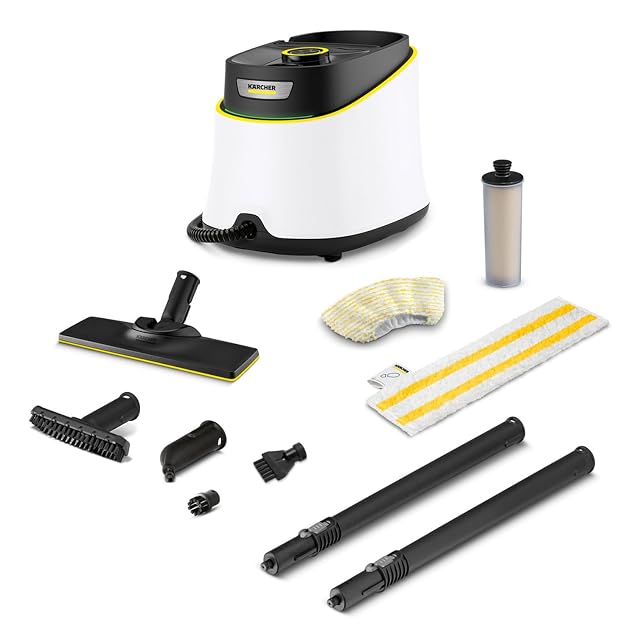
Kärcher SC 3 Deluxe

Meant for: Kitchens and bathrooms cleaned regularly, where the machine is picked up for twenty minutes at a time
Where it is strongest: Refillable mid-session — no depressurizing, no cooling down, no fifteen-minute pause

Where it is weakest: 3.5 bar is modest against the 4 and 5 bar Polti machines

Read the full review →

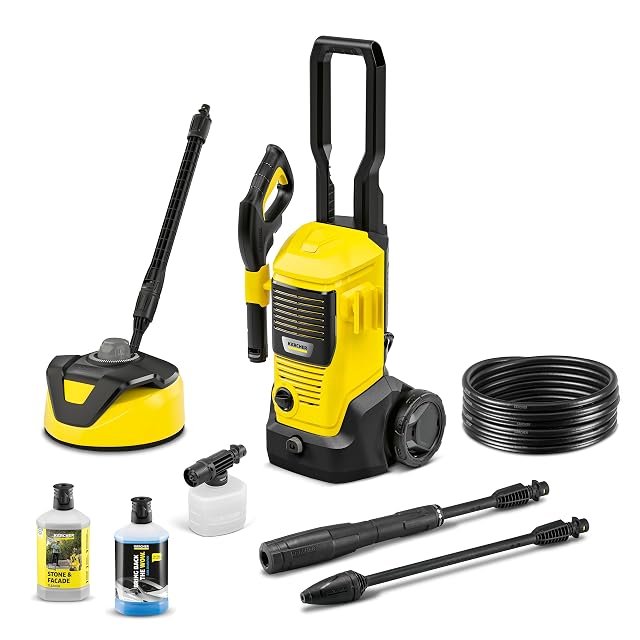
Kärcher K 4 FJ Home

Meant for: A terrace, a drive and a car, cleaned two or three times a year, where the K 3 would need too many passes

Where it is strongest: 420 l/h is published, so the machine can be compared honestly against anything else that publishes a flow figure

Where it is weakest: 5.7 kg (12.6 lb) with no water in it: light, which also means it walks when you pull the hose

Read the full review →

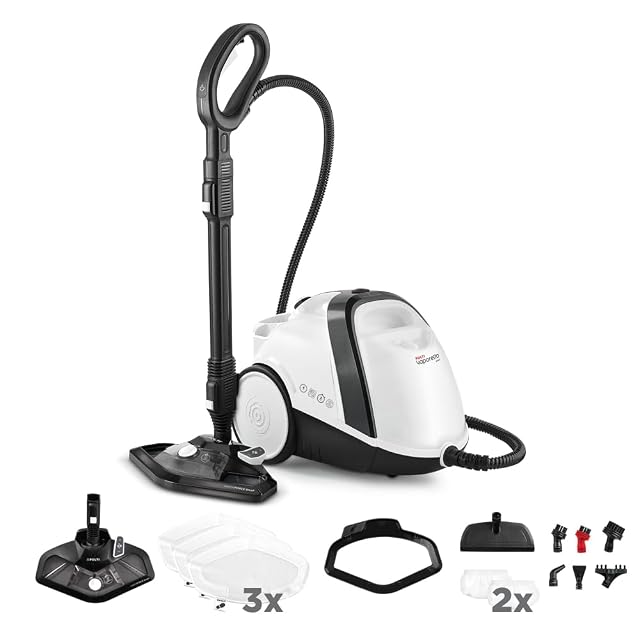
Polti Vaporetto Smart 120

Meant for: Whole-house sessions — several rooms in a row, where pressure and a large water supply both matter

Where it is strongest: 4 bar — half a bar more than the top domestic Kärcher here

Where it is weakest: Two minutes to heat, against thirty seconds on the Kärcher SC 3 Deluxe

Read the full review →

What you get for each level of spend

Mid range

$110 – $200

3 models

What you will need too

Lances, nozzles and detergents from the same aisle, at the price we read. Confirm the fit against the machine you choose before ordering: it turns on the coupling and the part number, which the listing gives.

The short of it

Comparisons that are worth it

Comparisons we have already run between two washers from this guide or this aisle.

What this page is based on

The washers above come from the catalog of this site. Specifications are those the manufacturer and the Amazon page publish; prices are what Keepa reported for the date below, and both move. The order follows declared specifications, stated strengths weighed against stated limits, and price. No machine here has been put to work by us, and nothing on this page pretends otherwise.

Last checked on

Prices quoted in these summaries are dated readings. The live price is shown next to each product.

The tool we use ourselves

Chosen your machine? Now buy it at the right price.

Pressure washers and floor washers swing by a hundred dollars or more across the year, and the biggest "discounts" often land at prices the same model sold for six weeks earlier. UniverTrack tracks the real price history across retailers, spots fake reductions, and alerts you when it is genuinely the moment to buy.

Real price historyBuy-now alertsAI buying assistant
Try free for 14 days →
No commitment · Cancel in one click · 5 languages