What the maker puts in writing
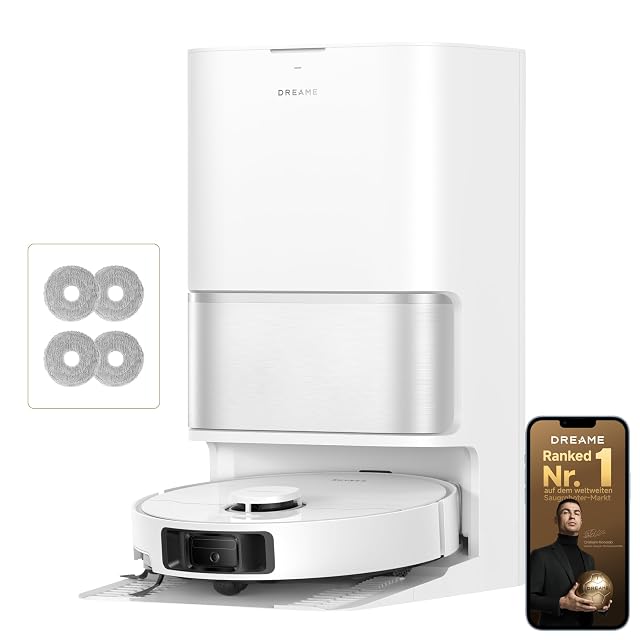
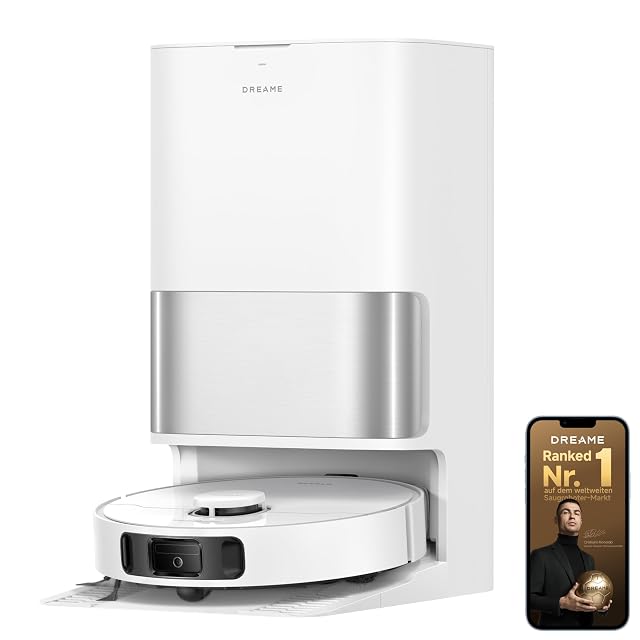
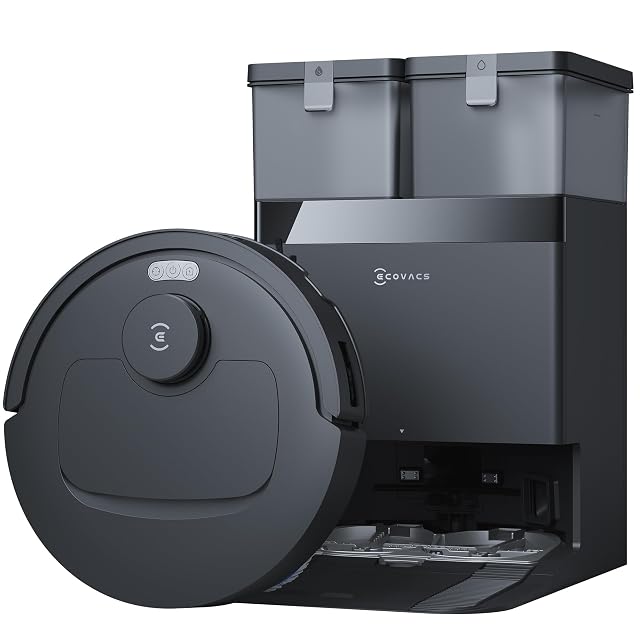
- “The Omni Station automatically empties dust into a large 3.1 L bag (up to 60 days), washes and dries mop pads with room-temperature air (just 1.56W/hr)… Transparent tanks show clean and dirty water levels at a glance. Based on a 3-person household without pets; intervals vary”
- “Mop Master applies 6N of downward pressure at 180 RPM to scrub away dried stains on hardwood, tile, and laminate… Note: For carpet pile over 20mm (0.79 in) / 0.78 in., set No-Go Zones in the app”
- “Boost IQ automatically adjusts suction up to 7,000 Pa… The Pro-Detangle Comb flips down mid-clean to loosen hair wrapped around the roller brush”
- “At just 3.35 inches (85mm) tall, the C20 slides under sofas, beds, and cabinets with as little as 3.54” clearance. Runs up to 132 min on Standard mode… iPath Laser Navigation… stores up to 3 floor maps”
- “Child Safety Lock prevents accidental starts. Note: Boundary strips are not included or compatible with this model”
- Catalog: 9004 g (317.6 oz) · 289 × 460 × 330 mm (11.4 × 18.1 × 13 in)
The only listing that shows its working
“Based on a 3-person household without pets; intervals vary.”
One footnote, and it is the most useful sentence on this shelf.
Every self-emptying claim here rests on an assumption about how much dirt you make. Nobody else states theirs. Divide capacity by days and the assumptions appear:
TRDIOL — 4 L / 120 days = 33 ml a day
iRobot 115X — 2.5 L / 90 = 28
roborock Q10 S5+ — 2.7 L / 70 = 39
eufy E25 — 3 L / 75 = 40
roborock Qrevo S Pro — 2.7 L / 49–63 = 43 to 55
eufy Omni C20 — 3.1 L / 60 = 52
So this listing assumes the largest daily volume of any machine here, which is exactly why its interval reads shortest — and it is the one admitting the assumption excludes a shedding animal.
How soft these figures are is settled by roborock’s own pair: identical 2.7 liter bags, one claiming 70 days and the other 7 to 9 weeks, from one maker.
Take the 3.1 liter bag as the fact. The days are an estimate, and this is the only estimate with its conditions printed.
Six newtons at a hundred and eighty revolutions
“Mop Master applies 6N of downward pressure at 180 RPM.”
The only complete scrubbing specification on this shelf, because scrubbing work is pressure times speed and this is the only listing giving both numbers.
Six newtons is roughly the weight of a 600 gram object pressed onto the pad. That is real force, not a pad resting under its own weight.
The rivals give one half:
iRobot 705X — 200 rpm, no force
roborock Q10 S5+ — 3000 oscillations a minute (50 Hz), no force
Shark Matrix Plus — 100 a minute (1.67 Hz, which it calls “sonic”), no force
the other nine — nothing
Why it matters: a pad spinning fast under its own weight polishes a dried mark; a pad pressed hard abrades it. That is why the iRobot listings talk about “SmartScrub applies extra pressure exactly where messes are stubborn” without ever saying how much — they know pressure is the variable, and this is the one machine that quantifies it.
And it names the surfaces it claims the effect on: “hardwood, tile, and laminate”.
Room-temperature air, which it admits
“washes and dries mop pads with room-temperature air (just 1.56W/hr).”
This is the weakest mop drying here, published as an efficiency rather than buried.
The spread:
ECOVACS T90 PRO — wash up to 167 °F, dry 145 °F
roborock Qrevo S Pro — wash 167 °F, dry 113 °F
eufy E25 — dry 50 °C (122 °F)
iRobot 415X — wash and heat-dry 113 °F
iRobot 505X, 705X — hot, unspecified
eufy Omni C20 — room temperature
Shark, TRDIOL, iRobot 105, 105X, 115X — no mop washing at all
Heat matters for one reason: a damp pad sitting in a dock between runs grows mold and begins to smell, which is the complaint about these machines after a few months. The iRobot 415X names it directly — “preventing odors and buildup so floors aren’t cleaned with yesterday’s dirt”.
Unheated air will dry a pad in a ventilated room, slowly, and will do nothing about what is living in it.
What the 1.56 watt-hours buys is a station that draws almost nothing while idle. On a machine that spends most of its life parked, that is not a negligible argument — it is simply a different one from hygiene.
And the transparent tanks are the small, genuinely thoughtful touch: clean and dirty water levels readable without opening anything.
Eighty-five millimeters, and the clearance it actually needs
“At just 3.35 inches (85mm) tall, the C20 slides under sofas, beds, and cabinets with as little as 3.54” clearance.”
Two figures rather than one, and the second is the useful one. 3.54 inches is 90 millimeters — the machine is 85 mm (3.35 in) and it asks for 90, because it needs to get under without scraping.
Nobody else on this shelf states the clearance required, only their own height:
iRobot 115X 79 mm · iRobot 415X 84 mm · this 85 mm · roborock Qrevo S Pro “3.8 in” (96 mm) · iRobot 105, 105X, 705X 104 mm · iRobot 505X 107 mm · Shark 145 mm
Height is the specification that decides whether the dust under your sofa ever gets cleaned, and it is the one you cannot change later.
Worth noting the iRobot 415X claims a “46% slimmer design* fits under more furniture *Compared to Roomba 105” — and the catalog gives those two as 84 mm (3.31 in) against 104 mm (4.09 in), which is 19 per cent, not 46.
A hundred and thirty-two minutes
The longest runtime published on this shelf, and only three listings publish one at all:
eufy Omni C20 — 132 min on Standard
eufy E25 — 125 min, specified as “vacuum + mop, standard mode”, which is the demanding case
iRobot 115X — “up to 900 sq ft/charge”, an area rather than a time
The rest say nothing, which on a machine that has to finish a floor in one pass is a real omission. And the listing adds the behavior that matters more than the figure: “then auto-recharges and resumes until the entire floor is done.”
iPath Laser Navigation with three floor maps is the standard arrangement — the eufy E25 stores five, the TRDIOL four.
Seven thousand pascals, and the carpet it tells you to fence off
7000 Pa, second lowest on a shelf running to 30,000:
ECOVACS 30,000 · iRobot 415X and eufy E25 20,000 · roborock Qrevo S Pro 18,500 · iRobot 115X 15,000 · roborock Q10 S5+ 10,000 · this 7000 · TRDIOL 6000 · and five listings with no figure, four of them iRobot models publishing “70X” or “175x” against the discontinued Roomba 600 series
Boost IQ raises it automatically on carpet, which is the right behavior at this figure.
And then the honest note: “For carpet pile over 20mm (0.79 in) / 0.78 in., set No-Go Zones in the app.”
That is a published limit, and no other listing on this shelf states one. Deep pile defeats a robot mop regardless of lift height — the mop touches, the suction cannot reach the base of the fibers, and the machine can beach itself. Being told in advance is better than finding out.
Also worth reading: “Boundary strips are not included or compatible with this model.” So zoning is entirely in software, and there is no physical fallback.
What is not published
No mop lift height. It says the mop “auto-lifts” when carpet is detected but gives no figure, where the ECOVACS publishes 0.6 inch (15.2 mm), the eufy E25 10.8 mm, the iRobot 415X and roborock Qrevo S Pro 10 mm, the roborock Q10 S5+ 8 mm.
No noise figure, where the roborock Qrevo S Pro publishes 55 dB and the sibling eufy E25 “≤61dB (max mode)”.
No water tank capacity, which nothing on this shelf publishes — though this is the only listing where you can at least see the levels.
No filtration standard, where the Shark publishes “True HEPA… 99.97% down to 0.3 microns” and two iRobot listings publish 99% at 0.7 microns.
And 2.4 GHz Wi-Fi only, stated twice, along with a note that voltage is 110 V and you should buy the version for your region — which is true of at least thirteen of the eighteen listings here.
Availability
Read on the day this page was built: $380 at the American Amazon shop.
Read from Keepa on the day this page was last revised; stock and price both move without notice.
Prices quoted in this text were read on 2026-10-04. The live price is at the top of the page.