Skip to content

Choosing a window vacuum

A window vacuum removes the drip and the streak, not the effort. What separates them is how many panes they do before you stop to empty or recharge.

A window vacuum solves one problem: the water you have just used has to go somewhere, and on a cloth it goes back onto the glass as a streak.

Blade width

Wide blades cover a tall pane in fewer passes and are useless on a glazing bar. Several machines come with two, and if yours does not, buy the narrow one — the awkward pane is the reason you bought the machine.

Tank, and where the water goes

Between 25 ml and 100 ml across this comparison. The small tanks are not a defect; they belong to machines meant for a bathroom mirror and a shower screen. Ask how tall your windows are before deciding this one.

Battery, and whether it is removable

Most of these have an integrated cell, so battery life is machine life. That makes the stated runtime a durability figure rather than a convenience one. Twenty-five minutes new is fifteen after a few years.

What they are also good at

Shower screens, condensation on a cold morning, and the inside of a car windscreen — all jobs where a cloth leaves a film. Several owners buy these for windows and keep them for the shower.

Which washer does your job need?

You clean windows regularly
A window vacuum removes the drips and streaks that a cloth leaves behind.
You have condensation
This is where they earn their keep, faster than any cloth on a winter morning.
You have very large windows
Blade width and tank capacity decide how often you stop.
You clean windows twice a year
A squeegee and a cloth do the job, and storage may matter more than speed.

Picking by the surface

Windows and glass doors

The main use. Removing the water without the drips and streaks a cloth leaves.

Condensation

Where these machines are genuinely quicker than anything else on a cold morning.

Tiles and shower screens

Where the same tool removes water from any smooth surface.

Mirrors

Where a narrow blade helps and where technique matters more than the machine.

What to measure, and what to ignore

Blade width
A wide blade covers large panes fast; a narrow one reaches small panes and mirrors. Many machines include both.
Tank capacity
How often you stop to empty. On a house full of condensation this matters more than it sounds.
Runtime
Whether it covers the whole house in one charge. Running out mid-window is the practical irritation.
Weight and balance
You hold this at arm's length above your head. Balance matters more than absolute weight.
The spray bottle and cloth
Most kits include one. The washing part still matters, since the vacuum only removes water.

Which figure for which surface

What you cleanThe bladeThe note
Large windowsA wide bladeFewer passes
Small panes and mirrorsA narrow bladeReach into corners
CondensationEitherTank capacity matters
Shower screensEitherSame principle

What to avoid doing

Expecting it to wash the window
It removes water. The washing still has to happen with a cloth or applicator, and dirty glass stays dirty.
Working in direct sun
The solution dries on the glass before you vacuum it, leaving exactly the streaks you were avoiding.
Overfilling the tank
Water reaches the motor. The fill line exists and the machine will not warn you politely.
Storing it wet
The tank develops an odor and the blade perishes. Emptying and drying takes a moment.

By how hard you will work it

The regular window cleaner
Uses one on all the glass in the house and finds it faster than cloths.
The condensation sufferer
Uses it every winter morning, where nothing else is as quick.
The occasional cleaner
May be served perfectly well by a squeegee and a cloth.

Servicing, storage and working life

Window vacuums fail at the rubber blade and from being stored wet. A blade with a nick leaves a line on every window, and a tank stored with water in it develops a smell that transfers to the glass.

  • Empty and rinse the tank after every use.
  • Replace the blade when it starts leaving lines; it is a consumable.
  • Store it dry and with the blade uncompressed.
  • Wipe the blade clean before storing; grit on it scratches glass.

Safety

Mostly about working at height.

  • Use a stable step rather than stretching; most window cleaning accidents are falls.
  • Do not lean out of an open window to reach the outside.
  • Keep the charger away from the wet working area.
  • Watch for water running down onto electrical fittings below.

The picks, and what decided them

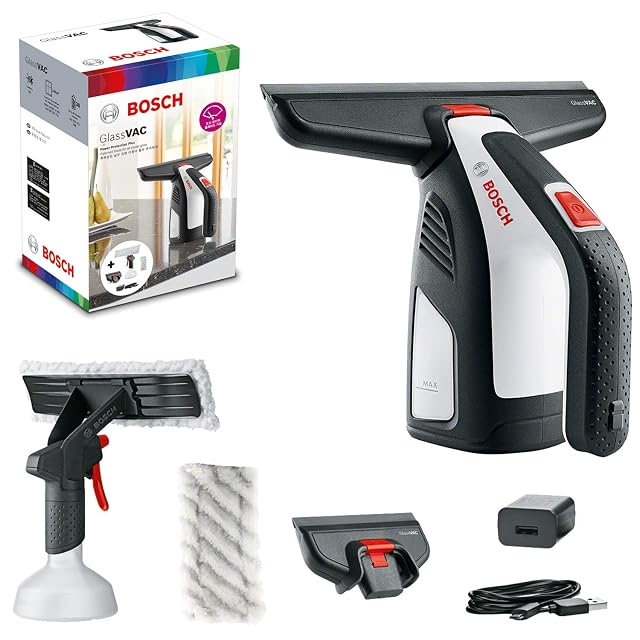
  1. Bosch GlassVAC

    Up to 35 windows per charge · LED battery indicator · streak-free

    Bosch quotes its runtime in windows rather than minutes — which is the number you actually wanted.

    Best for: Households already using Bosch home tools, and anyone who wants a runtime figure they can act on

    7.8/10

    ≈ $100

The questions we hear

Do I still need to wash the glass first?

Yes. A window vacuum does not clean — it removes the dirty water you have already loosened with a cloth and a little detergent. Used on dry glass it does nothing at all, which is the most common disappointment with the category.

What decides how many windows I get?

Tank capacity and battery, in that order. A 100 ml tank on tall windows means stopping to empty; a 25-minute battery is roughly thirty average panes. Both figures are published, and both matter more than the blade.

Does a window vacuum wash the window?

No. It removes the water after washing, which is what prevents the drips and streaks a cloth leaves. The washing still has to happen.

Is it better than a squeegee?

It removes the water rather than pushing it to the edge, which is where drips form. For regular use most people find it noticeably better.

Why is my window streaky?

Usually the solution drying before you vacuum, or a nicked blade. Working out of direct sun fixes the first and a new blade the second.

Can I use it on condensation?

It is one of the best uses. On a winter morning it clears a whole house of glass faster than any cloth.

How often does the blade need replacing?

When it starts leaving a line. It is a cheap consumable and a nicked blade marks every window you clean.

Can I use my own cleaning solution?

Usually, though excessive foam is a problem for some machines. A light solution and a clean cloth are what the tool is designed around.

Each washer, and the job behind it

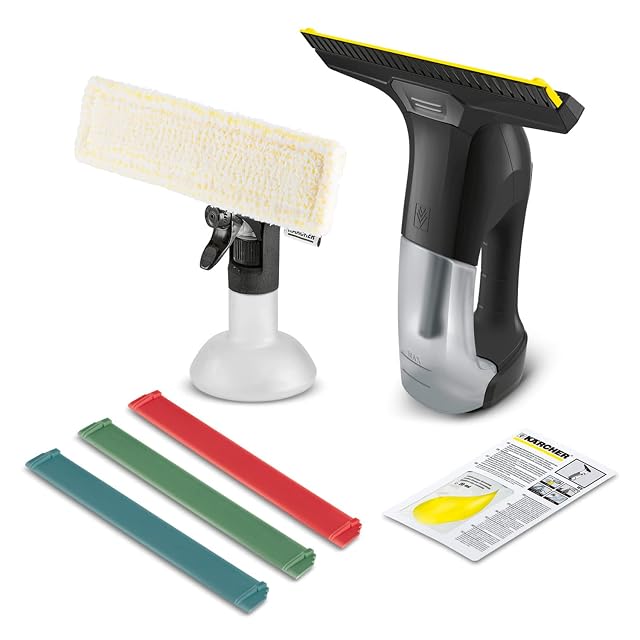
Kärcher WV 6 Plus Multi Black Edition

Meant for: Houses with a lot of glass, cleaned in long sessions rather than in passing
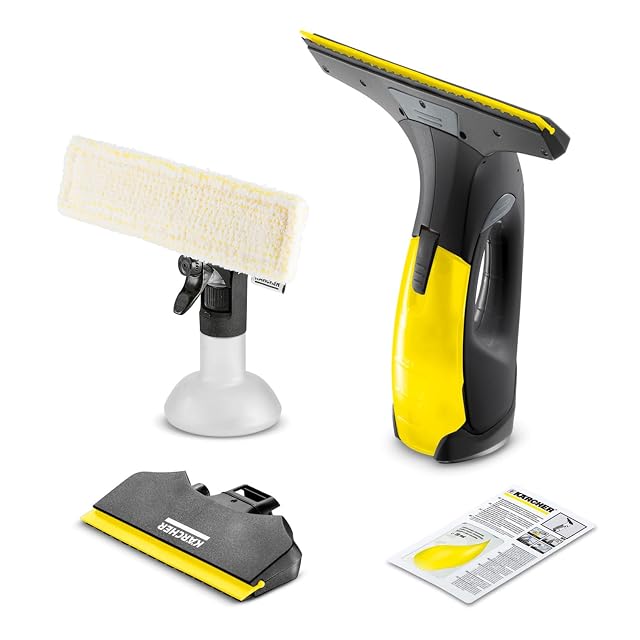
Where it is strongest: 100 minutes: a whole house, conservatory included, without charging

Where it is weakest: Costs roughly twice the WV 2 for battery life you may never use

Read the full review →

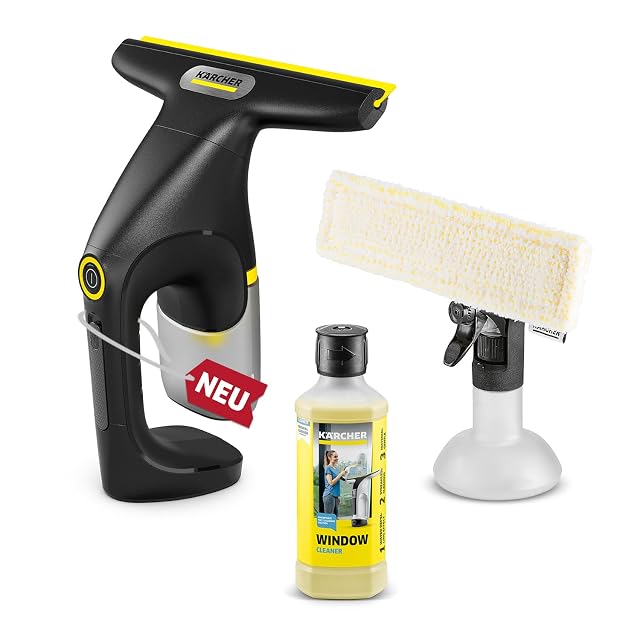
Kärcher WV 2 Black Edition · $190

Meant for: Houses with traditional windows, glazing bars and a mix of pane sizes

Where it is strongest: The narrow blade makes small panes and glazing bars practical

Where it is weakest: Two blades to store, and one will be missing when you want it

Read the full review →

Kärcher WV 1 Compact Care Extra+ Black

Meant for: Shower screens, mirrors and skylights — the everyday glass rather than a whole house

Where it is strongest: Works in any orientation, including overhead — skylights and shower ceilings

Where it is weakest: Verified absent from the US store

Read the full review →

Bosch GlassVAC · $100

Meant for: Households already using Bosch home tools, and anyone who wants a runtime figure they can act on

Where it is strongest: Runtime quoted in windows, which is directly usable

Where it is weakest: Verified absent from the UK store

Read the full review →

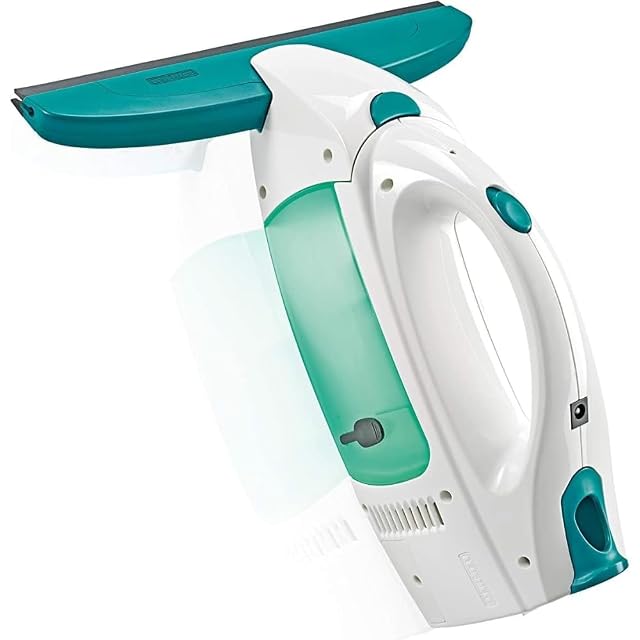
Leifheit Dry & Clean · $90

Meant for: Conservatories, stairwell windows and anything above head height

Where it is strongest: Fits telescopic poles, so high windows and conservatory roofs are reachable from the ground

Where it is weakest: The pole is a separate purchase, and the reach depends on which one

Read the full review →

What you get for each level of spend

What you will need too

Lances, nozzles and detergents from the same aisle, at the price we read. Confirm the fit against the machine you choose before ordering: it turns on the coupling and the part number, which the listing gives.

The short of it

What this page is based on

The washers above come from the catalog of this site. Specifications are those the manufacturer and the Amazon page publish; prices are what Keepa reported for the date below, and both move. The order follows declared specifications, stated strengths weighed against stated limits, and price. No machine here has been put to work by us, and nothing on this page pretends otherwise.

Last checked on

Prices quoted in these summaries are dated readings. The live price is shown next to each product.

The tool we use ourselves

Chosen your machine? Now buy it at the right price.

Pressure washers and floor washers swing by a hundred dollars or more across the year, and the biggest "discounts" often land at prices the same model sold for six weeks earlier. UniverTrack tracks the real price history across retailers, spots fake reductions, and alerts you when it is genuinely the moment to buy.

Real price historyBuy-now alertsAI buying assistant
Try free for 14 days →
No commitment · Cancel in one click · 5 languages