Skip to content

Choosing a push sweeper

A sweeper is the least glamorous machine on this site and the one that saves the most time, provided you match the brushes to the surface.

A push sweeper is a mechanical broom with a hopper. It does not need power, it does not raise dust the way a blower does, and on a large hard surface it is several times faster than a brush.

Working width, honestly

Quoted widths include the side brushes at full sweep. The useful width — what the main roller actually collects — is narrower, and that is the figure that decides how many passes a drive takes. Compare machines on roller width where it is published.

The hopper decides your rhythm

A small hopper on an autumn drive means emptying every few minutes. A large hopper on a workshop floor is dead weight you push around all day. Match it to the volume you actually generate, not to the biggest number.

Surface first

Smooth concrete suits a soft roller; block paving and asphalt need stiffer bristles to reach into the texture. A sweeper set up for one is mediocre on the other, and adjustable brush height is what lets a single machine do both.

Where they beat a pressure washer

Leaves, grit, sand and dry debris. Washing dry debris off a drive means moving it as slurry, blocking a gully and using several hundred liters of water. Sweep first, wash second — that order halves both jobs.

Which washer does your job need?

You have a long drive or yard
A push sweeper collects far faster than a broom and without the dust cloud.
You clear leaves
A sweeper handles dry leaves well and wet ones poorly, which is worth knowing before autumn.
You want no noise or power
A push sweeper needs neither, which is its quiet advantage over a blower.
You have a small paved area
A broom is probably enough, and storage is the deciding factor.

Picking by the surface

Drives and yards

The main case. Collecting rather than moving debris, and without the dust a broom raises.

Autumn leaves

Where dry leaves are collected quickly and wet ones clog the brushes.

Grass clippings and gravel spill

Where a sweeper picks up what a blower merely relocates.

Indoor hard floors

Where a smaller sweeper works in workshops and garages without power or noise.

What to measure, and what to ignore

Working width
How much you cover per pass. Wider is faster on open areas and more awkward around obstacles.
Brush type and adjustment
Brushes that can be adjusted for height and wear last far longer and clean better on uneven surfaces.
Hopper capacity and emptying
How often you stop and how easy it is. On a leaf-covered drive this decides the pace.
Side brushes
For pulling debris in from edges and curbs. Without them you sweep the edges by hand anyway.
Surface suitability
Smooth paving suits sweepers; loose gravel and very uneven surfaces do not.

Which figure for which surface

Your surfaceSuitable?The note
Smooth paving or concreteYesThe natural fit
Block pavingUsuallyBrush height matters
Loose gravelPoorlyIt picks up the gravel
Wet leavesPoorlyBrushes clog

What to avoid doing

Using it on wet leaves
They clog the brushes and pack in the hopper. Dry conditions are what a sweeper is designed for.
Setting the brushes too low
It wears them out quickly and makes pushing hard work. Height adjustment exists to be used as they wear.
Using it on loose gravel
It collects the gravel along with the debris. That is a different problem from the one you were solving.
Leaving it full
Wet debris in a hopper rots and rusts. Emptying after use is a small habit with a large effect.

By how hard you will work it

The long drive owner
Gets the most benefit, especially in autumn, and should look at working width and hopper size.
The workshop user
Wants a smaller sweeper for hard floors without power or dust.
The small yard owner
Is probably better served by a broom, since storage outweighs the time saved.

Servicing, storage and working life

Sweepers are simple and wear at their brushes and their drive belt. Brushes that have worn short stop reaching the ground, and a sweeper that has stopped collecting usually needs adjusting or rebrushing rather than replacing.

  • Adjust the brush height as the bristles wear.
  • Cut string and wire from the brush shaft; it wraps and jams.
  • Empty and dry the hopper rather than storing it full.
  • Check the drive belt where the design uses one.

Safety

A simple machine with a few real hazards.

  • Keep hands away from the brushes while the sweeper is moving.
  • Watch for stones being flicked forward on uneven ground.
  • Empty the hopper with the sweeper stationary.
  • Wear gloves when clearing wrapped string or wire from the shaft.

The picks, and what decided them

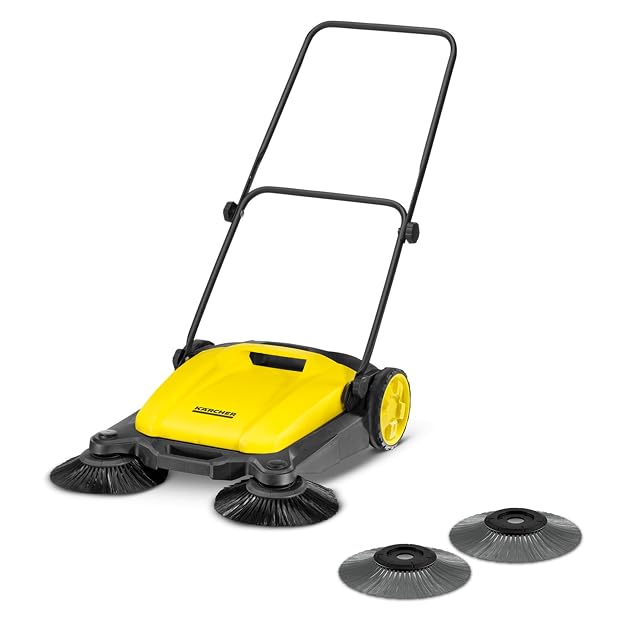
  1. Kärcher S 3 Twin 2-in-1

    650 mm (25.6 in) width · 1,800 m (5906 ft)²/h · 16 l hopper · 9.7 kg (21.4 lb) · two side brushes

    Two side brushes and a 16-liter hopper: the sweeper you push once rather than the broom you swing all afternoon.

    Best for: Terraces, paths and short drives cleaned regularly, where storage space is limited

    8.7/10

    ≈ $255

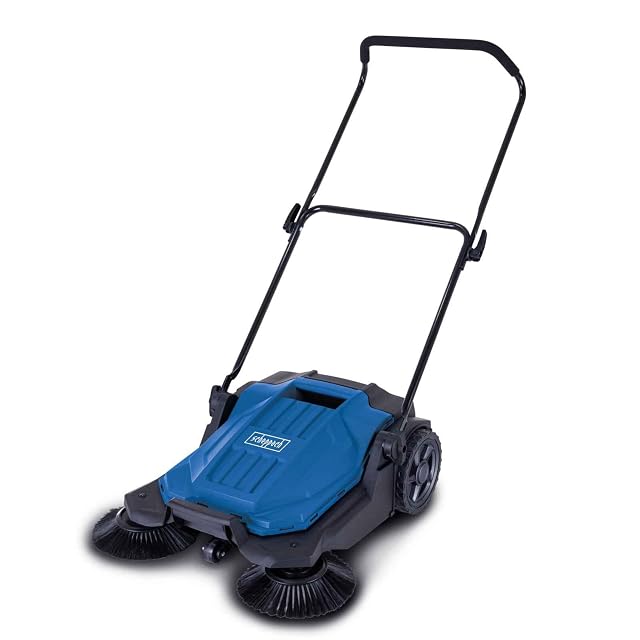
  2. Scheppach S800

    650 mm (25.6 in) width · 2,600 m (8530 ft)²/h · 20 l basket · three-brush system

    Three brushes and a 20-liter basket for the price of a good broom and a bin.

    Best for: A drive or a yard where the job is dry leaves, grit and general debris

    6.9/10

    ≈ $310

The questions we hear

Does a sweeper work on gravel?

On loose gravel it throws stones and picks up the gravel itself, which is not what you want. Sweepers are for a hard surface — concrete, asphalt, block paving, a workshop floor. On block paving they lift moss and grit out of the joints, which is where they beat a broom outright.

One side brush or two?

Two, if the machine will work against a wall on both sides or along a curb. A single side brush means approaching every edge from one direction, which on a long drive is twice the walking.

Is a sweeper better than a leaf blower?

It collects rather than relocates, and it makes no noise. A blower is faster over rough ground; a sweeper leaves you with the debris in a hopper.

Does it work on wet leaves?

Poorly. Wet leaves clog the brushes and pack in the hopper. Sweepers are designed around dry conditions.

What surfaces suit a sweeper?

Smooth paving and concrete. Loose gravel gets collected along with the debris, and very uneven ground defeats the brushes.

How wide should it be?

Wider covers open areas faster and is more awkward around obstacles. Match it to the shape of the area rather than its size alone.

Why has mine stopped collecting?

Usually worn brushes that no longer reach the ground, or string wrapped around the shaft. Both are quick to correct.

Do I need side brushes?

If you sweep along curbs and walls, they save doing the edges by hand afterwards, which is where most of the debris collects.

Each washer, and the job behind it

Kärcher S 3 Twin 2-in-1 · $255

Meant for: Terraces, paths and short drives cleaned regularly, where storage space is limited

Where it is strongest: Two side brushes feed both edges into the roller — one-brush machines leave a line

Where it is weakest: 1,800 m (5906 ft)²/h is the lowest area figure in this group

Read the full review →

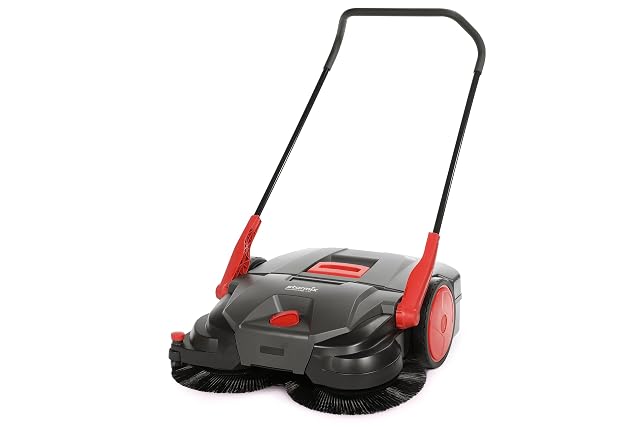
Starmix Durosweep 77 Pro

Meant for: Daily sweeping of large hard areas — yards, forecourts, industrial units

Where it is strongest: Built for repeated professional use rather than a season of Saturdays

Where it is weakest: Costs several times any other sweeper in this group

Read the full review →

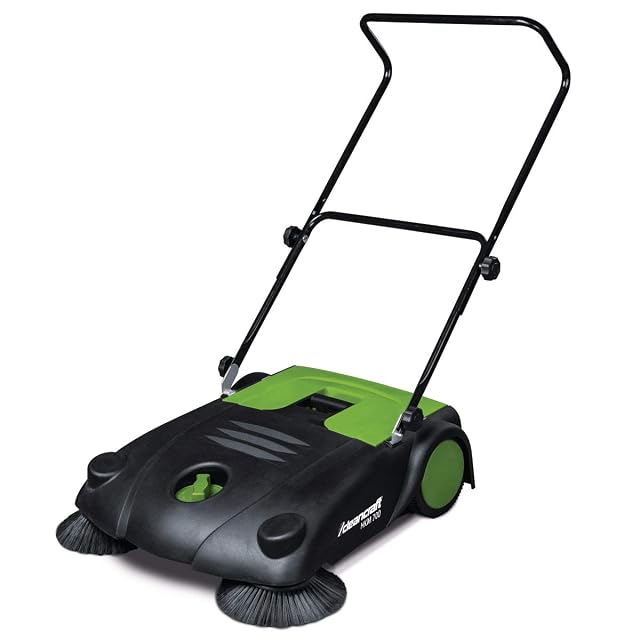
Cleancraft HKM 700

Meant for: Forecourts, workshop floors and shared drives — mixed debris, regularly, for years

Where it is strongest: Tandem rollers pick up flat and bulky debris — where single-roller machines skip

Where it is weakest: More mechanism means more to keep clean and eventually more to wear

Read the full review →

Scheppach S800 · $310

Meant for: A drive or a yard where the job is dry leaves, grit and general debris

Where it is strongest: 2,600 m (8530 ft)²/h and a 20-liter basket at the second-lowest price in this group

Where it is weakest: No published brush height adjustment detail on the listing

Read the full review →

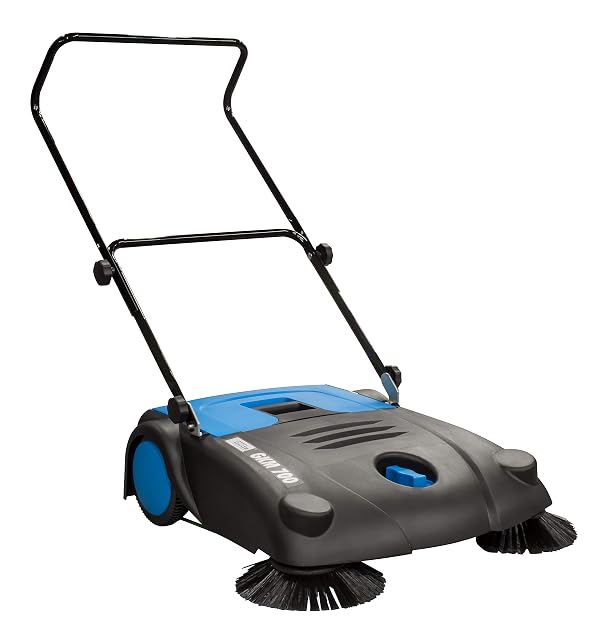
Güde GKM 700

Meant for: Long, open, hard-surfaced areas where sweeping width saves passes

Where it is strongest: 700 mm (27.6 in) of width — 50 mm (1.97 in) more than the Kärcher and Scheppach machines here

Where it is weakest: 14-liter hopper: the smallest here, so more trips to the bin

Read the full review →

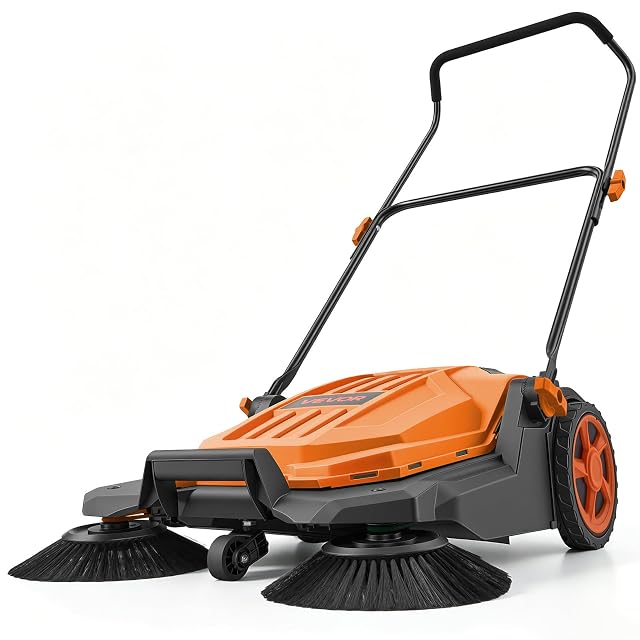
VEVOR Manual Sweeper 650 mm · $86

Meant for: A terrace or a short drive where storage space is the binding constraint

Where it is strongest: 9.1 kg (20.1 lb) — light enough to hang on a wall or lift into a boot

Where it is weakest: No area performance figure published

Read the full review →

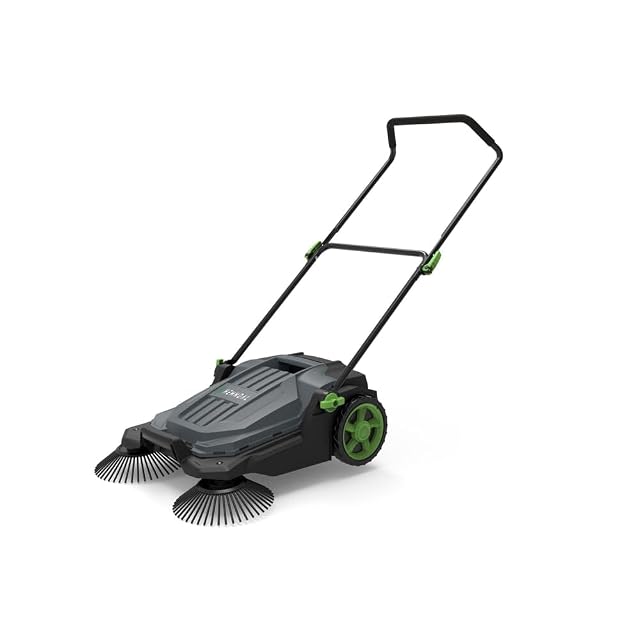
HEMMDAL HKM65

Meant for: A drive or yard in Germany, the UK or France, where price decides

Where it is strongest: 20-liter container and 2,600 m (8530 ft)²/h, matching machines that cost more

Where it is weakest: Verified absent from the US, Italian and Spanish stores

Read the full review →
What you get for each level of spend

What you will need too

Lances, nozzles and detergents from the same aisle, at the price we read. Confirm the fit against the machine you choose before ordering: it turns on the coupling and the part number, which the listing gives.

The short of it

What this page is based on

The washers above come from the catalog of this site. Specifications are those the manufacturer and the Amazon page publish; prices are what Keepa reported for the date below, and both move. The order follows declared specifications, stated strengths weighed against stated limits, and price. No machine here has been put to work by us, and nothing on this page pretends otherwise.

Last checked on

Prices quoted in these summaries are dated readings. The live price is shown next to each product.

The tool we use ourselves

Chosen your machine? Now buy it at the right price.

Pressure washers and floor washers swing by a hundred dollars or more across the year, and the biggest "discounts" often land at prices the same model sold for six weeks earlier. UniverTrack tracks the real price history across retailers, spots fake reductions, and alerts you when it is genuinely the moment to buy.

Real price historyBuy-now alertsAI buying assistant
Try free for 14 days →
No commitment · Cancel in one click · 5 languages