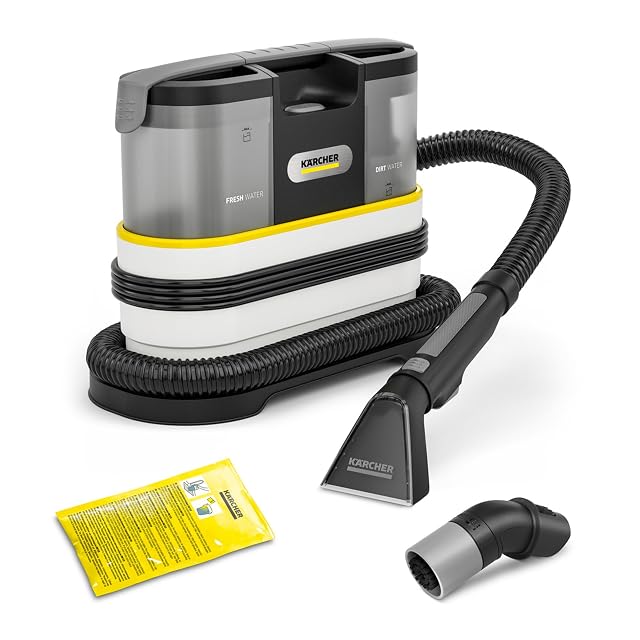
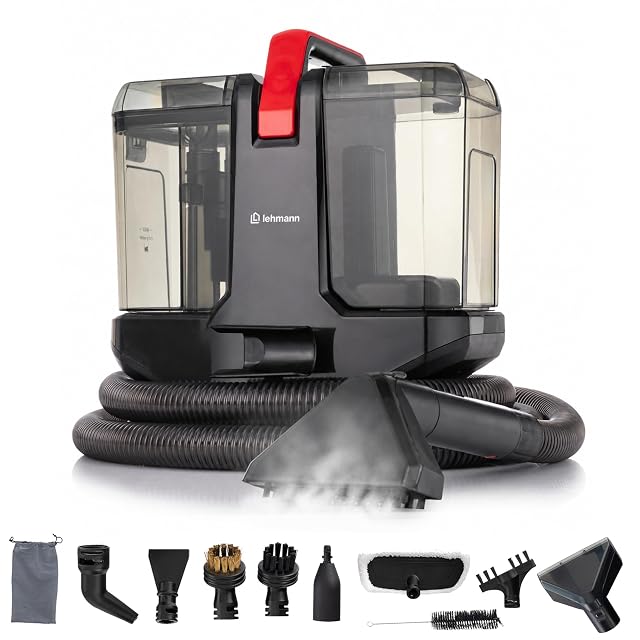
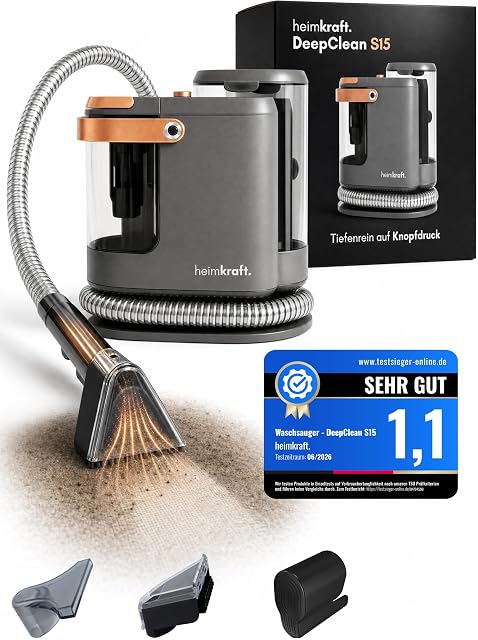
Spray extraction works. The failures are almost all technique.
1. Vacuum dry first
Loose grit and hair turn into a slurry once wet, and a wet vacuum will not lift it as cleanly as a dry one would have.
2. Test somewhere hidden
Under a cushion, behind a skirt. Color transfer on old fabric is not reversible.
3. Spray, agitate, extract — in strips
Overlapping strips, spray on the way out, extract on the way back. Working randomly leaves alternating wet and dry patches that dry as watermarks.
4. The dry passes
Two or three more passes over the same strip with the spray off. This is the step that decides whether the sofa smells on Thursday. Then open a window and put a fan on it if you can.
Car seats, specifically
Foam under a car seat holds water for days and a car is a sealed box. Do a lighter job than you think you need, dry pass twice as much, and leave the doors open.
The questions we hear
Hot or cold water?
Cold first on protein — blood, milk, egg, most bodily accidents — because heat sets it permanently. Warm on grease and body oils, which is what a sofa arm accumulates. If you cannot identify the stain, cold is the safer default.
How wet is too wet?
If the foam beneath the cover is damp, too wet. Upholstery holds far more liquid than its surface suggests, and foam dries slowly enough to smell. Two or three passes with the spray off pull out a surprising amount.
Last reviewed 2026-08-15