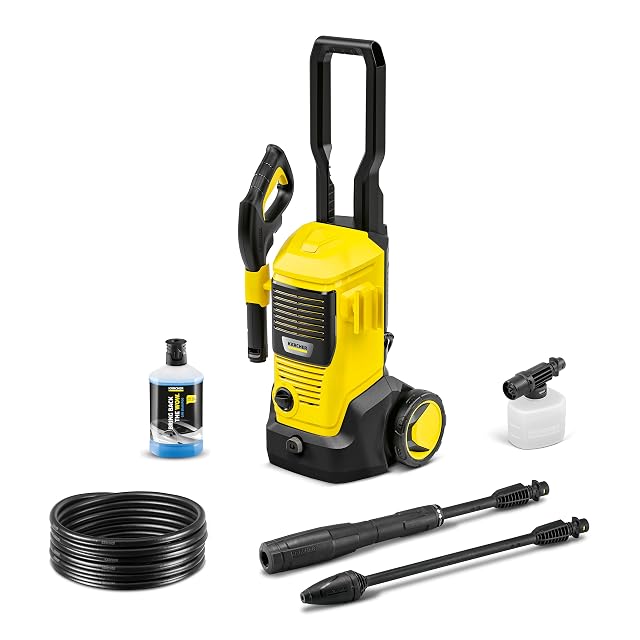
A blocked gully or downpipe is normally a fifteen-minute job with the right hose.
Feed it in before you pull the trigger
At least a meter inside the pipe. Triggered in the open, the nozzle whips violently and the jets are aimed straight back at you.
Mark the hose
Tape at two and five meters tells you how far in you are and, more importantly, whether you are still making progress. A hose that has stopped advancing is telling you something.
Work in and out
Do not drive straight to the blockage and hold. Advance a meter, withdraw half, advance again. The withdrawal is what carries the debris back out rather than compacting it.
Where not to use it
Older clay drains with displaced joints, and any pipe you suspect is collapsed. High-pressure water will find a defect and go through it into the surrounding ground, which turns a blockage into an excavation.
Afterwards
Flush with plenty of low-pressure water and check the run drains freely. And rinse the hose itself — it comes back out carrying what it removed.
The questions we hear
How does the hose move along the pipe by itself?
The nozzle on the end has rear-facing jets and no forward one. The backward thrust pulls the hose into the pipe and the same jets scour the walls on the way. That is also why you must never pull the trigger with the nozzle outside the pipe.
What if the hose gets stuck?
Release the trigger first — under thrust it will keep burrowing. Then withdraw steadily while a helper feeds slack. The usual causes are a sharp bend, a root mass and a nozzle that has passed a junction and turned back on itself.
Last reviewed 2026-08-16