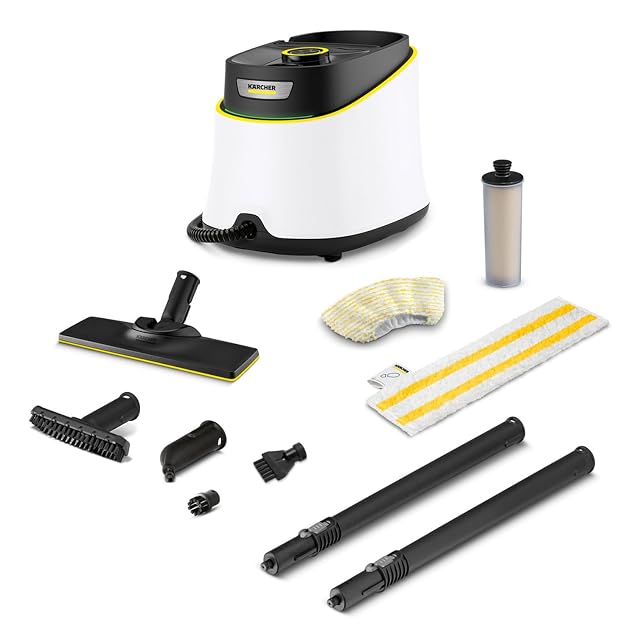
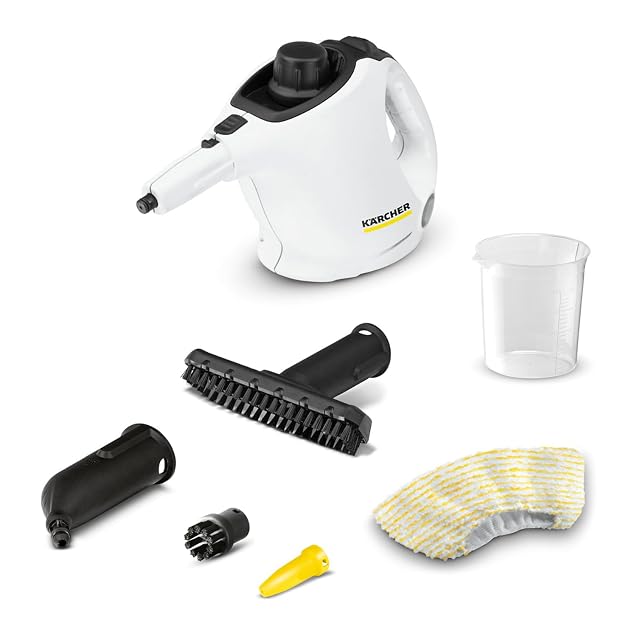
Steam cleaning is a two-handed job, and that is the part nobody explains.
Nozzle in one hand, cloth in the other
Hold the steam on the mark for two or three seconds, then wipe. The steam breaks the bond; the cloth carries the dirt away. Without the cloth you are redistributing softened grease.
Work top-down and in sections
On a hob, a shower or an extractor hood, loosened grime runs. Start high, wipe as you go, and never steam a large area before wiping any of it.
Floors: keep moving, and know the finish
On floors the opposite applies — the head must keep moving, because parking it puts water into a joint. Use the lower steam setting on sealed wood if the machine has one, and test any laminate in a hidden corner first.
Pads are consumables
A matted pad no longer holds water and leaves the floor wet. That is the most common reason a steam mop is judged to have stopped working — and the cheapest thing here to fix.
The questions we hear
Why does steam seem to do nothing on grease?
Because it is being moved too fast. Steam softens grease in a few seconds at close range; a cloth then lifts it. Keep the nozzle in one place until the surface changes, wipe immediately, and repeat. Moving the nozzle continuously heats the room and not the mark.
Which floors should never be steamed?
Unsealed timber, waxed floors, and laminate with open or lifting joints. Sealed tile, porcelain and vinyl are fine. If you cannot identify the finish, test behind a door before committing to a room.
Last reviewed 2026-08-15