The bottom line The right first workshop vacuum: cheap, honest, and unremarkable in the way a tool should be.
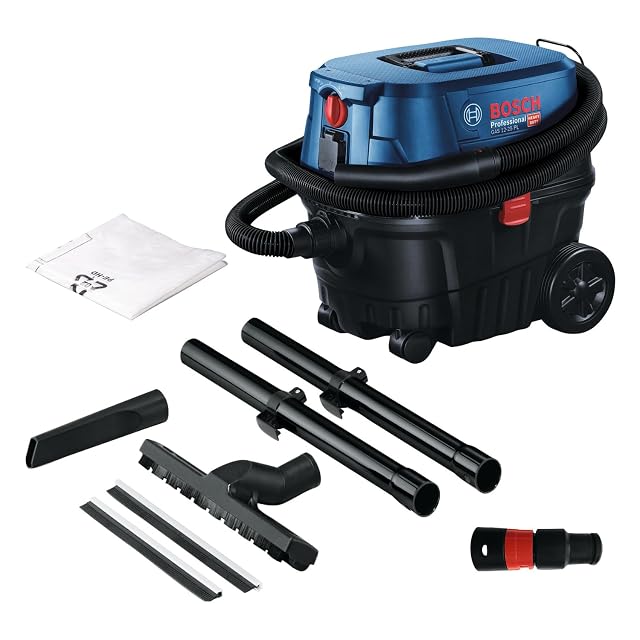
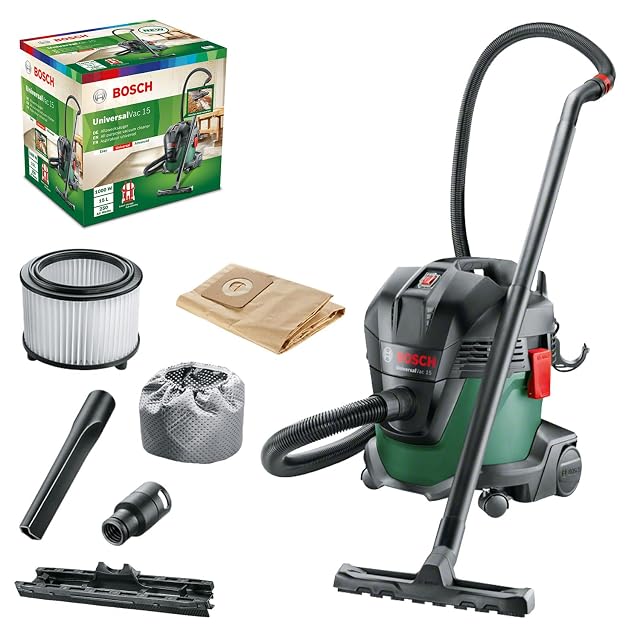
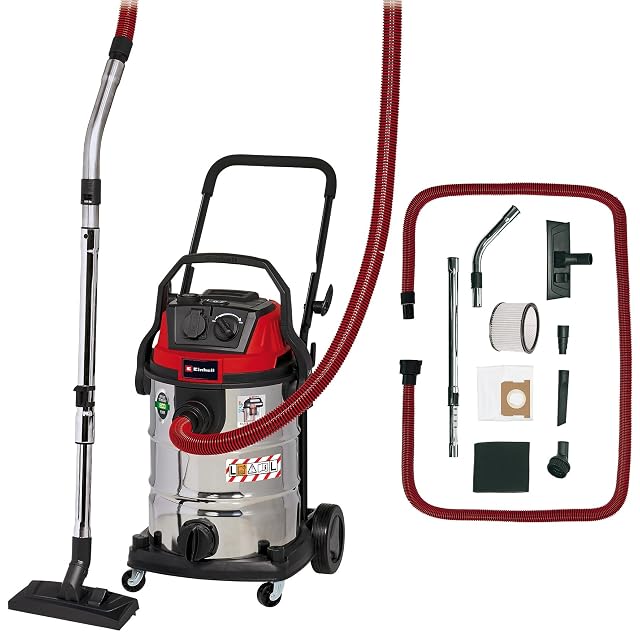
The WD 3 is the machine most workshops start with: 17 litres, 1 000 W and a cartridge filter that handles dust and water without being swapped.
What a wet and dry vacuum is actually for
Not carpets. It is for what a household vacuum must never meet — standing water, plaster dust, sawdust, broken glass, the contents of a blocked sink trap, the gravel in a car footwell. A domestic vacuum bag turns to paste on the first litre of water; this machine is built around that fact.
The two metres of hose
The specification that shapes daily use is the hose, and two metres is short. In a car it is fine. Across a workshop floor it means the machine follows you every couple of minutes, which is exactly when tools get pulled over. The step up to a WD 4 P or WD 5 P buys hose, cable and a power socket for a sander — a bigger practical difference than the drum size.
The bag question
Fleece bags cost more than paper and hold several times as much before the suction fades, because they filter across their whole surface instead of clogging at the inlet. On plaster or ash — which this machine should not be used for anyway — the difference is not marginal.
Availability
One reference across all six Amazon stores, including the United States.
What we like, and what we don't
Strengths
Cartridge filter stays in place for wet pick-up on this generation — no filter swap for water
Seventeen litres is enough for a car interior, a workshop floor or a blocked sink
One reference on all six Amazon stores
Compromises
Two metres of hose: you move the machine constantly
No power take-off socket for tools, unlike the P models
Plastic drum — light, and less tolerant of being dropped than steel
Specifications
Container
17 l, plastic
Power
1 000 W
Hose
2 m
Filtration
Cartridge filter plus fleece filter bag
Part number
1.628-130.0
Amazon reference
B0GC6MPDLY
EAN
4066529220929
Questions people actually ask
Do I need to remove the filter to vacuum water?
On this generation Kärcher's cartridge filter is designed to stay fitted for both wet and dry work, which removes the classic wet-vac mistake of soaking a paper element. Check the manual for your exact model before the first wet job — on older and cheaper machines a foam filter must be fitted instead, and getting that wrong destroys the filter in one use.
Is 1 000 W enough?
For a household machine, yes. Wattage describes what the motor consumes, not what the machine picks up — airflow and suction do that, and neither is published here. What actually limits this machine is the two-metre hose and the 17-litre drum, not its motor.
What sets this model apart
Compared with the median of its own aisle on this site — not with the market at large.
Amazon referenceB0GC6MPDLY-100 % vs the aisle median
Container17 l, plastic-43 % vs the aisle median
Power1 000 W-29 % vs the aisle median
Our score
7.2/ 10
The right first workshop vacuum: cheap, honest, and unremarkable in the way a tool should be.
Who this one is for, among cleaning machines
A garage, a car and the occasional flood — the vacuum you buy because a household one must not be used for this
Set beside the neighbouring cleaning machines
cleaning machines from the same category, at nearby prices. Only what all of them publish is shown: a column with holes compares nothing.
A reference exists on these Amazon stores: France, Germany, Italy, Spain, United Kingdom, United States. Listed is not the same as in stock — availability changes daily.
Details checked on August 15, 2026.
Sources
Specifications: the manufacturer sheet for cleaning machines and the matching Amazon product page. Prices and availability: Keepa. Every figure on this page names its source.