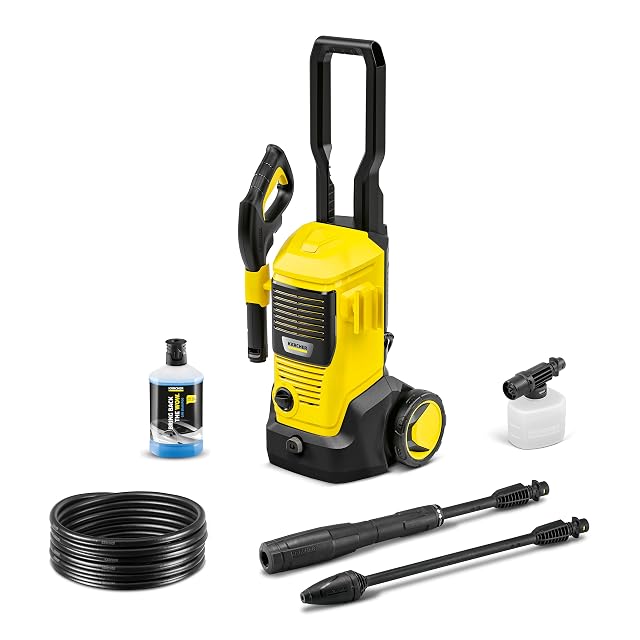
A property is cleaned in one direction: downwards.
1. Gutters and high surfaces
A gutter kit with a curved lance works from the ground. Everything dislodged here falls on what comes next, which is why it is first.
2. Render and walls
Low pressure, detergent, dwell time. Never a rotary nozzle. Water driven behind render reappears as a problem the following winter.
3. Windows and glass
After the walls, before the ground. A window vacuum removes the water without the streaks and without wetting the sill you just cleaned.
4. The terrace
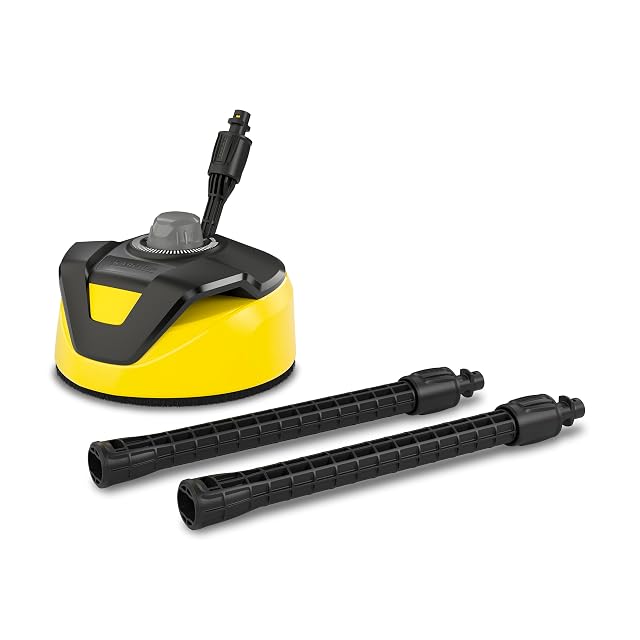
Surface cleaner, treatment where there is algae, even passes. This is the job the machine was bought for and the one most likely to be done twice if the order is wrong.
5. The drive and the drains
Last, because it is the dirtiest and the most tolerant. Concrete takes a rotary nozzle; block paving takes a surface cleaner, because a rotary jet blows the jointing sand out.
The questions we hear
Where do most people go wrong?
They start with the terrace, because it is the surface that annoys them most. Then they clean the render above it, and the terrace needs doing again. The rule is simple: nothing above a clean surface should still be dirty.
How long should I leave between passes?
Long enough for treatments to work — patio and facade products need their stated dwell time — and long enough for a surface to dry before you judge it. Wet stone always looks clean.
Last reviewed 2026-08-15