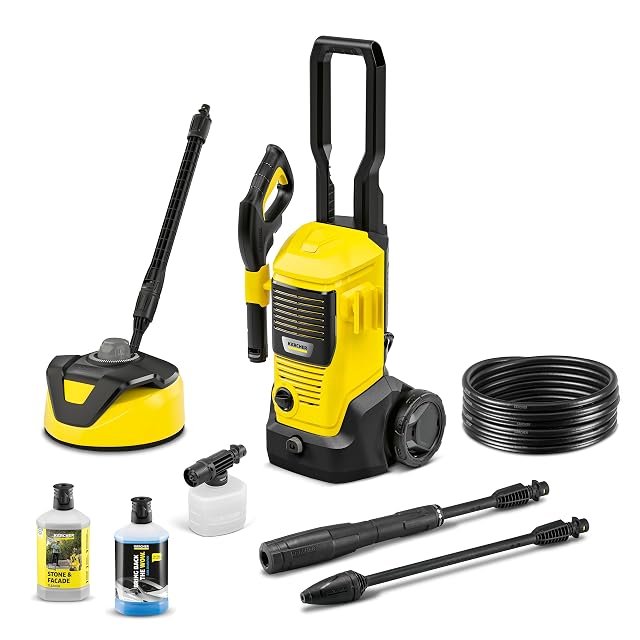
Most first-week problems are set up rather than manufactured.
1. Check the inlet filter
The small mesh screen in the water inlet catches grit from the mains. It is also the first thing to block, and a blocked filter looks exactly like a failing pump. Look at it before the first use and after any work on the water supply.
2. Purge the air
Connect the water, open the tap fully, and squeeze the trigger with the machine switched off until water runs steadily from the gun. Then start the motor. This is the step people skip, and it is why a new machine sometimes pulses.
3. Route the hose before you start
Uncoil it completely. A coiled high-pressure hose restricts flow, and a hose that kinks at the gun is on its way to splitting there. Put the machine where it will not be dragged.
4. Test at distance
First pass on an unimportant piece of concrete, a meter away, with the widest fan setting. Close in only as far as the surface tolerates. That habit is worth more than any accessory in the box.
The questions we hear
Why does the machine pulse instead of running steadily?
Almost always air or a restricted supply. Purge the machine with the trigger open and the motor off until water runs steadily, check the inlet filter for grit, and make sure the garden hose is fully open and not kinked. A pump starved of water cycles — and running dry damages seals in seconds.
Does it matter which tap I use?
It matters that the tap delivers enough flow. A machine rated at 500 l/h needs a supply that can give it; a half-open tap or a narrow, coiled hose starves the pump. Uncoil the supply hose fully before starting.
Last reviewed 2026-08-15