Running from stored water is one of the genuine advantages of these machines. It also removes the mains’ two free gifts: pressure and cleanliness.
Filter first, always
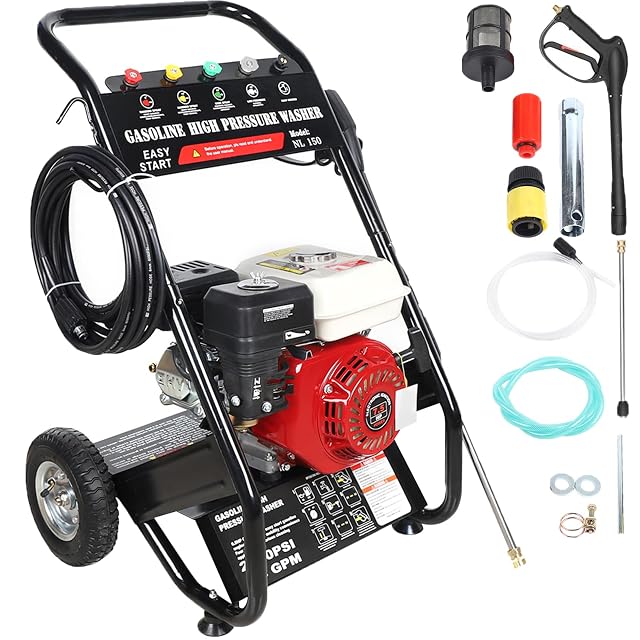
A water butt holds leaves, sediment and insects. A pump does not. Fit the filter that comes with the suction kit, and check it every session — it is cheaper than a pump.
Keep the lift short
Pumps that self-prime do so within a stated height. A butt on the ground with the machine beside it is fine; the same butt on a stand with the machine ten meters away and uphill is not. Shorten the hose and lower the machine before assuming a fault.
Never run dry
The single most expensive mistake in this niche. Seals rely on water for lubrication and cooling, and a few seconds without it is enough. Watch the level, and stop before the tank does.
Expect a little less pressure
Drawing water costs the machine some of its performance compared with a pressurized mains feed. That is normal, and it is not a fault.
The questions we hear
Can any pressure washer draw from a tank?
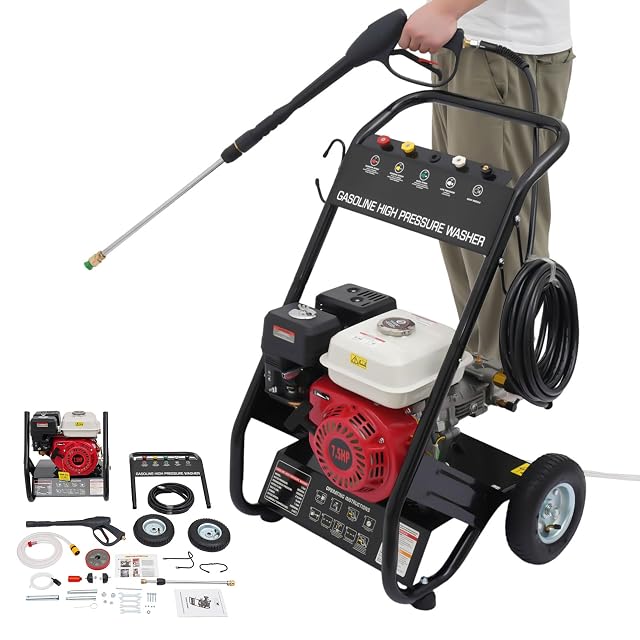
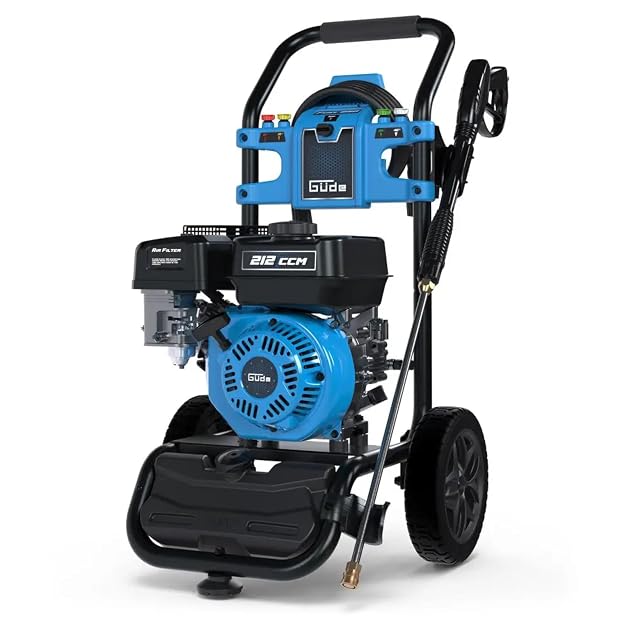
No — check the manual for a stated suction capability and a maximum lift. Machines that can will specify a suction hose and filter, usually sold separately. Petrol machines are commonly self-priming, which is often the reason to own one.
What ruins the pump?
Two things. Grit, because a pump is a precision component and a water butt is full of sediment; and running dry, which destroys seals within seconds. A filter on the suction line and never letting the tank empty solve both.
Last reviewed 2026-08-15