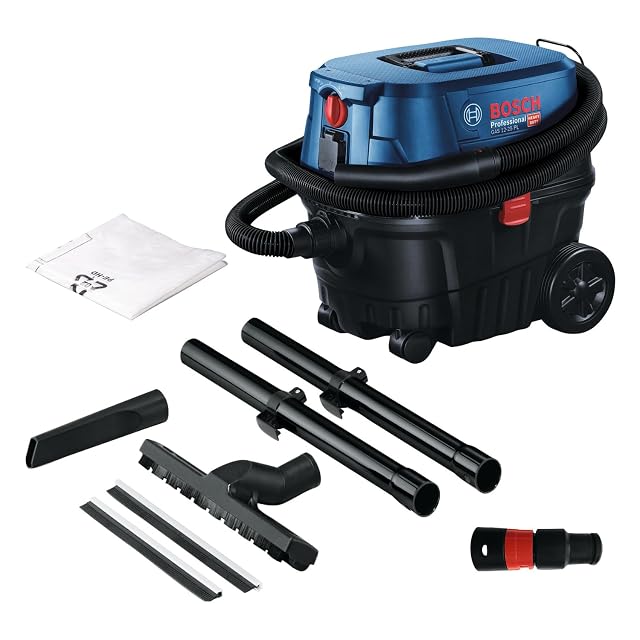
Three stages, in front of each other, and the machine survives.
Stage one: a cyclone separator
A bucket lid with a cyclone drops most of the material out of the airflow. It is the difference between one bag a day and one bag a week.
Stage two: a fleece bag
Fleece, not paper. Paper splits under a heavy load of fines and tears if anything is damp.
Stage three: the right filter
A renovation-grade or fine-dust filter, not the standard element. This matters most when you are working inside a house — a standard filter puts the finest and most damaging fraction straight back into the room.
Clear the filter as you go
If the machine has a filter-clean button, use it every ten minutes rather than waiting for the suction to drop. Recovery is far better from a lightly loaded filter than from a blinded one.
Wet the dust where you can
Misting a floor before sweeping, or using a wet-cut attachment, keeps the fine fraction out of the air entirely. That is better for the machine and considerably better for your lungs.
The questions we hear
Why does the suction die so quickly?
Because plaster dust is fine enough to sit in the pleats rather than pass through them or fall off. Once the pleats are loaded, airflow collapses, and shaking the filter recovers only part of it. It is the fastest way to write off a filter.
Is a cyclone separator worth it?
On a single job, marginally. On regular renovation work, it pays for itself in bags and filters within a couple of jobs — it drops the great majority of the debris into a bucket before it ever reaches the machine.
Last reviewed 2026-08-16