Moss holds water and lichen bonds to stone. Neither is dirt, and neither behaves like dirt.
What pressure does and does not do
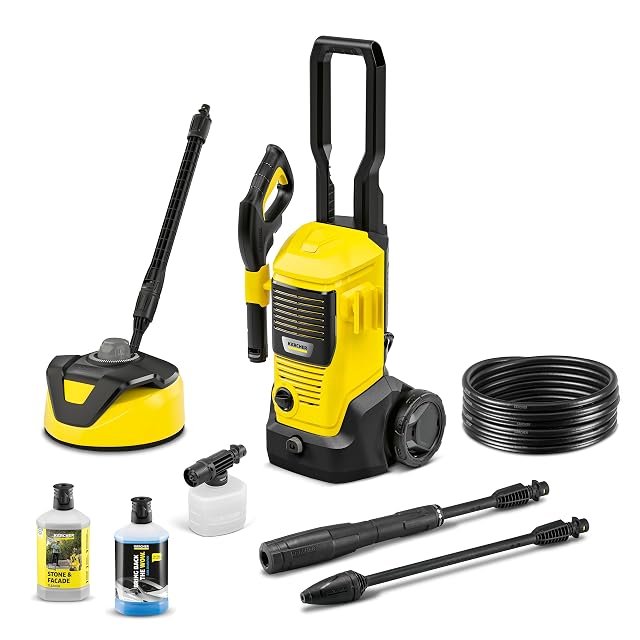
Pressure removes the top growth in seconds and leaves the rooted base. It also erodes soft stone and opens the surface, which is why the regrowth is often faster than the original colonization.
The chemical step
An alkaline stone cleaner, applied to a wetted surface, left the full stated dwell time, then rinsed. Dwell is doing the work — this is not a step you can shorten by turning the pressure up.
On a roof, do not
Roof moss on a domestic pitched roof is a job for a soft brush and a scraper from a safe access platform, or for someone insured to do it. A pressure washer on tiles drives water under the laps and lifts the surface off concrete tiles.
Slowing the return
Shade, damp and standing water are what feed it. Clearing a gutter that overflows onto a wall, or cutting back a shrub that keeps a slab wet, does more for the next two years than the cleaning did.
The questions we hear
Why does it come back so fast after pressure washing?
Because you removed the growth and left the spores and the roots, and you also roughened the surface slightly, which gives the next generation a better hold. A drive blasted clean in April is often visibly green again by September.
Is household bleach a good idea?
No. It never goes anywhere near a pressure washer — it attacks pump seals — and on a drive it runs off into planting and watercourses. Use a product sold for the surface, at the dilution on the label.
Last reviewed 2026-08-16