A drive is the largest hard surface most people own, and the order of operations decides how long it takes.
Sweep, then wet
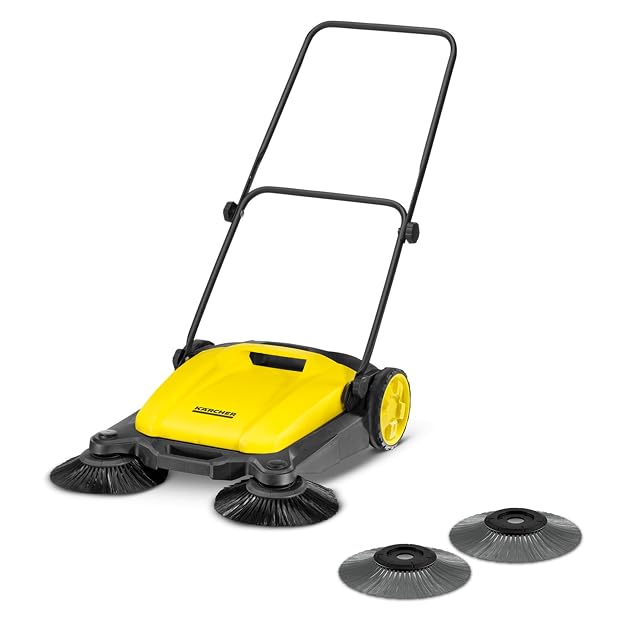
Dry grit, leaves and moss come off far faster with a brush or a push sweeper than with water. Wash them and you are moving the same material as slurry, using several hundred liters to do it and pushing silt into a gully.
Treat the growth chemically
Algae and lichen are organic and they respond to a stone cleaner and four minutes of dwell far better than to pressure. Apply from the bottom up, let it work, then rinse from the top down.
Then the surface cleaner
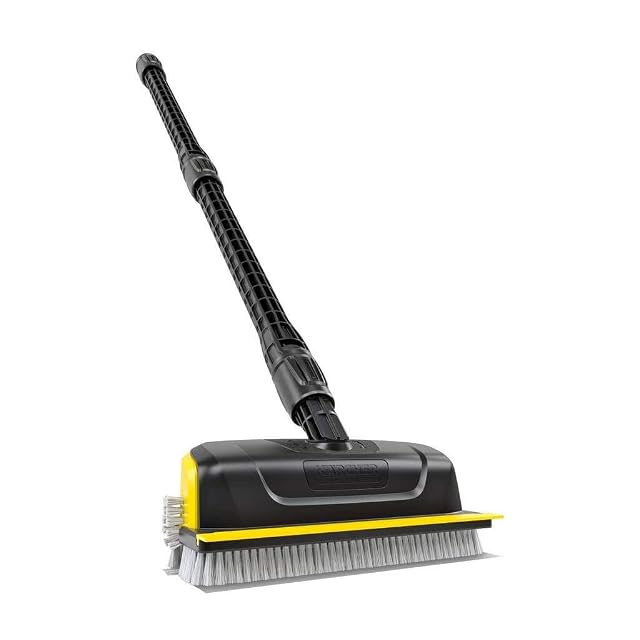
Overlapping passes, constant walking speed, and the machine doing the distance-keeping for you. This is where the even finish comes from — a lance held by hand cannot maintain the same standoff for twenty minutes.
Afterwards
Sweep kiln-dried sand into block paving joints once the surface has dried, on a dry day. Joints left empty let blocks move and let weeds back in faster than before you started.
The questions we hear
Will a pressure washer wash out the joint sand?
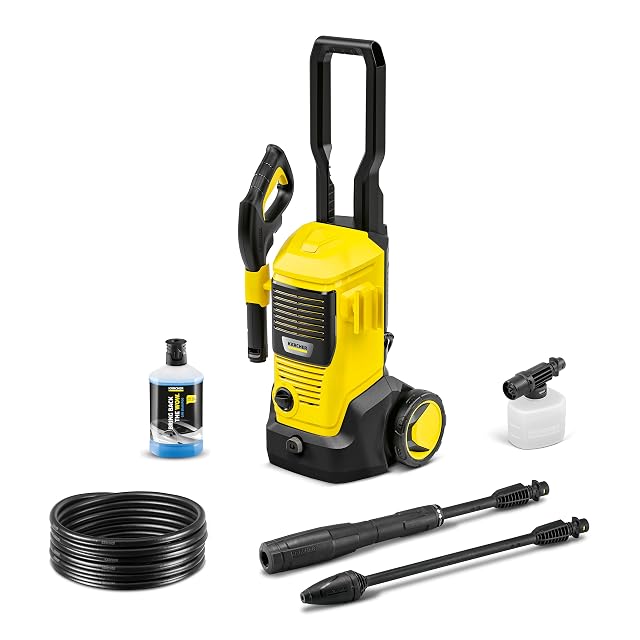
On block paving, yes, if you hold a narrow jet close or run a rotary nozzle into the joints. Use a surface cleaner at its normal standoff, keep moving, and accept that you will top up kiln-dried sand afterwards on any drive that has not been sealed.
Where should the dirty water go?
To a foul or surface drain that can take silt, not onto a lawn or a neighbor’s land. Sweeping first is what keeps the volume of solids low enough for a gully to cope.
Last reviewed 2026-08-16