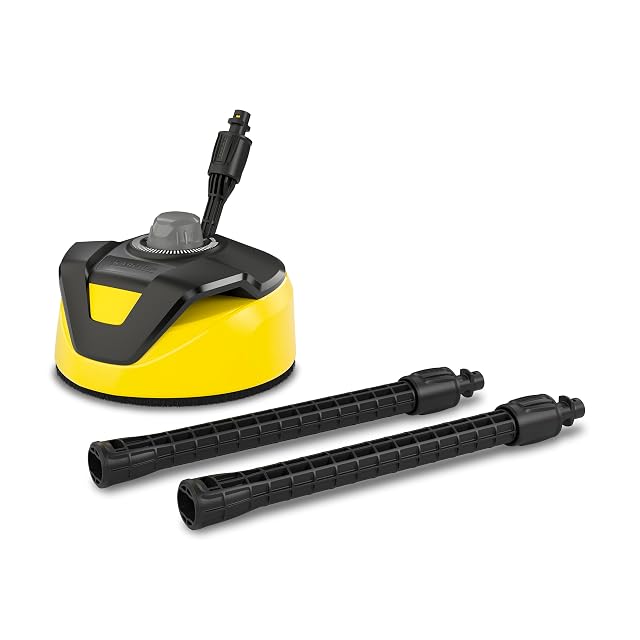
Two things produce an even terrace: a constant distance, and a treatment that has been given time.
Use the surface cleaner, always
The housing holds the jets at a fixed height and passes them at a steady rate, so every square centimeter receives the same energy. A hand-held lance cannot do that — your arm speeds up and slows down, and the stone records it.
Overlap by a third
Full-width passes with a third of the head overlapping the previous one. Straight lines, one direction. Random sweeps show as a pattern once the surface dries.
Let the treatment work
Black spot and lichen are rooted in the stone. A stone and facade product applied at low pressure and left for its stated dwell time does what no nozzle can. Rinse at low pressure afterwards — and keep the product away from planting beds and ponds.
Judge it dry
Wet stone always looks clean. Walk away, come back an hour later, and only then decide whether it needs a second pass.
The questions we hear
Can I fix a terrace that is already striped?
Usually, by cleaning the whole surface again with a surface cleaner so that every part receives the same treatment. What cannot be fixed is a groove cut by a rotary nozzle held still — that is material removed, not dirt.
What about the sand in block paving joints?
A rotary nozzle blows it out, and so does a lance held close. Use a surface cleaner at a moderate setting, and expect to re-sand afterwards. Kiln-dried sand brushed in when the paving is dry is the standard repair.
Last reviewed 2026-08-15