What the maker puts in writing
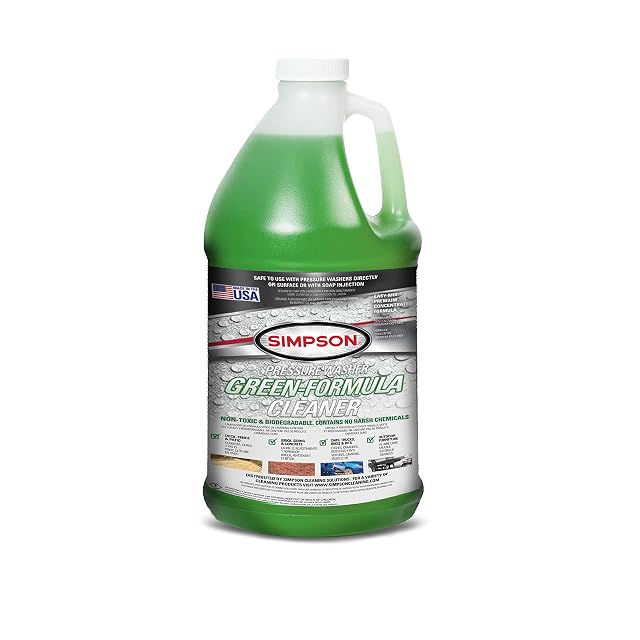
- “Multi-Purpose Cleaner: Non-butyl degreaser quickly cuts through tough oil and grease; eliminates the need to use several other products”
- “Natural Green Formula: Non-toxic, biodegradable and contains no harsh chemicals. Meets or exceeds OSHA, USDA, EPA, DNR requirements for health and safety”
- “Can be used in equipment such as pressure washers, automatic scrubbers, and steam cleaners; or use it for manual applications by spraying, mopping and wiping”
- “Use directly from the bottle or effective at dilutions as great as half-ounce per gallon of water; providing up to 256 gallons of cleaning solution per bottle”
- Description: “Offering the same cleaning power as the Multi-Purpose Cleaner, our Green Formula is perfect for providing extra cleaning power for vehicles, siding, decking, lawn furniture, garage floors, sidewalks, driveways, and more”
- Title: “1 Gallon, 88283” · Reference 88264 · Catalog: 4082 g (144 oz)
Five point nine cents a gallon
Every item on this shelf is a concentrate, so the price of the bottle is not the price of anything. What you buy is gallons of ready-to-use solution.
$15.18 ÷ 256 gallons = 5.9 cents.
And the dilution verifies, which is true of no other listing here. A US gallon is 128 fluid ounces. At half an ounce per gallon of water: 128 ÷ 0.5 = 256 — exactly the figure claimed.
The shelf, each at its own best published figure:
Simpson Heavy Duty — 5.4¢ · this — 5.9¢ · Simpson Multi-Purpose — 7.6¢ · Kärcher Vehicle — 36¢ · Kärcher Multi — 47¢ · Zep — 58¢ if its 26 gallons is per bottle, $2.31 if for the case · Krud Kutter — 80¢ · Briggs 1-gallon — $1.24 · Briggs 32 oz — $3.56 · Sun Joe and Simple Green — not calculable in gallons
Four listings on this shelf publish two different ratios for themselves: both Kärchers say 40 gallons in a bullet and 20 in the description, Krud Kutter says 20 and then 11, and Zep says 26 on a case of four without saying per bottle or per case. Sun Joe publishes none at all.
The honest qualification, which the bullet makes itself: 256:1 is the maximum — “dilutions as great as”. At that strength it is a light solution for light soil, and the same bullet offers the other end, “use directly from the bottle”. Every figure above is each maker’s own best case; this one’s best case is simply far more dilute.
It is the cheaper of the two domestic Simpsons, and says it cleans as well
The description does the comparison for you: “Offering the same cleaning power as the Multi-Purpose Cleaner, our Green Formula is perfect for… vehicles, siding, decking, lawn furniture, garage floors, sidewalks, driveways.”
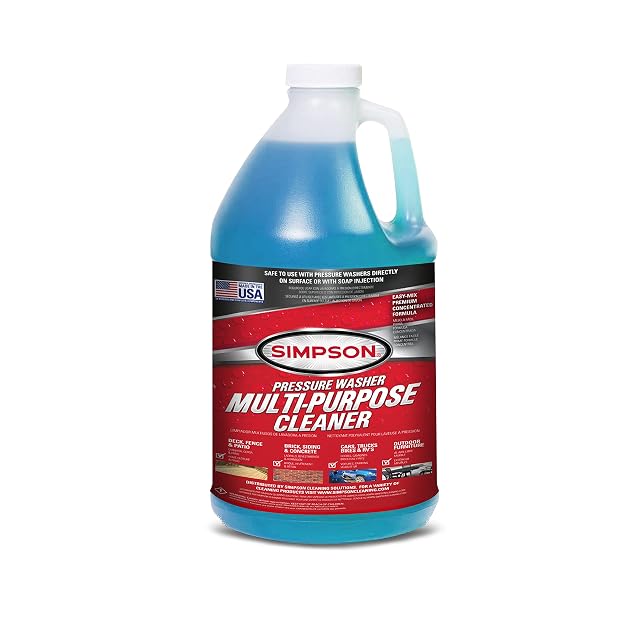
The Simpson Multi-Purpose on this shelf is $19.43. This is $15.18.
Same claimed cleaning power, same 256:1 dilution, same non-butyl chemistry, $4.25 less — and this one adds the non-toxic and biodegradable claims the Multi-Purpose does not make.
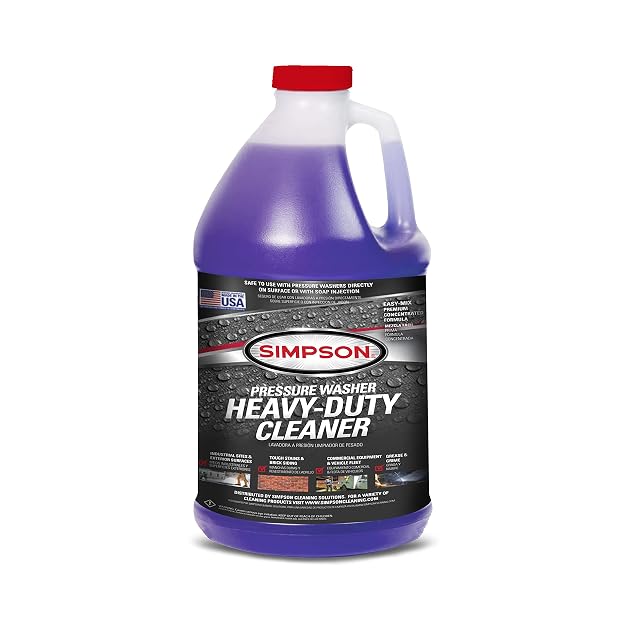
The third sibling, the Heavy Duty at $13.85, is $1.33 cheaper than this and aimed somewhere else entirely: “industrial sites, commercial equipment, construction machinery, fleet vehicles”, with no domestic surface list at all and no environmental claim.
All three weigh an identical 4082 g (144 oz) — 9 lb exactly — in the same 159 × 159 × 298 mm (6.26 × 6.26 × 11.7 in) bottle. So the differences are the formulation and the audience, not the packaging.
Of the three, this is the one to buy unless the job genuinely is plant and heavy grease.
Non-butyl, non-toxic, biodegradable — and what each one means
Three claims, and they are not the same kind of claim.
“Non-butyl degreaser” is the specific one. Butyl here means butyl cellosolve — 2-butoxyethanol, a glycol ether that has been the workhorse solvent of heavy degreasers for decades because it cuts oil and grease superbly. It is also a skin and eye irritant, absorbed through skin, and restricted or discouraged in a number of applications. So this names what is not in the bottle, and it is the most informative line on the page.
“Biodegradable” says what happens to the runoff. Which matters here more than on most shelves, because the surfaces named — “decking, garage floors, sidewalks, driveways” — drain onto soil and into storm water. Krud Kutter at $15.98 is the only other listing on this shelf to claim it.
“Non-toxic” and “no harsh chemicals” are the softest of the three, since neither is a defined term.
What the rest of the shelf declares:
Simple Green, $23.99 — “peroxide-powered”, “without harsh chemicals”, plus EPA Safer Choice Certified in the title
Simpson Heavy Duty and Multi-Purpose — “non-butyl”, and nothing else
Krud Kutter — “bleach free”, “biodegrabable”, and uniquely “anti-corrosive agents to help safeguard pressure washer components”
Sun Joe, $25.97 — “bleach-free”
Zep, $59.99 and both Briggs bottles — claim mold stains and declare no chemistry at all, which is the hardest promise on this shelf to make without bleach or peroxide
Four agencies, and no standard
“Meets or exceeds OSHA, USDA, EPA, DNR requirements for health and safety.”
Four bodies named, and no standard cited — not a number, not a program, not a test.
OSHA governs workplace safety. USDA maintains incidental-food-contact categories for cleaning compounds. EPA regulates chemical registration and runoff. DNR is a state-level department of natural resources, so it varies by state.
“Meets or exceeds requirements” across all four with no specifics is an assertion the maker makes about itself.
Compare the one certification on this shelf. The Simple Green at $23.99 carries “EPA Safer Choice Certified” in its title. Safer Choice is an actual EPA program with a published list of permitted ingredient functions, and the mark is granted rather than claimed.
So on paperwork, Simple Green is ahead. On the three concrete chemistry claims above, this page says more. And on cost per gallon of solution, this is cheaper by a very wide margin — though Simple Green publishes coverage instead of dilution, so the two are not directly comparable, which is the next section.
Four ways to apply it
“Can be used in equipment such as pressure washers, automatic scrubbers, and steam cleaners; or use it for manual applications by spraying, mopping and wiping.”
The widest application range on the shelf, shared with its two siblings.
Automatic scrubbers are the walk-behind floor machines of a warehouse — consistent with the “garage floors” in the description.
Steam cleaners is the unexpected one, because the steam shelf on this site is built on the opposite argument: the McCulloch there leads with “CHEMICAL-FREE CLEANING… uses ordinary water”, and four machines sell the absence of a consumable as the whole point. A detergent that names steam cleaners is addressing the commercial end, where a pre-spray before steaming is normal.
Manual use matters practically: a detergent you can also brush on covers the jobs a washer cannot reach. At least nine of the thirteen items here offer it; the two Briggs & Stratton bottles do not.
And bullet five gives the warning every listing should: “Always consult your machine’s owner’s manual for specific instructions regarding use of detergent.”
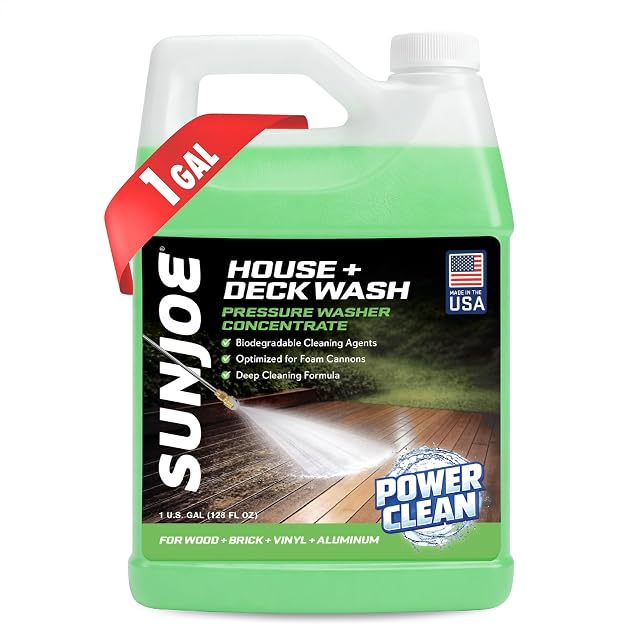
Which is more important than it sounds, and the Sun Joe listing is the only one on this shelf to explain why: “this power-washing detergent may require the use of a soap nozzle. Other models may need to use a soap-sprayer attachment.” A pressure washer will not draw detergent through a high-pressure tip — the siphon is a venturi and only pulls at low pressure, which is what the wide black soap nozzle on the lance shelf of this site exists for. Fit a 25° green tip and nothing comes through, and most people blame the detergent.
Two part numbers
Title: “1 Gallon, 88283”. Catalog reference: 88264.
The siblings are 88282 (Heavy Duty) and 88281 (Multi-Purpose), both matching their own titles — so 88283 sits neatly in that sequence and 88264 does not. Which does not settle it; it only says which looks like it belongs.
Why it matters: a part number is what you quote to reorder the same thing, and on a consumable that is the entire point of having one.
And it is a pattern. The Simpson wand on this site’s lance shelf does exactly the same: title ending 80479, catalog reference 80150.
Every other code on this shelf is single and unambiguous: 9.558-144.0 and 9.558-146.0 (Kärcher), 6832 and 6826 (Briggs), 385462 (Krud Kutter), ZUPPWC160PH (Zep), SPX-HDC1G (Sun Joe), 8541813566 (Simple Green).
What is not published
No dwell time, and this is the omission with a real cost. Krud Kutter is the only listing on this shelf that publishes a method: “allow product to remain on the surface for 3–5 minutes to penetrate”, “work in small sections”, “rinse thoroughly without allowing it to dry on the surface”. Dwell time is what makes a detergent work, and letting it dry leaves a film worse than the dirt. Briggs gives the other half: apply to a dry surface, then switch to a high pressure tip to rinse.
No surface coverage. Two listings publish square footage: Krud Kutter 5,800 sq ft at $15.98 — about 0.276 cents a square foot — and Simple Green 6,400 sq ft at $23.99, about 0.375 cents. On a concentrate this dilute, coverage would be the more meaningful of the two figures.
No dilution guidance by surface. “Use directly from the bottle” and “as great as 256:1” bracket a very wide range, and nothing says which end a cedar deck wants and which end a garage floor does. That is the one thing a page naming seven different surfaces should say.
No anti-corrosive claim, which only Krud Kutter makes. Detergent passes through your pump, and a pump contains aluminum and brass.
No foam cannon compatibility, which both Kärcher bottles name.
No mold or algae claim, where Zep leads on “algae, mold and mildew”, Simple Green brings peroxide to it, and both Briggs bottles claim mold stains. This is a degreaser, and it says so.
No certification mark, as above.
Availability
Read on the day this page was built: $15 at the American Amazon shop.
Read from Keepa on the day this page was last revised; stock and price both move without notice.
Prices quoted in this text were read on 2026-10-05. The live price is at the top of the page.