What the maker puts in writing
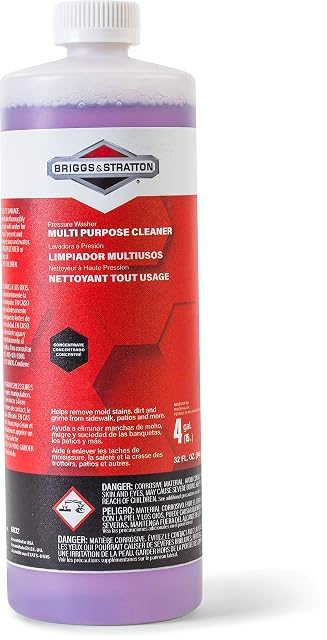
- “Use to fight mold stains, dirt and grime on siding, patios and more”
- “Mix 32 fl. Oz. Concentrate with water to create a perfectly blended pressure washer soap up to 4 gallons”
- “Compatible with direct from concentrate soap system, no mixing required”
- “Use with most brands of gas or electric pressure washers”
- Description: “Simply apply detergent to the dry surface then switch to a high pressure spray tip to rinse it all away”
- Reference 6832 · Catalog: 1043 g (36.8 oz)
Three dollars fifty-six a gallon, which is the top of this shelf
Every item here is a concentrate, so the price of the bottle is not the price of anything. What you buy is gallons of ready-to-use solution.
32 fl oz making up to 4 gallons is a 16 to 1 dilution. At $14.25, that is $3.56 a gallon of solution.
The shelf, each at its own best published figure:
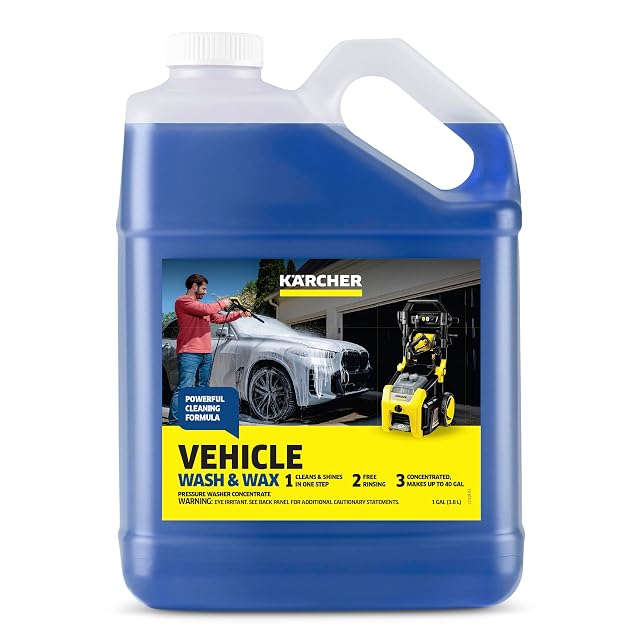
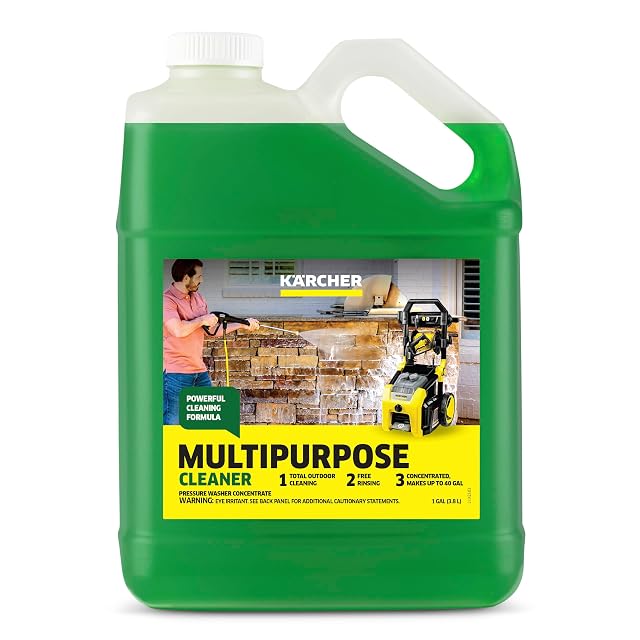
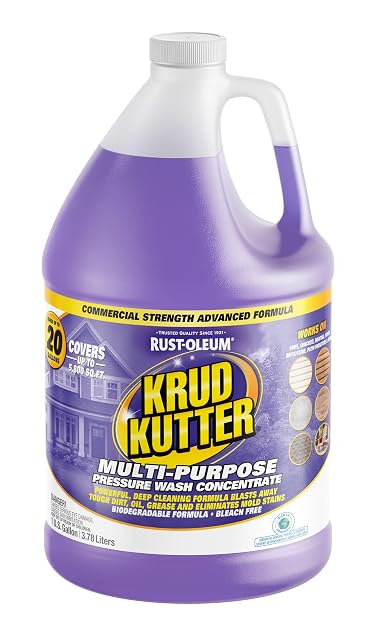
Simpson Heavy Duty — 5.4¢ · Simpson Green Formula — 5.9¢ · Simpson Multi-Purpose — 7.6¢ · Kärcher Vehicle — 36¢ · Kärcher Multi — 47¢ · Zep — 58¢ if its 26 gallons is per bottle, $2.31 if for the case · Krud Kutter — 80¢ · Briggs & Stratton 1-gallon — $1.24 · this — $3.56 · Sun Joe and Simple Green — not calculable in gallons
So this is roughly sixty-five times the cost per gallon of solution of the cheapest bottle on the shelf, and three times its own sibling.
And its own sibling is the same soap at a third the price
The Briggs & Stratton 6826 at $19.90 is 1 gallon making “up to 16 gallons” — the identical 16 to 1 ratio, which is to its credit: the two listings agree with each other, which four listings on this shelf do not manage with themselves.
$19.90 / 16 = $1.24 a gallon there. $14.25 / 4 = $3.56 here.
You are buying a quarter of the concentrate for seventy per cent of the price.
Two real reasons to do it anyway, and they are the only ones.
It is the smallest bottle on the shelf. 1043 g against 4082 g for each of the three Simpsons, 3946 g for its own gallon sibling, 4205 g for Simple Green, and 22680 g for the Zep case of four. On a shelf in a garage, that is a genuine difference.
And four gallons may be all you need. If the job is one patio once a year, a gallon of concentrate making sixteen gallons of soap will outlive its own usefulness.
The direct-concentrate system, which is a machine feature
“Compatible with direct from concentrate soap system, no mixing required.”
Some pressure washers — Briggs & Stratton’s own among them — carry a tank or siphon that draws undiluted concentrate and meters the dilution itself into the low-pressure stream. Pour this in neat and skip the bucket.
Only this and the 6826 gallon mention it. Nothing else on this shelf does.
If your machine does not have one, you mix 1 part to 15 parts water and apply that — and then you need the thing the Sun Joe at $25.97 is the only listing here to explain:
“this power-washing detergent may require the use of a soap nozzle. Other models may need to use a soap-sprayer attachment.”
A pressure washer will not draw detergent through a high-pressure tip. The siphon works by venturi, and a venturi only pulls at low pressure — which is exactly what the wide black soap nozzle on the lance shelf of this site exists for. Fit a 25° green tip and nothing comes through, and most people conclude the detergent is at fault.
And it publishes the method, which almost nothing here does
“Simply apply detergent to the dry surface then switch to a high pressure spray tip to rinse it all away.”
Two instructions, both correct, and only one other listing on this shelf gives any method at all.
Apply to a dry surface. Detergent on wet siding is already diluted before it touches the dirt, and it runs off instead of clinging.
Then change the tip to rinse. Which is the other half of the nozzle point above: soap goes on through a low-pressure tip and comes off through a high-pressure one. Two tips, one job.
The one listing that completes the picture is Krud Kutter at $15.98: “allow product to remain on the surface for 3–5 minutes to penetrate”, “work in small sections”, “rinse thoroughly without allowing it to dry on the surface.”
Dwell time is what makes a detergent work, and letting it dry leaves a film worse than the dirt. Neither figure appears here, so take the 3–5 minutes from the Krud Kutter page and apply it: spray a section, wait, change the tip, rinse before it dries.
Mold stains, with nothing said about how
“Use to fight mold stains”, and in the description, “Keep mold stains, dirt & grime at Bay & off of siding, patios, & more.”
A mold stain is biological pigment in or on the surface, and removing it normally means oxidizing it — which in practice means bleach or peroxide.
The shelf divides precisely on that:
Simple Green, $23.99 — names it: “peroxide-powered formula”, plus EPA Safer Choice Certified in the title
Zep, $59.99 — leads with “removes stains caused by algae, mold and mildew” and names no chemistry
this and the 6826 — claim mold stains, declare nothing
Krud Kutter, $15.98 and Sun Joe, $25.97 — declare themselves “bleach free” and do not claim mold pigment; Krud Kutter targets “dirt, oil, grease, bird droppings, tree sap”
The three Simpsons — “non-butyl degreaser”, aimed at oil and grease, no mold claim at all
So if a green or black stain on siding is the actual job, the listing that tells you what is in the bottle is Simple Green. If grease is the job, a Simpson does it for a few cents a gallon.
What is not published
No chemistry. Not bleach-free, not biodegradable, not non-butyl, not peroxide. Six listings on this shelf declare something about what is in the bottle; this declares nothing.
No manual use. This and the 6826 are the only two items on this shelf that do not offer it. Both Kärcher bottles are “suitable for pressure washer or foam cannon application, as well as manual use”; all three Simpsons can be “sprayed, mopped, wiped”; Simple Green is “Pressure Washer & Manual Use” in its title; Sun Joe can be applied “with a brush or mop”; Zep offers “a pressure washer or manual applications”; Krud Kutter is “Manual Use Outdoor Cleaner” in its title.
That is a real limitation rather than a quibble: a detergent you can also use with a brush covers the jobs a washer cannot reach.
No surface coverage. Two listings publish square footage: Krud Kutter 5,800 sq ft at $15.98 — about 0.276 cents a square foot — and Simple Green 6,400 sq ft at $23.99, about 0.375 cents.
No foam cannon compatibility, which both Kärcher bottles name explicitly. A foam cannon wants a soap that foams; nothing here says whether this does.
No anti-corrosive claim. Only Krud Kutter mentions the machine: “contains anti-corrosive agents to help safeguard pressure washer components.” Worth weighing, since detergent passes through your pump and a pump contains aluminum and brass.
No certification. Simple Green carries EPA Safer Choice; the Simpson Green Formula claims to meet “OSHA, USDA, EPA, DNR” requirements.
No dwell time, as above.
Availability
Read on the day this page was built: $14 at the American Amazon shop.
Read from Keepa on the day this page was last revised; stock and price both move without notice.
Prices quoted in this text were read on 2026-10-05. The live price is at the top of the page.