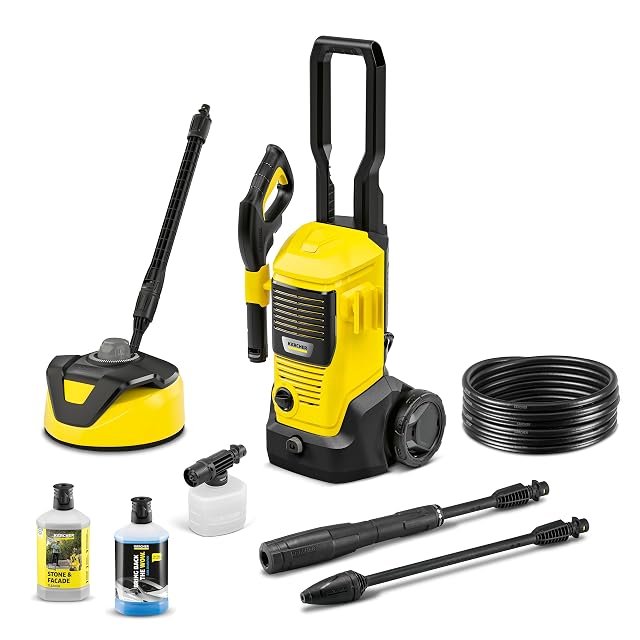
Render is the surface where a pressure washer causes damage that appears months later.
Detergent does the work
A stone and facade cleaner applied at low pressure, left for its stated period, then rinsed. That sequence removes green growth and grime without force. Blasting it off after two minutes achieves nothing and marks the surface.
Angle downwards, never up
Water driven upwards goes behind textured coatings, under flashings and past window seals. Downwards, it follows the path rain already takes.
Watch the joints and the frames
Mortar joints on old brickwork, silicone around windows, the junction between render and a sill: these are where water enters. Keep the jet well away from them and finish those areas by hand.
When not to use the machine at all
Chalky, crazed or previously patched render, and anything painted with a coating that is already lifting. A soft brush, a treatment and a hose do less damage and cost nothing to try first.
The questions we hear
What pressure is safe on render?
Lower than you think, and the answer is a technique rather than a number: widest fan, at least half a meter away, angled downwards, never held still. If the render is old, chalky or already crazed, the honest answer is a soft brush and a treatment rather than a pressure washer at all.
Why downwards?
Because an upward jet drives water under the top edge of every textured surface and behind flashings and window frames. Working downwards keeps the water traveling the way rain does, which is the direction the wall was designed for.
Last reviewed 2026-08-15