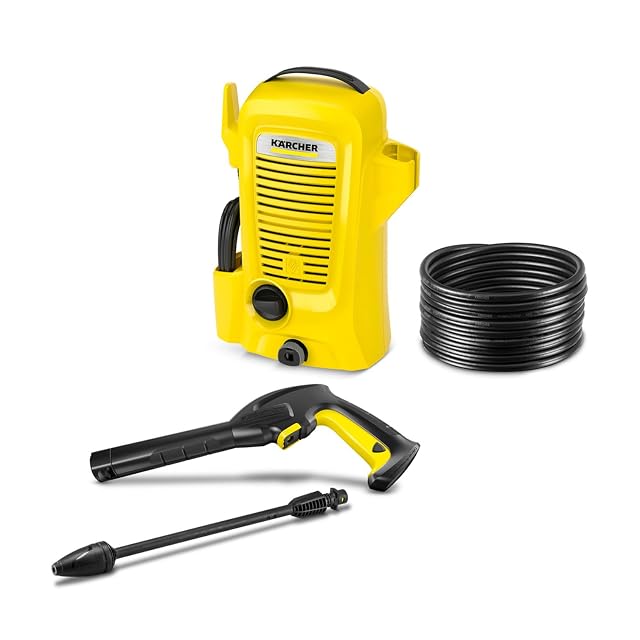
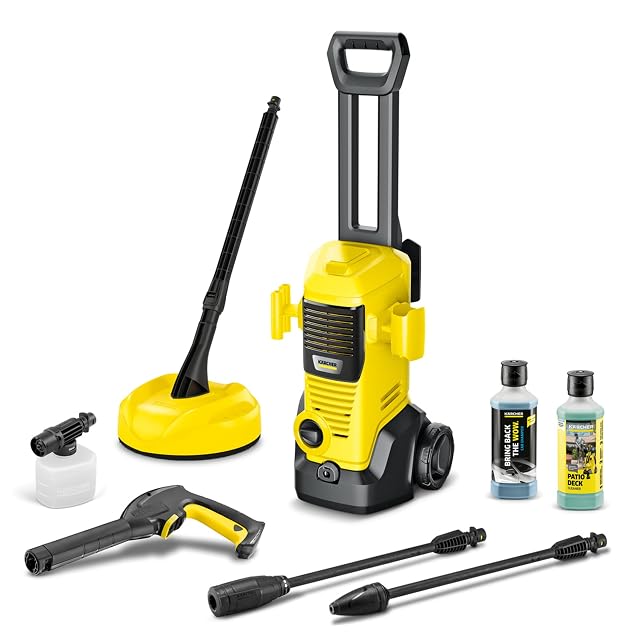
Furniture and fencing are the softest things most people point a lance at.
Test on the back
Every panel and every chair has a face nobody looks at. Start there, at a meter, and close in. Thirty seconds of testing is cheaper than a stripped arm.
A rotating wash brush changes this job
For furniture, a brush head running at low pressure with detergent does more than a jet and cannot mark the surface. It is the accessory worth owning if you have a lot of furniture and no interest in repainting it.
Powder coating and aluminum
Both take a wide fan comfortably. What they do not take is a narrow jet aimed into a joint or a fixing, which drives water where it will sit and corrode.
Wood that is going to be treated
If the fence is being oiled or stained afterwards, some furring is acceptable — it will be sanded. If it is not being treated, work as you would on decking: wide, low, along the grain.
Let it dry fully
Timber that is oiled while still damp will not take the finish evenly. Two dry days, not two hours.
The questions we hear
Can I pressure wash a painted fence?
You can strip a painted fence very efficiently, which is sometimes the point and usually not. If you want the paint to stay, use a brush attachment and detergent at low pressure, and test on the back of a panel first.
What about rattan and woven furniture?
Synthetic rattan takes a wide fan at low pressure and a good rinse. Natural rattan does not — the weave absorbs water, the fibers swell and the joints loosen. Wipe it instead.
Last reviewed 2026-08-16