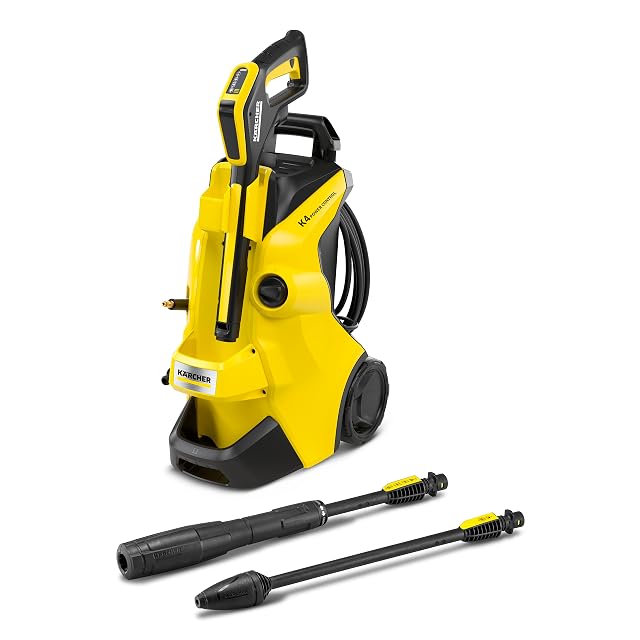
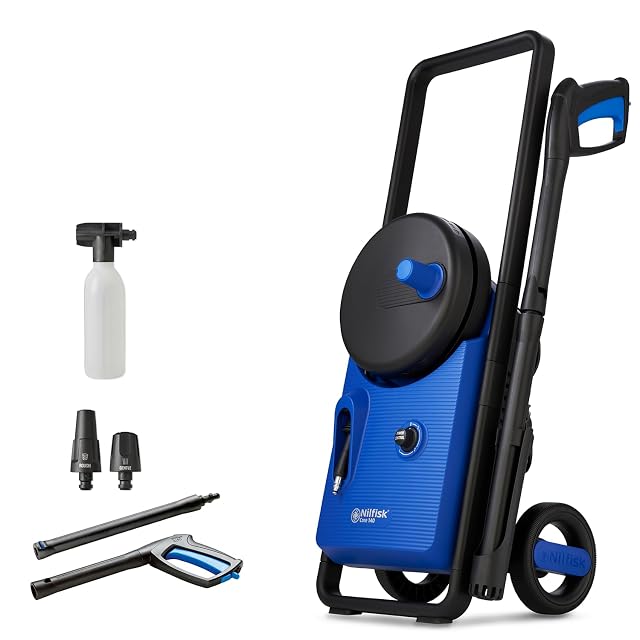
Work through it in this order and you will find it in ten minutes.
1. The supply
Tap fully open, hose uncoiled, no kinks. Fill a ten-liter bucket from the hose and time it — that tells you whether the supply meets the machine’s stated minimum.
2. The inlet filter
Every machine has a small screen at the water inlet. It blocks with grit from the mains, and a blocked screen looks exactly like a failing pump. Pull it, rinse it, refit it.
3. The nozzle
A partly blocked nozzle makes the pump cycle against a restriction. Use the nozzle needle if your machine came with one, or a fine wire — never widen the bore.
4. Air in the system
Disconnect the lance and run water through the gun until it flows steadily, then reconnect. Machines started before the hose has filled will pulse until the air clears.
5. Leaks on the suction side
A loose inlet coupling or a perished washer draws air in and gives exactly this symptom without leaking a drop of water outwards. Check the washer in the inlet fitting.
If all five are clear, it is the unloader valve or the pump seals, and that is a service item rather than a driveway fix.
The questions we hear
Is pulsing damaging the machine?
Running a pump dry or with air in it is genuinely damaging, so treat it as urgent rather than as a quirk. Stop, find the cause, and do not simply run it for another twenty minutes.
Could it just be my tap?
Very often, yes. These machines need a stated minimum flow, and a half-open tap, a narrow-bore hose, a long coiled hose or a partly blocked inlet screen can all put the supply below it. That is the first thing to check because it is free.
Last reviewed 2026-08-16